Lavender croton
Croton gratissimus · Accepted scientific name
Scientific literature: Very Sparse (37 studies) · ★☆☆☆☆
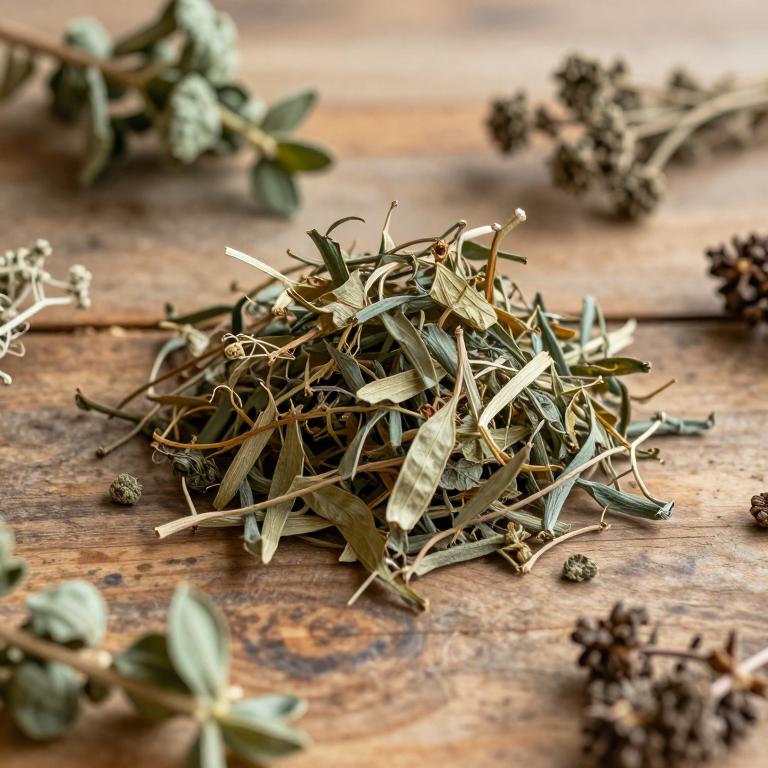
Lavender croton, scientifically known as Croton gratissimus, is a striking ornamental shrub cherished for its vibrant, colorful foliage. Beyond its aesthetic appeal, this plant holds significant ethnobotanical value. Various cultures utilize its leaves and extracts in traditional medicine to treat ailments ranging from skin infections to digestive issues.
- Family
- Euphorbiaceae
- Native range
- Africa
- Parts used
- Leaf
- Common names
- Lavender Croton · Lavender Feverberry
- Scientific synonyms
- Oxydectes Gratissima
Names and Synonyms
Common Names
- Lavender Croton
- Lavender Feverberry
Scientific Names
Accepted name
Croton gratissimusSynonyms
- Oxydectes gratissima
Regional and Traditional Names
French:
- Croton zambesicus
- Oxydectes gratissima
- Croton amabilis
- Croton antunesii
- Croton microbotryus
- Croton welwitschianus
- Oxydectes amabilis
- Oxydectes welwitschiana
- Oxydectes zambesica
- Croton subgratissimus
Sources: Wikidata, Catalogue of Life
Taxonomical Classification
This plant belongs to the kingdom Plantae and the phylum Streptophyta, falling under the class Equisetopsida and subclass Magnoliidae. Within the order Malpighiales, it is classified under the family Euphorbiaceae. Ultimately, its specific taxonomic designation is within the genus Croton.
| Rank | Classification |
|---|---|
| Kingdom | Plantae |
| Phylum | Streptophyta |
| Class | Equisetopsida |
| Subclass | Magnoliidae |
| Order | Malpighiales |
| Family | Euphorbiaceae |
| Genus | Croton |
Sources: The World Checklist of Vascular Plants (WCVP)
Distribution
This plant exhibits a specific distribution pattern across the West Tropical Africa region. It can be found growing within the borders of Benin and Burkina Faso. Additionally, its presence extends to the country of Gambia. The species is also documented to inhabit parts of Ghana. Finally, its geographical range includes the nation of Guinea.
| Region | Area |
|---|---|
| West Tropical Africa | Benin |
| West Tropical Africa | Burkina |
| West Tropical Africa | Gambia |
| West Tropical Africa | Ghana |
| West Tropical Africa | Guinea |
| West Tropical Africa | Ivory Coast |
| West Tropical Africa | Mali |
| West Tropical Africa | Nigeria |
| West Tropical Africa | Senegal |
| West Tropical Africa | Sierra Leone |
Sources: The World Checklist of Vascular Plants (WCVP)
Botanical Identification
Ecology
The ecology of Croton gratisimus is characterized by its ability to inhabit a broad vertical gradient across diverse landscapes, demonstrating significant adaptability to varying altitudinal conditions. This species thrives across an expansive elevational range, occupying habitats from as low as 5 m AMSL to altitudes reaching a maximum of 1950 m AMSL. This wide distribution suggests a tolerance for a variety of microclimates and soil types, allowing it to persist in both lowland tropical environments and higher-altitude montane regions. Such ecological plasticity enables the plant to colonize various ecological niches within its geographic range, facilitating its presence in diverse forest structures and disturbed sites alike.
- Elevational range max:
- 1950 m AMSL
- Elevational range min:
- 5 m AMSL
Life history
The life history of Croton gratisimus is characterized by its status as a perennial plant, ensuring its presence in the ecosystem over multiple growing seasons. Structurally, it functions as a phanerophyte, maintaining its conducting organs above the ground, though it can also be classified under the nanophanerophyte life form depending on the specific environmental context and height of its woody stems. The species exhibits a deciduous nature, meaning it undergoes a seasonal shedding of its leaves, which is a key component of its physiological cycle and adaptation to its habitat.
- Deciduousness :
- deciduous
- Life form :
- nanophanerophyte
- Life form :
- phanerophyte
- Lifecycle :
- perennial
Morphology
The morphology of Croton gratissimus is characterized by its growth form as a woody tree, functioning as a self-supporting structure rather than a climber or vine. This independent, non-parasitic species is terrestrial in nature and exhibits significant variation in stature, with plant heights ranging from a minimum of 0.5 m to a maximum of approximately 15.24 m, maintaining an average height of about 10 m.
- Aquatic :
- terrestrial
- Climber :
- self-supporting
- Epiphyte :
- terrestrial
- Growth form :
- tree
- Parasite :
- independent
- Plant height max:
- 15.24018532 m
- Plant height mean:
- 10 m
- Plant height min:
- 0.5 m
- Woodiness :
- woody
Physiology
The physiology of Croton gratissimus is characterized by complex metabolic processes involving the synthesis and storage of various secondary metabolites, particularly diterpene esters and polyphenols, which serve as chemical defense mechanisms against herbivory. Its photosynthetic pathways are optimized for growth in diverse African landscapes, allowing for efficient carbon assimilation under varying light intensities. Regarding its nutritional interaction with the soil, the plant does not function as a nitrogen fixer; it lacks the symbiotic relationship with diazotrophic bacteria, such as Rhizobium, typically found in leguminous species, and therefore relies on the uptake of inorganic nitrogen from the soil substrate. This absence of nitrogen-fixing capabilities means its physiological development and nitrogen assimilation are directly dependent on the availability of nitrate and ammonium ions within the immediate rhizosphere.
- Nitrogen fixer :
- no
Reproduction
The reproduction of Croton gratissimus is characterized by specific morphological attributes of its seeds and fruits. The plant produces fruit that is classified as dry rather than fleshy, a trait that influences its dispersal mechanisms. The seeds produced by this species exhibit a highly uniform physical profile, with a consistent seed volume measured at exactly 28 mm³, representing both the minimum and maximum values as well as the mean volume. Furthermore, the seed mass is exceptionally stable, maintaining a constant value across the population with a minimum, maximum, and mean mass of 0.02717 g.
- Fruit dryness :
- dry
- Seed mass mean:
- 0.02717 g
- Seed volume max:
- 28 mm³
Sources: Global Inventory of Floras and Traits (GIFT)
Plant Parts
Croton gratissimus has 1 reported plant parts identified across 1 scientific publications and several other databases that are studied for medicinal purposes. The most consistently reported plant part include leaf.
| Plant part | Supporting sources | Consensus |
|---|---|---|
| Leaf | 1 supporting sources | ★☆☆☆☆ |
Leaf
- Plants (Basel, Switzerland)
Chemicals
Croton gratissimus has 13 reported phytochemicals identified across 1 scientific publications and several other databases. The most consistently reported chemicals include 4-Methylumbelliferone glucuronide, 8-Prenylnaringenin, CATECHIN, Cembranolide, Flavonol 3-O-D-galactoside.
| Chemical | Supporting sources | Consensus |
|---|---|---|
| 4-Methylumbelliferone glucuronide | 1 supporting sources | ★☆☆☆☆ |
| 8-Prenylnaringenin | 1 supporting sources | ★☆☆☆☆ |
| CATECHIN | 1 supporting sources | ★☆☆☆☆ |
| Cembranolide | 1 supporting sources | ★☆☆☆☆ |
| Flavonol 3-O-D-galactoside | 1 supporting sources | ★☆☆☆☆ |
| Gallic acid | 1 supporting sources | ★☆☆☆☆ |
| Pheophorbide a | 1 supporting sources | ★☆☆☆☆ |
| Phlorizin | 1 supporting sources | ★☆☆☆☆ |
| Spirasine I | 1 supporting sources | ★☆☆☆☆ |
| caffeic acid | 1 supporting sources | ★☆☆☆☆ |
4-Methylumbelliferone glucuronide
- Plants (Basel, Switzerland)
8-Prenylnaringenin
- Plants (Basel, Switzerland)
CATECHIN
- Plants (Basel, Switzerland)
Cembranolide
- Phytochemistry
Flavonol 3-O-D-galactoside
- Plants (Basel, Switzerland)
Gallic acid
- Plants (Basel, Switzerland)
Pheophorbide a
- Plants (Basel, Switzerland)
Phlorizin
- BMC complementary medicine and therapies
Spirasine I
- Plants (Basel, Switzerland)
caffeic acid
- Plants (Basel, Switzerland)
Activities
Croton gratissimus has 3 reported activities identified across 1 scientific publications and several other databases. The most consistently reported activities include Antimicrobial, Cytotoxic, Hepatoprotective.
| Activity | Supporting sources | Consensus |
|---|---|---|
| Antimicrobial | 1 supporting sources | ★☆☆☆☆ |
| Cytotoxic | 1 supporting sources | ★☆☆☆☆ |
| Hepatoprotective | 1 supporting sources | ★☆☆☆☆ |
Antimicrobial
- Journal of ethnopharmacology
Cytotoxic
- BMC complementary and alternative medicine
Hepatoprotective
- Plants (Basel, Switzerland)
Conditions
Croton gratissimus has 19 reported investigations on conditions identified across 1 scientific publications and several other databases. The most consistently reported conditions include Bacillus cereus, Candida albicans, Cryptococcus neoformans, HIV, Leishmania donovani.
| Condition | Supporting sources | Consensus |
|---|---|---|
| Bacillus cereus | 1 supporting sources | ★☆☆☆☆ |
| Candida albicans | 1 supporting sources | ★☆☆☆☆ |
| Cryptococcus neoformans | 1 supporting sources | ★☆☆☆☆ |
| Hiv | 1 supporting sources | ★☆☆☆☆ |
| Leishmania donovani | 1 supporting sources | ★☆☆☆☆ |
| Plasmodium falciparum | 1 supporting sources | ★☆☆☆☆ |
| Staphylococcus aureus | 1 supporting sources | ★☆☆☆☆ |
| Staphylococcus epidermidis | 1 supporting sources | ★☆☆☆☆ |
| Trypanosoma brucei rhodesiense | 1 supporting sources | ★☆☆☆☆ |
| Cancer | 1 supporting sources | ★☆☆☆☆ |
Bacillus cereus
- Journal of ethnopharmacology
Candida albicans
- Journal of ethnopharmacology
Cryptococcus neoformans
- Journal of ethnopharmacology
Hiv
- BMC complementary and alternative medicine
Leishmania donovani
- Frontiers in pharmacology
Plasmodium falciparum
- Frontiers in pharmacology
Staphylococcus aureus
- BMC complementary and alternative medicine
Staphylococcus epidermidis
- BMC complementary and alternative medicine
Trypanosoma brucei rhodesiense
- Frontiers in pharmacology
Cancer
- Journal of ethnopharmacology
Preparations
Croton gratissimus has 9 reported preparations identified across 1 scientific publications and several other databases. The most consistently reported preparations include Esseniaal oils, Herbal Tea, acetone extracts, bark, herbal tea infusion.
| Preparation | Supporting sources | Consensus |
|---|---|---|
| Esseniaal oils | 1 supporting sources | ★☆☆☆☆ |
| Herbal tea | 1 supporting sources | ★☆☆☆☆ |
| Acetone extracts | 1 supporting sources | ★☆☆☆☆ |
| Bark | 1 supporting sources | ★☆☆☆☆ |
| Herbal tea infusion | 1 supporting sources | ★☆☆☆☆ |
| Leaf herbal tea | 1 supporting sources | ★☆☆☆☆ |
| Leaves | 1 supporting sources | ★☆☆☆☆ |
| Plant extracts | 1 supporting sources | ★☆☆☆☆ |
| Roots | 1 supporting sources | ★☆☆☆☆ |
Esseniaal oils
- Journal of ethnopharmacology
Herbal tea
- Plants (Basel, Switzerland)
Acetone extracts
- BMC complementary medicine and therapies
Bark
- Journal of ethnopharmacology
Herbal tea infusion
- Plants (Basel, Switzerland)
Leaf herbal tea
- Plants (Basel, Switzerland)
Leaves
- Journal of ethnopharmacology
Plant extracts
- BMC complementary medicine and therapies
Roots
- Journal of ethnopharmacology