Croton grandivelum
Croton grandivelum · Accepted scientific name
Scientific literature: Very Sparse (5 studies) · ★☆☆☆☆
, scientifically known as Croton grandivelum, is a medicinal plant valued for its diverse therapeutic properties. Belonging to the Euphorbiaceae family, this species is often utilized in traditional medicine to treat various ailments. Its bioactive compounds offer significant potential for pharmacological research, particularly in developing new natural healing treatments.
- Family
- Euphorbiaceae
- Native range
- Southern America
- Parts used
- Not available
- Common names
- Not available
- Scientific synonyms
- Croton Curuguatyensis · Croton Agrarius Var. Cremostachyus · 19 more
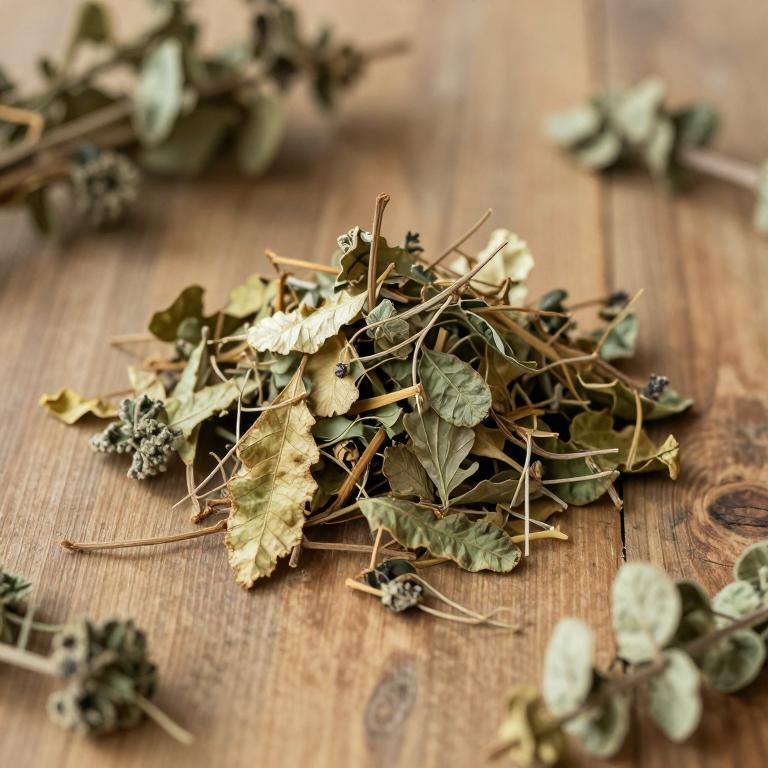
Names and Synonyms
Scientific Names
Accepted name
Croton grandivelumSynonyms
- Croton curuguatyensis
- Croton agrarius var. cremostachyus
- Croton occidentalis var. intermedius
- Croton occidentalis
- Croton occidentalis var. oblongifolius
- Croton pohlianus var. macrophyllus
- Croton occidentalis var. ovalifolius
- Croton pomaderris
- Croton occidentalis var. parvifolius
- Croton pycnocarpus
- Croton occidentalis f. rupestris
- Croton occidentalis var. setosus
- Croton grandivelum var. neuwiedii
- Oxydectes pomaderris
- Croton grandivelum var. pannosus
- Oxydectes occidentalis
- Croton grandivelum var. augustinianus
- Oxydectes cremostachya
- Croton grandivelum var. cremostachyus
- Croton agrarius var. augustinianus
- Croton agrarius var. neuwiedii
Regional and Traditional Names
French:
- Croton algernonii
- Croton augustinianus
- Croton cremostachyus
- Croton pycnocarpus
- Oxydectes cremostachya
- Croton grandivelus
Sources: Wikidata
Taxonomical Classification
This plant, Croton grandivelum, belongs to the kingdom Plantae and the phylum Streptophyta. Within the class Equisetopsida and subclass Magnoliidae, it is categorized under the order Malpighiales. It is a member of the family Euphorbiaceae and is specifically classified under the genus Croton.
| Rank | Classification |
|---|---|
| Kingdom | Plantae |
| Phylum | Streptophyta |
| Class | Equisetopsida |
| Subclass | Magnoliidae |
| Order | Malpighiales |
| Family | Euphorbiaceae |
| Genus | Croton |
Sources: The World Checklist of Vascular Plants (WCVP)
Distribution
This plant exhibits a broad geographical presence across several distinct regions of South America. Within the western part of the continent, it can be found growing in Bolivia. Its distribution extends significantly into Brazil, spanning the West-Central, Southeast, and South regions. Additionally, the species inhabits the southern reaches of the continent within Paraguay. Together, these locations highlight the diverse environmental range occupied by this medicinal species.
| Region | Area |
|---|---|
| Western South America | Bolivia |
| Brazil | Brazil West-Central |
| Brazil | Brazil Southeast |
| Brazil | Brazil South |
| Southern South America | Paraguay |
Sources: The World Checklist of Vascular Plants (WCVP)
Botanical Identification
Ecology
The ecology of Croton grandivelum is characterized by its broad adaptability across diverse Brazilian biomes, including the Caatinga (strictu sensu), Campo Limpo, Campo Rupestre, Cerrado (lato sensu), and Floresta Estacional Decidual. This species demonstrates a significant vertical distribution, inhabiting a wide elevational gradient that begins at sea level (0 m AMSL) and extends up to a maximum of 500 m AMSL. Such varied habitat preferences suggest a high degree of ecological plasticity, allowing the plant to thrive in environments ranging from the arid conditions of the Caatinga to the seasonal forest structures of the Deciduous Seasonal Forest.
- Elevational range max:
- 500 m AMSL
- Elevational range min:
- 0 m AMSL
- Habitat :
- Caatinga (stricto sensu), Campo Limpo, Campo Rupestre, Cerrado (lato sensu), Floresta Estacional Decidual
Life history
The life history of Croton grandivelum is characterized by its classification as a perennial species, indicating a long-term survival strategy that allows it to persist through multiple growing seasons. In terms of its ecological growth habit, the plant functions as a chamaephyte, a life form where the ascending or descending buds are located close to the soil surface, often protected by the substrate or leaf litter. This chamaephyte nature, consistent across its structural classifications, allows the plant to maintain a stable presence within its habitat, utilizing its perennial lifecycle to establish long-term dominance in its specific environmental niche.
- Life form :
- chamaephyte
- Lifecycle :
- perennial
Morphology
The morphology of Croton grandivelum is characterized by a woody structure, manifesting primarily as a subshrub or herb. It is a terrestrial species that grows independently, functioning as a non-parasitic organism. In terms of its physical habit, the plant is self-supporting rather than acting as a climber or an epiphyte, maintaining a stable growth form within its terrestrial habitat.
- Aquatic :
- terrestrial
- Climber :
- self-supporting
- Epiphyte :
- terrestrial
- Growth form :
- herb
- Growth form :
- subshrub
- Parasite :
- independent
- Woodiness :
- woody
Sources: Global Inventory of Floras and Traits (GIFT)
Chemicals
Croton grandivelum has 4 reported phytochemicals identified across 0 scientific publications and several other databases. The most consistently reported chemicals include Glaucine, Sterols, Terpenes, alpha-Tocopherol.
| Chemical | Supporting sources | Consensus |
|---|---|---|
| Glaucine | 1 supporting sources | ★☆☆☆☆ |
| Sterols | 1 supporting sources | ★☆☆☆☆ |
| Terpenes | 1 supporting sources | ★☆☆☆☆ |
| alpha-Tocopherol | 1 supporting sources | ★☆☆☆☆ |
Glaucine
- Zeitschrift fur Naturforschung. C, Journal of biosciences
Sterols
- Zeitschrift fur Naturforschung. C, Journal of biosciences
Terpenes
- Zeitschrift fur Naturforschung. C, Journal of biosciences
alpha-Tocopherol
- Zeitschrift fur Naturforschung. C, Journal of biosciences