Croton floribundus
Croton floribundus · Accepted scientific name
Scientific literature: Very Sparse (5 studies) · ★☆☆☆☆
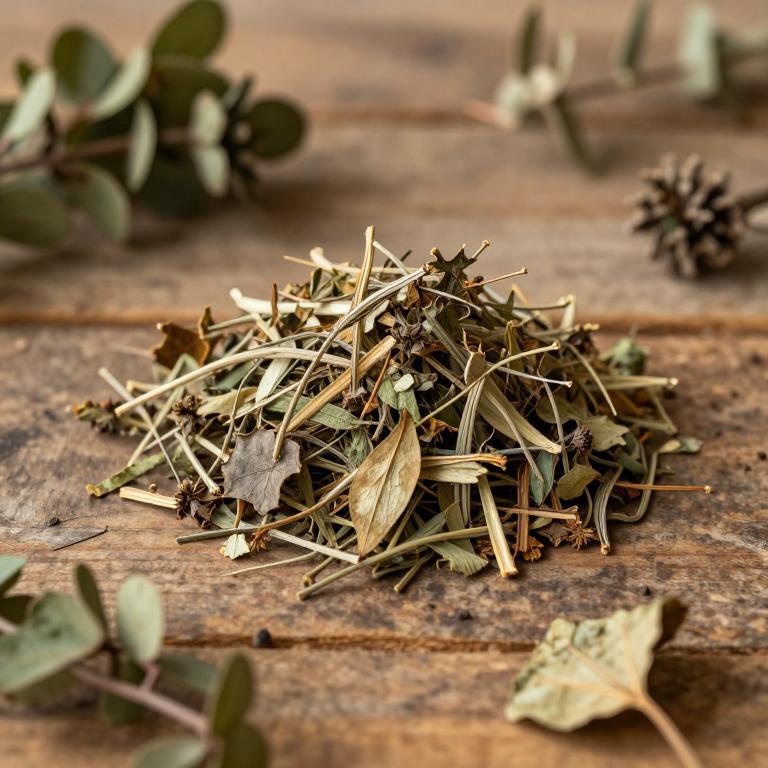
, scientifically known as Croton floribundus, is a versatile medicinal shrub native to tropical regions. Renowned for its bioactive compounds, it is traditionally used in herbal medicine to treat skin ailments, inflammation, and digestive issues. This plant offers significant pharmacological potential for developing new treatments in modern integrative medicine.
- Family
- Euphorbiaceae
- Native range
- Southern America
- Parts used
- Leaf
- Common names
- Not available
- Scientific synonyms
- Oxydectes Floribunda · Croton Maracayuensis
Names and Synonyms
Scientific Names
Accepted name
Croton floribundusSynonyms
- Oxydectes floribunda
- Croton maracayuensis
Regional and Traditional Names
French:
- Croton asper
- Oxydectes floribunda
Sources: Wikidata
Taxonomical Classification
This plant belongs to the kingdom Plantae and is classified within the phylum Streptophyta and class Equisetopsida. As a member of the subclass Magnoliidae and order Malpighiales, it is further categorized under the family Euphorbiaceae. Ultimately, its specific taxonomic placement is defined by its membership in the genus Croton.
| Rank | Classification |
|---|---|
| Kingdom | Plantae |
| Phylum | Streptophyta |
| Class | Equisetopsida |
| Subclass | Magnoliidae |
| Order | Malpighiales |
| Family | Euphorbiaceae |
| Genus | Croton |
Sources: The World Checklist of Vascular Plants (WCVP)
Distribution
This plant exhibits a broad geographical distribution across several key regions of South America. Within Brazil, it can be found spanning the West-Central, Northeast, Southeast, and South regions. Its presence is not limited to Brazilian borders, as it also extends into the southern parts of the continent. Specifically, the species is documented to grow in Paraguay, located in Southern South America. Consequently, this medicinal plant occupies a diverse range of habitats throughout these specific territories.
| Region | Area |
|---|---|
| Brazil | Brazil West-Central |
| Brazil | Brazil Northeast |
| Brazil | Brazil Southeast |
| Brazil | Brazil South |
| Southern South America | Paraguay |
Sources: The World Checklist of Vascular Plants (WCVP)
Botanical Identification
Ecology
The ecology of Croton floribundus is characterized by its presence in diverse Brazilian biomes, ranging from the open landscapes of the Cerrado (latu sensu) and the specialized Campo Rupestre to more densely forested environments such as the Floresta Estacional Semidecidual and the Floresta Ombrófila (also known as Floresta Pluvial). This species exhibits significant adaptability to varying terrain, frequently occurring in vegetation associated with rocky outcrops (Vegetação Sobre Afloramentos Rochosos). Its vertical distribution is broad, spanning an elevational range from sea level (0 m AMSL) up to a maximum altitude of 1000 m AMSL.
- Elevational range max:
- 1000 m AMSL
- Elevational range min:
- 0 m AMSL
- Habitat :
- Campo Rupestre, Cerrado (lato sensu), Floresta Estacional Semidecidual, Floresta Ombrófila (= Floresta Pluvial), Vegetação Sobre Afloramentos Rochosos
Life history
The life history of Croton floribundus is characterized by its status as a perennial plant, ensuring its persistence across multiple growing seasons. As a phanerophyte, it possesses an elevated growth form where the stem branches are well above the ground level, though it can also be classified within the nanophanerophyte category depending on specific environmental adaptations and height variations. This species exhibits a deciduous nature, shedding its foliage periodically as part of its seasonal cycle.
- Deciduousness :
- deciduous
- Life form :
- nanophanerophyte
- Life form :
- phanerophyte
- Lifecycle :
- perennial
Morphology
The morphology of Croton floribundus is characterized by a woody growth form, primarily manifesting as a tree. This plant exhibits a significant stature, with an average height of approximately 8 m, though it is capable of reaching a maximum height of up to 18 m. It is a terrestrial species, meaning it grows on land rather than in aquatic or semiaquatic environments, and it functions as an independent organism without parasitic tendencies. Unlike climbing vines or lianas, its structural habit is self-supporting, allowing it to maintain its upright position through its own woody framework rather than relying on other structures for support. Additionally, it is categorized as a terrestrial plant in terms of its epiphytic status, lacking any hemi-epiphytic or obligate epiphytic characteristics.
- Aquatic :
- terrestrial
- Climber :
- self-supporting
- Epiphyte :
- terrestrial
- Growth form :
- tree
- Parasite :
- independent
- Plant height max:
- 18 m
- Plant height mean:
- 8 m
- Woodiness :
- woody
Physiology
The physiology of Croton floribundus is characterized by specific structural and biochemical adaptations related to its resource acquisition and biomass allocation. The plant exhibits a highly consistent Leaf Dry Matter Content (LDMC), with a mean, minimum, and maximum value all stabilized at 356.6 mg/g, suggesting a uniform investment in leaf tissue density and structural stability. This is complemented by a Specific Leaf Area (SLA) that remains constant at a mean, minimum, and maximum of 135 cm²/g, indicating a moderate leaf thickness and a controlled surface area-to-mass ratio for photosynthetic efficiency. Regarding its structural support and hydraulic capacity, the plant maintains a Stem Specific Density (SSD) with a mean value of 600 mg/cm³. Furthermore, in terms of nutrient cycling and symbiotic relationships, Croton floribundus does not function as a nitrogen fixer.
- Leaf dry matter content (LDMC) mean:
- 356.6 mg/g
- Nitrogen fixer :
- no
- Specific Leaf Area (SLA) min:
- 135 cm²/g
- Stem specific density (SSD) mean:
- 600 mg/cm³
Reproduction
Reproduction in Croton floribundus is characterized by a highly consistent seed production profile, ensuring uniformity in its propagules. The seeds produced by this species exhibit a precise and standardized mass, with a measured mean seed mass of 0.036 g. This consistency is absolute across the sampled population, as both the maximum and minimum recorded seed mass values are identical at 0.036 g. Such a lack of variance in seed mass suggests a highly regulated reproductive strategy, where the energy allocated to each individual seed remains constant, facilitating predictable germination patterns and seedling establishment.
- Seed mass mean:
- 0.036 g
Sources: Global Inventory of Floras and Traits (GIFT)
Plant Parts
Croton floribundus has 1 reported plant parts identified across 1 scientific publications and several other databases that are studied for medicinal purposes. The most consistently reported plant part include leaf.
| Plant part | Supporting sources | Consensus |
|---|---|---|
| Leaf | 1 supporting sources | ★☆☆☆☆ |
Leaf
- Chemistry & biodiversity
Chemicals
Croton floribundus has 3 reported phytochemicals identified across 1 scientific publications and several other databases. The most consistently reported chemicals include E-Caryophyllene, Epi-yangambin, PREMNASPIRODIENE.
| Chemical | Supporting sources | Consensus |
|---|---|---|
| E-Caryophyllene | 1 supporting sources | ★☆☆☆☆ |
| Epi-yangambin | 1 supporting sources | ★☆☆☆☆ |
| PREMNASPIRODIENE | 1 supporting sources | ★☆☆☆☆ |
E-Caryophyllene
- Chemistry & biodiversity
Epi-yangambin
- Fitoterapia
PREMNASPIRODIENE
- Chemistry & biodiversity
Conditions
Croton floribundus has 1 reported investigations on conditions identified across 1 scientific publications and several other databases. The most consistently reported conditions include melanoma.
| Condition | Supporting sources | Consensus |
|---|---|---|
| Melanoma | 1 supporting sources | ★☆☆☆☆ |
Melanoma
- Fitoterapia
Preparations
Croton floribundus has 1 reported preparations identified across 1 scientific publications and several other databases. The most consistently reported preparations include essential oil (EO).
| Preparation | Supporting sources | Consensus |
|---|---|---|
| Essential oil (eo) | 1 supporting sources | ★☆☆☆☆ |
Essential oil (eo)
- Chemistry & biodiversity