Hoggabush
Croton flavens · Accepted scientific name
Scientific literature: Very Sparse (1 studies) · ★☆☆☆☆
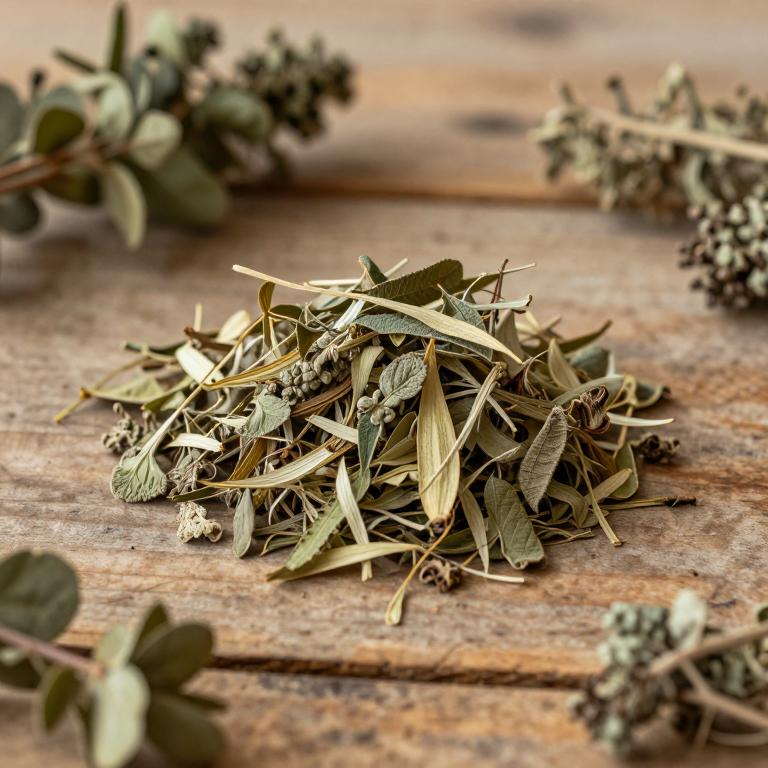
Hoggabush, scientifically known as Croton flavens, is a significant medicinal shrub native to various tropical regions. Renowned for its diverse therapeutic properties, it is traditionally utilized in folk medicine to treat skin ailments, inflammation, and digestive issues. This resilient plant offers promising phytochemical potential for modern pharmacological research.
Names and Synonyms
Common Names
- Hoggabush
- Marrow
- Moron
- Wormbush
- balsam
- copaiba
- rock-sage
Scientific Names
Accepted name
Croton flavensSynonyms
- Croton astroites
- Oxydectes flavens
- Croton flocculosus
- Oxydectes flocculosa
- Croton excisus
- Oxydectes althaeifolia
- Oxydectes astroites
- Croton flavens var. balsamifer
- Semilta althaeifolia
- Croton flavens var. mucronatus
- Croton flavens var. pallidus
- Croton flavens f. richardii
- Croton flavens var. rigidus
- Croton balsamifer
- Croton althaeifolius
- Croton abeggii
- Croton padifolius
- Croton mucronatus
- Croton martinicensis
- Croton mauralis
- Croton jacmelianus
- Croton priorianus
- Croton rigidus
- Croton richardii
- Croton rhamnifolius var. antillanus
- Croton stenophyllus var. brevifolius
- Croton tenuiramis
Regional and Traditional Names
Spanish:
- Palo de berraco
French:
- Croton albidus
- Croton balsamifer
- Croton lamarckianus
- Croton leprosus
- Croton mauralis
- Croton mucronatus
- Croton padifolius
- Croton portoricensis
- Croton richardii
- Croton rigidus
- Oxydectes albida
- Oxydectes astroites
- Oxydectes flavens
- Oxydectes flocculosa
- Bois Ti-Baume
- Croton balsamique
Sources: Wikidata, Catalogue of Life
Taxonomical Classification
This plant belongs to the kingdom Plantae and the phylum Streptophyta, falling under the class Equisetopsida and subclass Magnoliidae. Within the order Malpighiales, it is classified under the family Euphorbiaceae and is specifically identified by the genus Croton.
| Rank | Classification |
|---|---|
| Kingdom | Plantae |
| Phylum | Streptophyta |
| Class | Equisetopsida |
| Subclass | Magnoliidae |
| Order | Malpighiales |
| Family | Euphorbiaceae |
| Genus | Croton |
Sources: The World Checklist of Vascular Plants (WCVP)
Distribution
This plant exhibits a widespread presence across several islands within the Caribbean region. Its documented range includes the coastal and inland areas of Aruba. It is also commonly found throughout the various archipelagos of the Bahamas. Furthermore, the species is native to the large islands of Cuba and the Dominican Republic. Finally, its distribution extends to the diverse landscapes found in Haiti.
| Region | Area |
|---|---|
| Caribbean | Aruba |
| Caribbean | Bahamas |
| Caribbean | Cuba |
| Caribbean | Dominican Republic |
| Caribbean | Haiti |
| Caribbean | Jamaica |
| Caribbean | Puerto Rico |
| Caribbean | Southwest Caribbean |
| Caribbean | Trinidad-Tobago |
| Caribbean | Windward Is. |
Sources: The World Checklist of Vascular Plants (WCVP)
Botanical Identification
Life history
The life history of Croton flavens is characterized by its status as a perennial organism, allowing it to persist through multiple growing seasons within its ecological niche. In terms of its structural growth patterns and life forms, the species exhibits complexity in its developmental strategies, classified under both phanerophyte and nanophanerophyte categories. As a phanerophyte, it possesses significant woody structures that elevate its buds above the ground level, providing stability and resilience, while its nanophanerophytic traits suggest a capacity for more compact or low-growing growth forms under specific environmental conditions. This combination of life history traits enables the plant to maintain long-term presence and adapt its physical stature to varying resource availability.
- Life form :
- nanophanerophyte
- Life form :
- phanerophyte
- Lifecycle :
- perennial
Morphology
The morphology of Croton flavens is characterized by a woody growth form, specifically categorized as a shrub. As a terrestrial organism, it functions as an independent species, meaning it is not a parasite. Although it possesses a climbing habit, it is classified as self-supporting rather than an obligatory or facultative climber.
- Climber :
- self-supporting
- Epiphyte :
- terrestrial
- Growth form :
- shrub
- Parasite :
- independent
- Woodiness :
- woody
Reproduction
Reproduction in Croton flavens is characterized by the production of seeds that exhibit a highly uniform physical profile. Detailed analysis of the seed metrics reveals a consistent seed mass with no observed variance across the sampled population. The seed mass mean is recorded at 0.00653 g, a value that is identical to both the maximum (0.00653 g) and minimum (0.00653 g) recorded weights. This lack of deviation in seed mass suggests a highly stabilized reproductive output, ensuring that each individual seed carries a standardized amount of nutrient reserves for germination.
- Seed mass mean:
- 0.00653 g
Sources: Global Inventory of Floras and Traits (GIFT)
Chemicals
Croton flavens has 1 reported phytochemicals identified across 0 scientific publications and several other databases. The most consistently reported chemicals include Salutaridine.
| Chemical | Supporting sources | Consensus |
|---|---|---|
| Salutaridine | 1 supporting sources | ★☆☆☆☆ |
Salutaridine
- The Journal of organic chemistry