Croton eluteria
Croton eluteria · Accepted scientific name
Scientific literature: Very Extensive (202 studies) · ★★★★★
Croton eluteria, scientifically known as Croton eluteria, is a medicinal plant valued for its diverse therapeutic properties. Traditionally used in various herbal remedies, it is recognized for its bioactive compounds that offer anti-inflammatory and antimicrobial benefits. This species plays a significant role in ethnobotanical studies and natural pharmacology.
- Family
- Not available
- Native range
- Southern America
- Parts used
- Not available
- Common names
- Not available
- Scientific synonyms
- Not available
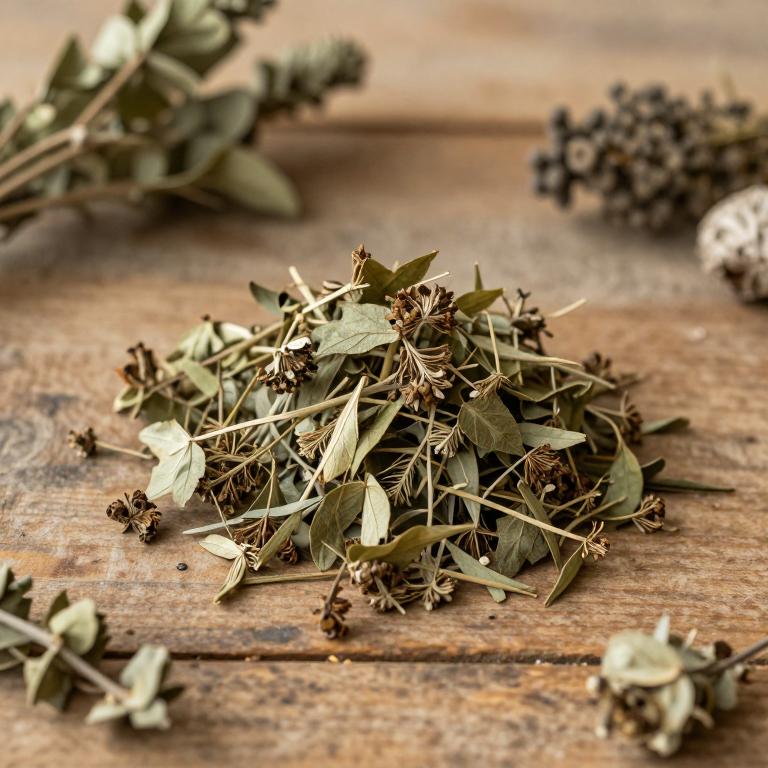
Names and Synonyms
Scientific Names
Accepted name
Croton eluteriaDistribution
This plant exhibits a specific geographical distribution across several island nations within the Caribbean region. It can be found growing naturally in the Bahamas, spreading its presence through this archipelago. The species is also widely documented throughout the island of Cuba. Its habitat extends further into the Greater Antilles, specifically within the Dominican Republic and Haiti. Finally, the plant completes its regional range by inhabiting the diverse landscapes of Jamaica.
| Region | Area |
|---|---|
| Caribbean | Bahamas |
| Caribbean | Cuba |
| Caribbean | Dominican Republic |
| Caribbean | Haiti |
| Caribbean | Jamaica |
Sources: The World Checklist of Vascular Plants (WCVP)
Botanical Identification
Life history
The life history of Croton eluteria is characterized by its perennial lifecycle, allowing the plant to persist across multiple growing seasons. In terms of its structural development and ecological positioning, it exhibits a dual classification of life forms, functioning as both a phanerophyte, where its buds are borne on aerial shoots well above the ground, and a nanophanerophyte, reflecting its growth habit within specific environmental niches.
- Life form :
- nanophanerophyte
- Life form :
- phanerophyte
- Lifecycle :
- perennial
Morphology
The morphology of Croton eluteria is characterized by its significant stature, reaching an average plant height of approximately 12 m. It exhibits a diverse growth form, manifesting as both a tree and a shrub, and is fundamentally a woody species. This plant is strictly terrestrial in its habitat, neither being aquatic nor functioning as an epiphyte. Structurally, it is a self-supporting organism, categorized as such in terms of its climbing habits, and it functions as an independent species rather than a parasite.
- Aquatic :
- terrestrial
- Climber :
- self-supporting
- Epiphyte :
- terrestrial
- Growth form :
- tree
- Growth form :
- shrub
- Parasite :
- independent
- Plant height mean:
- 12 m
- Woodiness :
- woody
Physiology
The physiology of Croton eluteria is characterized by its specialized metabolic processes and distinct biochemical profile, particularly regarding its secondary metabolism. The plant undergoes complex biosynthetic pathways to produce various diterpene esters and bioactive compounds within its latex, which serves as a critical physiological defense mechanism. In terms of its nutrient acquisition and soil interactions, the plant does not exhibit the physiological capacity for symbiotic nitrogen fixation; specifically, it is not a nitrogen fixer (trait_1: no; trait_2: no). Its growth and development are heavily dependent on the availability of exogenous nitrogen sources within the soil rather than the conversion of atmospheric nitrogen through specialized root nodules. This metabolic reliance influences its ecological niche and nutrient cycling roles within its natural habitat.
- Nitrogen fixer :
- no
Sources: Global Inventory of Floras and Traits (GIFT)
Chemicals
Croton eluteria has 32 reported phytochemicals identified across 0 scientific publications and several other databases. The most consistently reported chemicals include ALPHA-PINENE, ALPHA-THUJENE, BETA-CARYOPHYLLENE, BETA-ELEMENE, BETA-PINENE.
| Chemical | Supporting sources | Consensus |
|---|---|---|
| ALPHA-PINENE | 1 supporting sources | ★☆☆☆☆ |
| ALPHA-THUJENE | 1 supporting sources | ★☆☆☆☆ |
| BETA-CARYOPHYLLENE | 1 supporting sources | ★☆☆☆☆ |
| BETA-ELEMENE | 1 supporting sources | ★☆☆☆☆ |
| BETA-PINENE | 1 supporting sources | ★☆☆☆☆ |
| Borneol | 1 supporting sources | ★☆☆☆☆ |
| CALAMENENE | 1 supporting sources | ★☆☆☆☆ |
| CAMPHENE | 1 supporting sources | ★☆☆☆☆ |
| Cascarilladiene | 1 supporting sources | ★☆☆☆☆ |
| Cascarillic acid | 1 supporting sources | ★☆☆☆☆ |
ALPHA-PINENE
- Dr. Duke
ALPHA-THUJENE
- Dr. Duke
BETA-CARYOPHYLLENE
- Dr. Duke
BETA-ELEMENE
- Dr. Duke
BETA-PINENE
- Dr. Duke
Borneol
- Dr. Duke
CALAMENENE
- Dr. Duke
CAMPHENE
- Dr. Duke
Cascarilladiene
- Dr. Duke
Cascarillic acid
- Dr. Duke
Activities
Croton eluteria has 169 reported activities identified across 0 scientific publications and several other databases. The most consistently reported activities include (-)-Chronotropic, (-)-Inotropic, ACE-Inhibitor, Abortifacient, Acaricide.
| Activity | Supporting sources | Consensus |
|---|---|---|
| (-)-Chronotropic | 1 supporting sources | ★☆☆☆☆ |
| (-)-Inotropic | 1 supporting sources | ★☆☆☆☆ |
| ACE-Inhibitor | 1 supporting sources | ★☆☆☆☆ |
| Abortifacient | 1 supporting sources | ★☆☆☆☆ |
| Acaricide | 1 supporting sources | ★☆☆☆☆ |
| Aldose-Reductase-Inhibitor | 1 supporting sources | ★☆☆☆☆ |
| Allelochemic | 1 supporting sources | ★☆☆☆☆ |
| Allelopathic | 1 supporting sources | ★☆☆☆☆ |
| Allergenic | 1 supporting sources | ★☆☆☆☆ |
| Analgesic | 1 supporting sources | ★☆☆☆☆ |
(-)-Chronotropic
- Dr. Duke
(-)-Inotropic
- Dr. Duke
ACE-Inhibitor
- Dr. Duke
Abortifacient
- Dr. Duke
Acaricide
- Dr. Duke
Aldose-Reductase-Inhibitor
- Dr. Duke
Allelochemic
- Dr. Duke
Allelopathic
- Dr. Duke
Allergenic
- Dr. Duke
Analgesic
- Dr. Duke
Preparations
Croton eluteria has 1 reported preparations identified across 0 scientific publications and several other databases. The most consistently reported preparations include bark.
| Preparation | Supporting sources | Consensus |
|---|---|---|
| Bark | 1 supporting sources | ★☆☆☆☆ |
Bark
- Journal of natural products