Croton echioideus
Croton echioideus · Accepted scientific name
Scientific literature: Very Sparse (4 studies) · ★☆☆☆☆
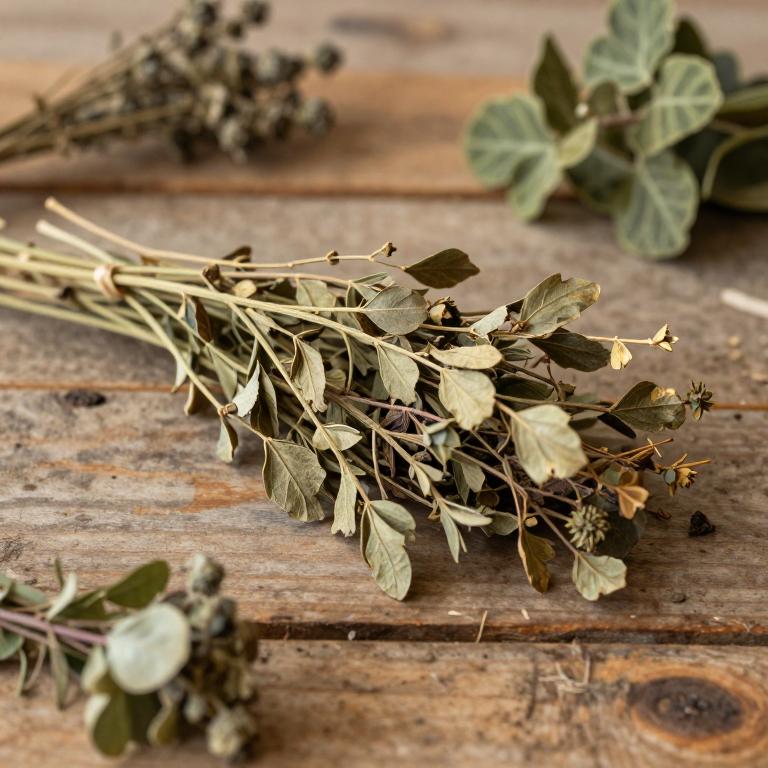
, scientifically known as Croton echioideus, is a versatile medicinal shrub widely used in traditional African medicine. Renowned for its potent therapeutic properties, this plant is frequently utilized to treat ailments such as gastrointestinal issues, skin infections, and inflammation, offering a rich natural resource for holistic healing practices.
- Family
- Euphorbiaceae
- Native range
- Southern America
- Parts used
- Leaf · Stem
- Common names
- Not available
- Scientific synonyms
- Oxydectes Echioidea
Names and Synonyms
Scientific Names
Accepted name
Croton echioideusSynonyms
- Oxydectes echioidea
Sources: Wikidata
Taxonomical Classification
This plant belongs to the kingdom Plantae and is classified under the phylum Streptophyta and the class Equisetopsida. Within the subclass Magnoliidae, it falls under the order Malpighiales and the family Euphorbiaceae. Ultimately, its specific taxonomic placement is within the genus Croton.
| Rank | Classification |
|---|---|
| Kingdom | Plantae |
| Phylum | Streptophyta |
| Class | Equisetopsida |
| Subclass | Magnoliidae |
| Order | Malpighiales |
| Family | Euphorbiaceae |
| Genus | Croton |
Sources: The World Checklist of Vascular Plants (WCVP)
Distribution
This plant exhibits a specific distribution pattern within the South American continent. It is notably documented across the Northeast region of Brazil. Furthermore, the species can also be found growing within the Southeast part of the country. These two areas represent the primary geographical ranges for the species in Brazil. Consequently, its habitat is concentrated in these distinct Brazilian territories.
| Region | Area |
|---|---|
| Brazil | Brazil Northeast |
| Brazil | Brazil Southeast |
Sources: The World Checklist of Vascular Plants (WCVP)
Botanical Identification
Ecology
The ecology of Croton echioideus is characterized by its adaptation to specific and often harsh environmental conditions within the Brazilian biome. It is primarily found inhabiting the Caatinga (strictu sensu), where it must withstand semi-arid climates, as well as in the unique ecosystems of Campo Rupestre. Additionally, the species demonstrates a specialized ability to thrive in vegetation situated over rocky outcrops (Vegetação Sobre Afloramentos Rochosos), indicating a high tolerance for shallow, nutrient-poor soils and intense solar radiation associated with these lithic landscapes.
- Habitat :
- Caatinga (stricto sensu), Campo Rupestre, Vegetação Sobre Afloramentos Rochosos
Life history
The life history of Croton echioideus is characterized by its classification as a phanerophyte, a growth form where the majority of its photosynthetic organs are borne on elevated woody stems well above the soil surface. This perennial life strategy allows the plant to maintain a robust structure within its tropical and subtropical habitats, ensuring stability and access to light. While its primary developmental stage is defined as a phanerophyte, the species' physiological flexibility and structural complexity within its ecosystem can sometimes exhibit characteristics associated with the nanophanerophyte life form, particularly in its smaller or more shrub-like growth phases. This life history pattern supports its ability to persist through varying seasonal conditions, utilizing its woody architecture to sustain growth and reproductive cycles over multiple years.
- Life form :
- nanophanerophyte
- Life form :
- phanerophyte
Morphology
The morphology of Croton echioideus is characterized by its growth form as a shrub, exhibiting a primarily woody structure. As a terrestrial plant, it does not inhabit aquatic or semiaquatic environments, nor does it function as an epiphyte in either a holoepiphytic or hemiepiphytic capacity. The species is strictly self-supporting rather than acting as a climber, and it maintains an independent life cycle, functioning as a non-parasitic organism.
- Aquatic :
- terrestrial
- Climber :
- self-supporting
- Epiphyte :
- terrestrial
- Growth form :
- shrub
- Parasite :
- independent
- Woodiness :
- woody
Sources: Global Inventory of Floras and Traits (GIFT)
Plant Parts
Croton echioideus has 2 reported plant parts identified across 2 scientific publications and several other databases that are studied for medicinal purposes. The most consistently reported plant part include leaf, stem.
| Plant part | Supporting sources | Consensus |
|---|---|---|
| Leaf | 1 supporting sources | ★☆☆☆☆ |
| Stem | 1 supporting sources | ★☆☆☆☆ |
Leaf
- Natural product communications
Stem
- Natural product communications
Chemicals
Croton echioideus has 2 reported phytochemicals identified across 2 scientific publications and several other databases. The most consistently reported chemicals include (Z)-alpha-Atlantone, trans-Isolongifolanone.
| Chemical | Supporting sources | Consensus |
|---|---|---|
| (Z)-alpha-Atlantone | 1 supporting sources | ★☆☆☆☆ |
| trans-Isolongifolanone | 1 supporting sources | ★☆☆☆☆ |
(Z)-alpha-Atlantone
- Natural product communications
trans-Isolongifolanone
- Natural product communications
Preparations
Croton echioideus has 1 reported preparations identified across 2 scientific publications and several other databases. The most consistently reported preparations include essential oils from the leaves and stems.
| Preparation | Supporting sources | Consensus |
|---|---|---|
| Essential oils from the leaves and stems | 1 supporting sources | ★☆☆☆☆ |
Essential oils from the leaves and stems
- Natural product communications