Croton conduplicatus
Croton conduplicatus · Accepted scientific name
Scientific literature: Very Sparse (20 studies) · ★☆☆☆☆
Croton conduplicatus, scientifically known as Croton conduplicatus, is a significant medicinal shrub native to tropical regions. Renowned for its diverse bioactive compounds, this plant is traditionally utilized in folk medicine to treat various ailments, including skin inflammations and digestive issues, offering promising potential for modern pharmacological research and development.
- Family
- Euphorbiaceae
- Native range
- Southern America
- Parts used
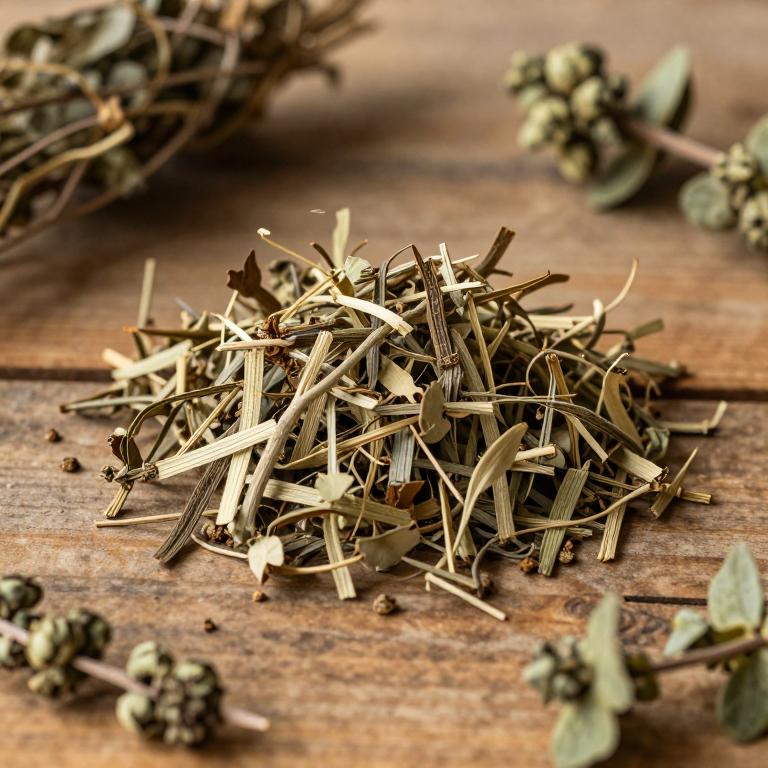
- Leaf
- Common names
- Not available
- Scientific synonyms
- Croton Rhamnifolius Var. Conduplicatus · Croton Rhamnifolius Var. Salviifolius · 3 more
Names and Synonyms
Scientific Names
Accepted name
Croton conduplicatusSynonyms
- Croton rhamnifolius var. conduplicatus
- Croton rhamnifolius var. salviifolius
- Croton salviifolius
- Croton meridensis
- Croton obtusus
Sources: Wikidata
Taxonomical Classification
This plant belongs to the kingdom Plantae and is classified under the phylum Streptophyta within the class Equisetopsida. Further taxonomic placement identifies it as part of the subclass Magnoliidae and the order Malpighiales. Finally, it is categorized under the family Euphorbiaceae within the genus Croton.
| Rank | Classification |
|---|---|
| Kingdom | Plantae |
| Phylum | Streptophyta |
| Class | Equisetopsida |
| Subclass | Magnoliidae |
| Order | Malpighiales |
| Family | Euphorbiaceae |
| Genus | Croton |
Sources: The World Checklist of Vascular Plants (WCVP)
Distribution
This plant exhibits a wide geographical distribution across several key regions of the Caribbean and Northern South America. Within the Caribbean, its presence is noted in the Netherlands Antilles, Trinidad and Tobago, and the Venezuelan Antilles. Moving into the continental mainland, it is also found throughout Northern South America. Specifically, its range includes the country of Guyana. Finally, the species is well-documented across the diverse landscapes of Venezuela.
| Region | Area |
|---|---|
| Caribbean | Netherlands Antilles |
| Caribbean | Trinidad-Tobago |
| Caribbean | Venezuelan Antilles |
| Northern South America | Guyana |
| Northern South America | Venezuela |
| Western South America | Bolivia |
| Western South America | Colombia |
| Brazil | Brazil Northeast |
Sources: The World Checklist of Vascular Plants (WCVP)
Botanical Identification
Ecology
The ecology of Croton conduplicatus is characterized by its adaptation to diverse altitudinal gradients and specific semi-arid environments. It inhabits an expansive elevational range, spanning from sea level (0 m AMSL) up to a maximum altitude of 3000 m AMSL. Its primary habitat is identified as the Caatinga (stricto sensu), a unique xeric shrubland biome, where it has evolved to thrive within the specific climatic and edaphic conditions of this seasonally dry tropical ecosystem.
- Elevational range max:
- 3000 m AMSL
- Elevational range min:
- 0 m AMSL
- Habitat :
- Caatinga (stricto sensu)
Life history
The life history of Croton conduplicatus is characterized by its growth strategy as a phanerophyte, maintaining its photosynthetic organs on elevated woody stems above the ground level. Within the broader spectrum of its ecological adaptations, it can be classified under the nanophanerophyte life form, reflecting its stature and the positioning of its buds during unfavorable seasons. This plant follows a perennial life cycle, investing significant energy into the development of robust, woody structures that allow it to persist through varying environmental conditions. Its reproductive cycle involves the production of flowers and seeds that facilitate dispersal across its natural habitat, ensuring the continuation of its lineage through seasonal shifts.
- Life form :
- nanophanerophyte
- Life form :
- phanerophyte
Morphology
The morphology of Croton conduplicatus is characterized by its woody structure and a growth form primarily categorized as a shrub. It functions as an independent organism, lacking any parasitic tendencies, and is strictly terrestrial in its habitat, showing no aquatic or semiaquatic tendencies. Although it possesses a self-supporting nature, it does not exhibit the climbing characteristics of a liana or vine, nor does it act as an obligatory or facultative climber. Furthermore, it is a terrestrial plant that does not function as an epiphyte, maintaining its development in the soil rather than growing upon other vegetation.
- Aquatic :
- terrestrial
- Climber :
- self-supporting
- Epiphyte :
- terrestrial
- Growth form :
- shrub
- Parasite :
- independent
- Woodiness :
- woody
Sources: Global Inventory of Floras and Traits (GIFT)
Plant Parts
Croton conduplicatus has 1 reported plant parts identified across 1 scientific publications and several other databases that are studied for medicinal purposes. The most consistently reported plant part include leaf.
| Plant part | Supporting sources | Consensus |
|---|---|---|
| Leaf | 1 supporting sources | ★☆☆☆☆ |
Leaf
- Journal of ethnopharmacology
Chemicals
Croton conduplicatus has 6 reported phytochemicals identified across 1 scientific publications and several other databases. The most consistently reported chemicals include Caryophyllene oxide, 1,8-Cineole, E-Caryophyllene, P-CYMENE, Spathulenol.
| Chemical | Supporting sources | Consensus |
|---|---|---|
| Caryophyllene oxide | 2 supporting sources | ★☆☆☆☆ |
| 1,8-Cineole | 1 supporting sources | ★☆☆☆☆ |
| E-Caryophyllene | 1 supporting sources | ★☆☆☆☆ |
| P-CYMENE | 1 supporting sources | ★☆☆☆☆ |
| Spathulenol | 1 supporting sources | ★☆☆☆☆ |
| camphor | 1 supporting sources | ★☆☆☆☆ |
Caryophyllene oxide
- Molecules (Basel, Switzerland)
- Journal of ethnopharmacology
1,8-Cineole
- Journal of ethnopharmacology
E-Caryophyllene
- Molecules (Basel, Switzerland)
P-CYMENE
- Journal of ethnopharmacology
Spathulenol
- Journal of ethnopharmacology
camphor
- Molecules (Basel, Switzerland)
Activities
Croton conduplicatus has 4 reported activities identified across 1 scientific publications and several other databases. The most consistently reported activities include Antinociceptive, Analgesic, Anxiolytic, Sedative.
| Activity | Supporting sources | Consensus |
|---|---|---|
| Antinociceptive | 2 supporting sources | ★☆☆☆☆ |
| Analgesic | 1 supporting sources | ★☆☆☆☆ |
| Anxiolytic | 1 supporting sources | ★☆☆☆☆ |
| Sedative | 1 supporting sources | ★☆☆☆☆ |
Antinociceptive
- Molecules (Basel, Switzerland)
- Journal of ethnopharmacology
Analgesic
- Journal of ethnopharmacology
Anxiolytic
- Journal of ethnopharmacology
Sedative
- Journal of ethnopharmacology
Conditions
Croton conduplicatus has 6 reported investigations on conditions identified across 1 scientific publications and several other databases. The most consistently reported conditions include anxiety, chronic pain, headaches, insomnia, nociception.
| Condition | Supporting sources | Consensus |
|---|---|---|
| Anxiety | 1 supporting sources | ★☆☆☆☆ |
| Chronic pain | 1 supporting sources | ★☆☆☆☆ |
| Headaches | 1 supporting sources | ★☆☆☆☆ |
| Insomnia | 1 supporting sources | ★☆☆☆☆ |
| Nociception | 1 supporting sources | ★☆☆☆☆ |
| Pain | 1 supporting sources | ★☆☆☆☆ |
Anxiety
- Journal of ethnopharmacology
Chronic pain
- Molecules (Basel, Switzerland)
Headaches
- Journal of ethnopharmacology
Insomnia
- Journal of ethnopharmacology
Nociception
- Molecules (Basel, Switzerland)
Pain
- Journal of ethnopharmacology
Preparations
Croton conduplicatus has 1 reported preparations identified across 1 scientific publications and several other databases. The most consistently reported preparations include EO.
| Preparation | Supporting sources | Consensus |
|---|---|---|
| Eo | 2 supporting sources | ★☆☆☆☆ |
Eo
- Molecules (Basel, Switzerland)
- Journal of ethnopharmacology