Croton cajucara
Croton cajucara · Accepted scientific name
Scientific literature: Sparse (61 studies) · ★★☆☆☆
Croton cajucaru, scientifically known as Croton cajucara, is a medicinal shrub native to Brazil. Renowned for its potent anti-inflammatory and gastroprotective properties, it is widely used in traditional medicine to treat gastric ulcers and digestive disorders. Its bioactive compounds offer significant therapeutic potential for modern pharmacological research and development.
- Family
- Euphorbiaceae
- Native range
- Southern America
- Parts used
- Stem
- Common names
- Not available
- Scientific synonyms
- Oxydectes Cajucara · Croton Motilonorum · 1 more
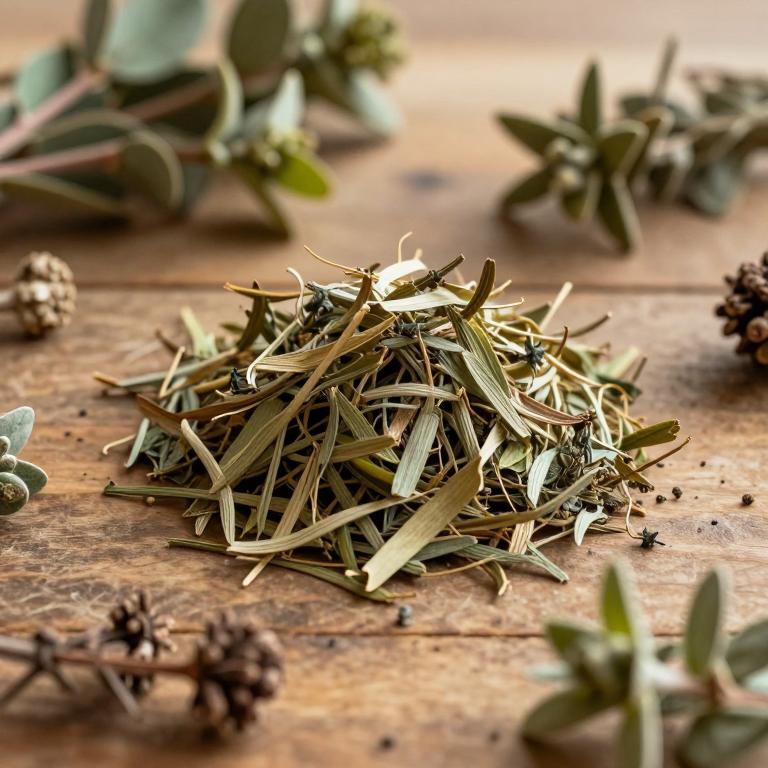
Names and Synonyms
Scientific Names
Accepted name
Croton cajucaraSynonyms
- Oxydectes cajucara
- Croton motilonorum
- Croton seputubensis
Regional and Traditional Names
French:
- Oxydectes cajucara
Sources: Wikidata, Catalogue of Life
Taxonomical Classification
This plant belongs to the kingdom Plantae and is classified within the phylum Streptophyta and the class Equisetopsida. As a member of the subclass Magnoliidae and the order Malpighiales, it is further categorized under the family Euphorbiaceae. Ultimately, its scientific designation is placed within the genus Croton.
| Rank | Classification |
|---|---|
| Kingdom | Plantae |
| Phylum | Streptophyta |
| Class | Equisetopsida |
| Subclass | Magnoliidae |
| Order | Malpighiales |
| Family | Euphorbiaceae |
| Genus | Croton |
Sources: The World Checklist of Vascular Plants (WCVP)
Distribution
This plant exhibits a broad distribution across several distinct regions of the South American continent. In Northern South America, its presence is documented in both Suriname and Venezuela. The species also extends into Western South America, specifically inhabiting parts of Bolivia and Peru. Furthermore, its range includes the West-Central region of Brazil. Together, these locations highlight the diverse environmental settings where Croton cajucara can be found.
| Region | Area |
|---|---|
| Northern South America | Suriname |
| Northern South America | Venezuela |
| Western South America | Bolivia |
| Western South America | Peru |
| Brazil | Brazil West-Central |
| Brazil | Brazil Northeast |
| Brazil | Brazil North |
Sources: The World Checklist of Vascular Plants (WCVP)
Botanical Identification
Ecology
The ecology of Croton cajucara is characterized by its ability to thrive across diverse environmental settings, ranging from highly modified landscapes to pristine natural ecosystems. It is commonly found in anthropized areas, where it demonstrates resilience to human-induced environmental changes. Furthermore, the species occupies critical forest niches, including coastal or riparian Atlantic forests (Floresta Ciliar ou Galeria) and stable inland forest environments (Floresta de Terra Firme). This broad distributional range across different forest structures and disturbed habitats suggests a versatile ecological strategy that allows it to persist in both stable climax communities and more transitional or disturbed landscapes.
- Habitat :
- Área Antrópica, Floresta Ciliar ou Galeria, Floresta de Terra Firme
Life history
The life history of Croton cajucarua is characterized by its status as a perennial plant, allowing it to persist in its ecosystem through multiple growing seasons. In terms of its structural growth strategy, the species is classified as a phanerophyte, specifically exhibiting characteristics of both phanerophyte and nanophanerophyte life forms, which indicates that its perennating buds are located on aerial shoots well above the soil surface. This growth habit enables the plant to maintain a stable presence in its habitat over long durations, utilizing its elevated bud positions to survive seasonal variations and environmental shifts.
- Life form :
- phanerophyte
- Lifecycle :
- perennial
Morphology
The morphology of Croton cajucara is characterized by a woody growth form, functioning as a self-supporting tree that reaches an average height of 5 m, with a maximum potential height of up to 7 m. As a terrestrial species, it does not exhibit aquatic or semiaquatic tendencies, nor does it function as an epiphyte, remaining strictly terrestrial in its habitat. The plant is an independent organism, lacking any parasitic life strategy, and maintains a self-supporting structure rather than growing as a liana or vine.
- Aquatic :
- terrestrial
- Climber :
- self-supporting
- Epiphyte :
- terrestrial
- Growth form :
- tree
- Parasite :
- independent
- Plant height max:
- 7 m
- Plant height mean:
- 5 m
- Woodiness :
- woody
Physiology
The physiology of Croton cajucaru is characterized by its metabolic processes and nutrient acquisition strategies typical of many species within the Euphorbiaceae family. In terms of its symbiotic relationships and nutrient cycling, the plant is not a nitrogen fixer, meaning it lacks the specialized root nodules containing nitrogen-fixing bacteria required to convert atmospheric nitrogen into a usable form for growth. Instead, it relies on the absorption of nitrates and ammonium from the soil through its root system to support its vegetative development and the synthesis of secondary metabolites. Its physiological processes involve efficient photosynthesis and water regulation to thrive in its native ecological niches, utilizing various biochemical pathways to produce the bioactive compounds that define its medicinal properties.
- Nitrogen fixer :
- no
Sources: Global Inventory of Floras and Traits (GIFT)
Plant Parts
Croton cajucara has 1 reported plant parts identified across 1 scientific publications and several other databases that are studied for medicinal purposes. The most consistently reported plant part include stem.
| Plant part | Supporting sources | Consensus |
|---|---|---|
| Stem | 1 supporting sources | ★☆☆☆☆ |
Stem
- Journal of ethnopharmacology
Chemicals
Croton cajucara has 21 reported phytochemicals identified across 1 scientific publications and several other databases. The most consistently reported chemicals include trans-Dehydrocrotonin, Dehydrocrotonin, Diterpene, ARABINOGALACTAN, Arabinan.
| Chemical | Supporting sources | Consensus |
|---|---|---|
| trans-Dehydrocrotonin | 6 supporting sources | ★★★☆☆ |
| Dehydrocrotonin | 3 supporting sources | ★★☆☆☆ |
| Diterpene | 2 supporting sources | ★☆☆☆☆ |
| ARABINOGALACTAN | 1 supporting sources | ★☆☆☆☆ |
| Arabinan | 1 supporting sources | ★☆☆☆☆ |
| BETA-SITOSTEROL | 1 supporting sources | ★☆☆☆☆ |
| Cajucarin A | 1 supporting sources | ★☆☆☆☆ |
| Cajucarinolide | 1 supporting sources | ★☆☆☆☆ |
| DHC | 1 supporting sources | ★☆☆☆☆ |
| Galacturonic acid | 1 supporting sources | ★☆☆☆☆ |
trans-Dehydrocrotonin
- Planta medica
- Teratogenesis, carcinogenesis, and mutagenesis
- Vascular pharmacology
- Leukemia research
- Diabetes, obesity & metabolism
View 1 additional sources
- Mutation research
Dehydrocrotonin
- Leukemia research
- Planta medica
- Human & experimental toxicology
Diterpene
- Vascular pharmacology
- Planta medica
ARABINOGALACTAN
- International journal of biological macromolecules
Arabinan
- International journal of biological macromolecules
BETA-SITOSTEROL
- Journal of ethnopharmacology
Cajucarin A
- Journal of ethnopharmacology
Cajucarinolide
- Journal of ethnopharmacology
DHC
- Planta medica
Galacturonic acid
- International journal of biological macromolecules
Activities
Croton cajucara has 9 reported activities identified across 1 scientific publications and several other databases. The most consistently reported activities include Antinociceptive, Antiulcerogenic, Apoptotic, Clastogenic, Cytotoxic.
| Activity | Supporting sources | Consensus |
|---|---|---|
| Antinociceptive | 2 supporting sources | ★☆☆☆☆ |
| Antiulcerogenic | 1 supporting sources | ★☆☆☆☆ |
| Apoptotic | 1 supporting sources | ★☆☆☆☆ |
| Clastogenic | 1 supporting sources | ★☆☆☆☆ |
| Cytotoxic | 1 supporting sources | ★☆☆☆☆ |
| Gastroprotective | 1 supporting sources | ★☆☆☆☆ |
| Genotoxic | 1 supporting sources | ★☆☆☆☆ |
| Hypoglycemic | 1 supporting sources | ★☆☆☆☆ |
| Hypolipidemic | 1 supporting sources | ★☆☆☆☆ |
Antinociceptive
- Journal of ethnopharmacology
- Planta medica
Antiulcerogenic
- Planta medica
Apoptotic
- Mutation research
Clastogenic
- Mutation research
Cytotoxic
- Mutation research
Gastroprotective
- Vascular pharmacology
Genotoxic
- Teratogenesis, carcinogenesis, and mutagenesis
Hypoglycemic
- Vascular pharmacology
Hypolipidemic
- Vascular pharmacology
Conditions
Croton cajucara has 9 reported investigations on conditions identified across 1 scientific publications and several other databases. The most consistently reported conditions include DNA damage, Sarcoma 180, apoptosis, gastric ulcer, gastric ulcers.
| Condition | Supporting sources | Consensus |
|---|---|---|
| Dna damage | 1 supporting sources | ★☆☆☆☆ |
| Sarcoma 180 | 1 supporting sources | ★☆☆☆☆ |
| Apoptosis | 1 supporting sources | ★☆☆☆☆ |
| Gastric ulcer | 1 supporting sources | ★☆☆☆☆ |
| Gastric ulcers | 1 supporting sources | ★☆☆☆☆ |
| Gastrointestinal disorders | 1 supporting sources | ★☆☆☆☆ |
| Hypoglycemic | 1 supporting sources | ★☆☆☆☆ |
| Inflammation | 1 supporting sources | ★☆☆☆☆ |
| Liver diseases | 1 supporting sources | ★☆☆☆☆ |
Dna damage
- Mutation research
Sarcoma 180
- Planta medica
Apoptosis
- Mutation research
Gastric ulcer
- Planta medica
Gastric ulcers
- International journal of biological macromolecules
Gastrointestinal disorders
- Planta medica
Hypoglycemic
- Vascular pharmacology
Inflammation
- Journal of pharmaceutical and biomedical analysis
Liver diseases
- Revista da Sociedade Brasileira de Medicina Tropical
Preparations
Croton cajucara has 4 reported preparations identified across 1 scientific publications and several other databases. The most consistently reported preparations include bark, bark extracts, leaves, stem bark.
| Preparation | Supporting sources | Consensus |
|---|---|---|
| Bark | 1 supporting sources | ★☆☆☆☆ |
| Bark extracts | 1 supporting sources | ★☆☆☆☆ |
| Leaves | 1 supporting sources | ★☆☆☆☆ |
| Stem bark | 1 supporting sources | ★☆☆☆☆ |
Bark
- Planta medica
Bark extracts
- Teratogenesis, carcinogenesis, and mutagenesis
Leaves
- Journal of ethnopharmacology
Stem bark
- Journal of ethnopharmacology