Rush Foil
Croton bonplandianus · Accepted scientific name
Scientific literature: Very Sparse (12 studies) · ★☆☆☆☆
Rush Foil, scientifically known as Croton bonplandianus, is a versatile medicinal shrub widely utilized in traditional Ayurvedic medicine. Renowned for its potent anti-inflammatory, antimicrobial, and antioxidant properties, this plant is frequently employed to treat skin ailments, digestive issues, and respiratory conditions, offering significant therapeutic potential in natural pharmacology.
- Family
- Euphorbiaceae
- Native range
- Africa
- Parts used
- Not available
- Common names
- Bonpland'S Croton
- Scientific synonyms
- Oxydectes Bonplandiana · Oxydectes Pauperula · 5 more
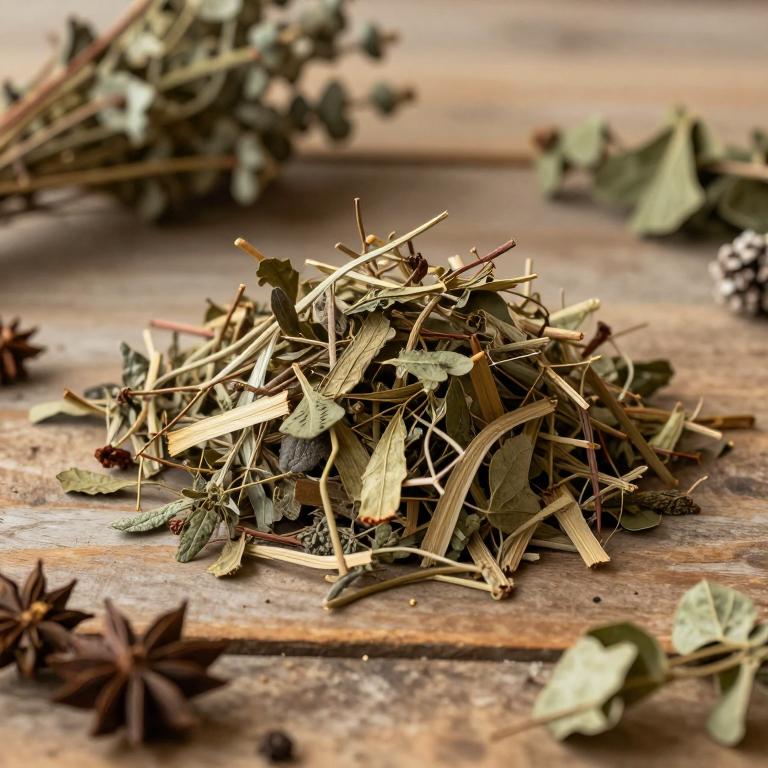
Names and Synonyms
Common Names
- Bonpland's croton
Scientific Names
Accepted name
Croton bonplandianusSynonyms
- Oxydectes bonplandiana
- Oxydectes pauperula
- Croton nivifer
- Oxydectes sparsiflora
- Croton pauperulus
- Croton rivinoides
- Croton sparsiflorus
Regional and Traditional Names
French:
- Croton pauperulus
- Croton rivinoides
- Croton sparsiflorus
- Oxydectes bonplandiana
- Oxydectes pauperula
- Oxydectes sparsiflora
Sources: Wikidata, Catalogue of Life
Taxonomical Classification
This plant belongs to the kingdom Plantae within the phylum Streptophyta and the class Equisetopsida. It is further classified under the subclass Magnoliidae and the order Malpighiales. Finally, it is a member of the family Euphorbiaceae and falls under the genus Croton.
| Rank | Classification |
|---|---|
| Kingdom | Plantae |
| Phylum | Streptophyta |
| Class | Equisetopsida |
| Subclass | Magnoliidae |
| Order | Malpighiales |
| Family | Euphorbiaceae |
| Genus | Croton |
Sources: The World Checklist of Vascular Plants (WCVP)
Distribution
This plant exhibits a specific geographical distribution across several regions in Africa and the Indian Ocean. In East Tropical Africa, it can be found within the borders of Kenya. Its presence extends significantly into the Western Indian Ocean, where it inhabits the island nation of Comoros. Additionally, the species is documented across multiple islands in this ocean, including Mauritius and Réunion. Finally, the plant's range also reaches the island of Rodrigues.
| Region | Area |
|---|---|
| East Tropical Africa | Kenya |
| Western Indian Ocean | Comoros |
| Western Indian Ocean | Mauritius |
| Western Indian Ocean | Réunion |
| Western Indian Ocean | Rodrigues |
| Arabian Peninsula | Gulf States |
| Eastern Asia | Taiwan |
| Indian Subcontinent | Assam |
| Indian Subcontinent | Bangladesh |
| Indian Subcontinent | East Himalaya |
Sources: The World Checklist of Vascular Plants (WCVP)
Botanical Identification
Ecology
The ecology of Croton bonplandianus is characterized by its adaptability to diverse topographical settings and specific Brazilian biomes. It thrives within the habitats of Cerrado (latu sensu) and Floresta Estacional Semidecidual, indicating a preference for seasonal tropical environments. The species exhibits a broad altitudinal distribution, ranging from sea level at its minimum elevation of 0 m AMSL to a maximum of 500 m AMSL, though it maintains a significant mean elevational range of approximately 1300 m AMSL across its broader ecological footprint.
- Elevational range max:
- 500 m AMSL
- Elevational range mean:
- 1300 m AMSL
- Elevational range min:
- 0 m AMSL
- Habitat :
- Cerrado (lato sensu), Floresta Estacional Semidecidual
Life history
The life history of Croton bonplandianus is characterized by a flexible and resilient developmental strategy, manifesting as a variable lifecycle that can function as an annual, biennial, or perennial species depending on environmental conditions. In terms of its structural life form, the plant exhibits dual ecological classifications; it primarily operates as a therophyte, completing its life cycle via seeds that allow it to persist through unfavorable periods, while also displaying traits of a chamaephyte, where its buds are located close to the soil surface. This combination of life forms enables the plant to adapt to diverse habitats, ensuring survival through rapid seasonal growth and efficient reproductive cycles.
- Life form :
- chamaephyte
- Life form :
- therophyte
- Lifecycle :
- perennial
Morphology
The morphology of Croton bonplandianus is characterized by its growth form as a non-woody herb, typically presenting as a self-supporting plant rather than a climber, liana, or vine. It functions as an independent organism, lacking any parasitic or epiphytic tendencies, and is strictly terrestrial in its habitat rather than aquatic or semiaquatic. The plant maintains a relatively low stature, with a minimum height of 0.69 m and reaching a maximum height of approximately 1 m. As a non-woody herb, its structure is defined by these compact dimensions and its ability to remain upright without external support.
- Aquatic :
- terrestrial
- Climber :
- self-supporting
- Epiphyte :
- terrestrial
- Growth form :
- herb
- Parasite :
- independent
- Plant height max:
- 1 m
- Plant height min:
- 0.69 m
- Woodiness :
- non-woody
Sources: Global Inventory of Floras and Traits (GIFT)
Activities
Croton bonplandianus has 2 reported activities identified across 0 scientific publications and several other databases. The most consistently reported activities include Antimicrobial, Antioxidant.
| Activity | Supporting sources | Consensus |
|---|---|---|
| Antimicrobial | 1 supporting sources | ★☆☆☆☆ |
| Antioxidant | 1 supporting sources | ★☆☆☆☆ |
Antimicrobial
- Pakistan journal of pharmaceutical sciences
Antioxidant
- Pakistan journal of pharmaceutical sciences
Conditions
Croton bonplandianus has 10 reported investigations on conditions identified across 0 scientific publications and several other databases. The most consistently reported conditions include Bacillus subtilis, Escherichia coli, Staphylococcus aureus, anti-oxidant, cancer.
| Condition | Supporting sources | Consensus |
|---|---|---|
| Bacillus subtilis | 1 supporting sources | ★☆☆☆☆ |
| Escherichia coli | 1 supporting sources | ★☆☆☆☆ |
| Staphylococcus aureus | 1 supporting sources | ★☆☆☆☆ |
| Anti-oxidant | 1 supporting sources | ★☆☆☆☆ |
| Cancer | 1 supporting sources | ★☆☆☆☆ |
| Hemolysis | 1 supporting sources | ★☆☆☆☆ |
| Malaria | 1 supporting sources | ★☆☆☆☆ |
| Obesity | 1 supporting sources | ★☆☆☆☆ |
| Skin diseases | 1 supporting sources | ★☆☆☆☆ |
| Ulcers | 1 supporting sources | ★☆☆☆☆ |
Bacillus subtilis
- Pakistan journal of pharmaceutical sciences
Escherichia coli
- Pakistan journal of pharmaceutical sciences
Staphylococcus aureus
- Pakistan journal of pharmaceutical sciences
Anti-oxidant
- Pakistan journal of pharmaceutical sciences
Cancer
- Microscopy research and technique
Hemolysis
- Pakistan journal of pharmaceutical sciences
Malaria
- Microscopy research and technique
Obesity
- Microscopy research and technique
Skin diseases
- Microscopy research and technique
Ulcers
- Microscopy research and technique
Preparations
Croton bonplandianus has 1 reported preparations identified across 0 scientific publications and several other databases. The most consistently reported preparations include n-hexane soluble fraction.
| Preparation | Supporting sources | Consensus |
|---|---|---|
| N-hexane soluble fraction | 1 supporting sources | ★☆☆☆☆ |
N-hexane soluble fraction
- Journal of Asian natural products research