slender leaf rattlebox
Crotalaria ochroleuca · Accepted scientific name
Scientific literature: Very Sparse (3 studies) · ★☆☆☆☆
Slender leaf rattlebox, scientifically known as Crotalaria ochroleuca, is a vibrant perennial herb celebrated for its striking yellow blooms. Native to various tropical regions, this medicinal plant is valued in traditional healing practices for its diverse bioactive properties, offering potential therapeutic benefits in managing various inflammatory and systemic conditions.
- Family
- Fabaceae
- Native range
- Africa
- Parts used
- Not available
- Common names
- Slender Leaf Rattlebox
- Scientific synonyms
- Crotalaria Cannabina
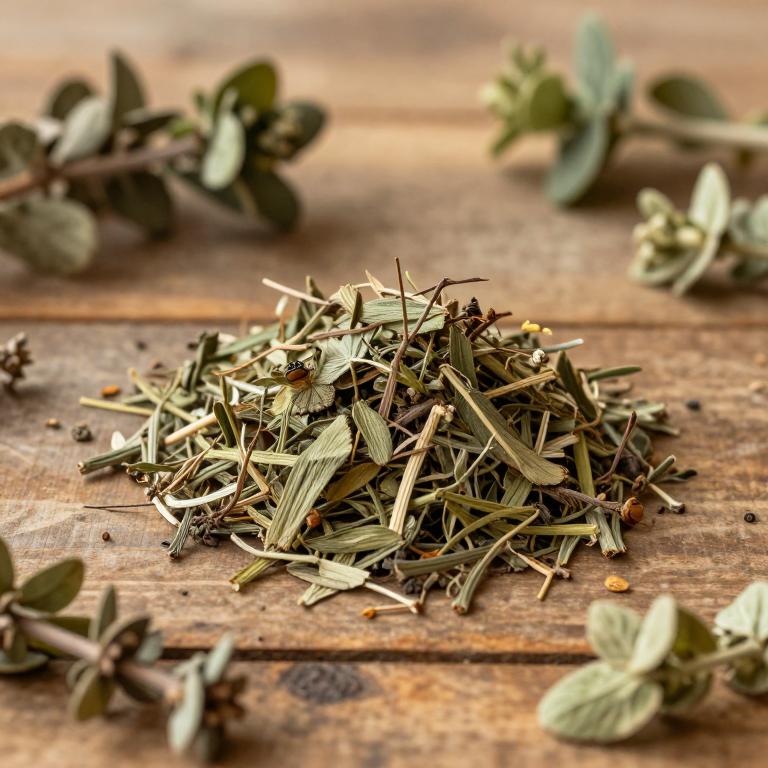
Names and Synonyms
Common Names
- slender leaf rattlebox
Scientific Names
Accepted name
Crotalaria ochroleucaSynonyms
- Crotalaria cannabina
Sources: Wikidata, Catalogue of Life
Taxonomical Classification
This plant belongs to the kingdom Plantae and the phylum Streptophyta, falling under the class Equisetopsida and subclass Magnoliidae. It is classified within the order Fabales and the family Fabaceae. Ultimately, its taxonomic identity is defined by its placement in the genus Crotalaria.
| Rank | Classification |
|---|---|
| Kingdom | Plantae |
| Phylum | Streptophyta |
| Class | Equisetopsida |
| Subclass | Magnoliidae |
| Order | Fabales |
| Family | Fabaceae |
| Genus | Crotalaria |
Sources: The World Checklist of Vascular Plants (WCVP)
Distribution
This plant is primarily distributed throughout the West Tropical Africa region. Its presence is specifically documented within the borders of Benin. Furthermore, it can be found growing across the landscape of Burkina. The species also inhabits various areas within Ghana. Finally, its geographical range extends to Guinea and Guinea-Bissau.
| Region | Area |
|---|---|
| West Tropical Africa | Benin |
| West Tropical Africa | Burkina |
| West Tropical Africa | Ghana |
| West Tropical Africa | Guinea-Bissau |
| West Tropical Africa | Guinea |
| West Tropical Africa | Ivory Coast |
| West Tropical Africa | Liberia |
| West Tropical Africa | Mali |
| West Tropical Africa | Nigeria |
| West Tropical Africa | Niger |
Sources: The World Checklist of Vascular Plants (WCVP)
Botanical Identification
Ecology
The ecology of Crotalaria ochroleuca is characterized by its ability to inhabit anthropized areas (Área Antrópica), where it often thrives in landscapes modified by human activity. This species occupies a specific altitudinal gradient, ranging from a minimum elevation of 183 m AMSL to a maximum elevation of 1067 m AMSL. This vertical distribution suggests an adaptability to diverse topographic conditions within its preferred environmental niches.
- Elevational range max:
- 1067 m AMSL
- Elevational range min:
- 183 m AMSL
- Habitat :
- Área Antrópica
Life history
The life history of Crotalaria ochroleuca is characterized by an annual lifecycle, completing its entire developmental process from germination to seed production within a single growing season. As a therophyte, the plant maintains its life strategy by surviving unfavorable conditions in the form of resistant seeds, which remain dormant in the soil until environmental triggers facilitate emergence. This life form dictates its ecological pattern, as the individual plant avoids the physiological stress of seasonal extremes by existing primarily in its vegetative and reproductive stages during optimal periods before returning to a seed state.
- Life form :
- therophyte
- Lifecycle :
- annual
Morphology
The morphology of Crotalaria ochroleuca is characterized by its growth form as a non-woody herb and forb, exhibiting a self-supporting structure rather than acting as a liana, vine, or obligatory climber. As a terrestrial species, it does not function as an epiphyte or an aquatic plant, and it maintains an independent lifestyle without parasitic tendencies. The plant's stature varies significantly depending on environmental conditions, with a minimum height of 0.5 m, a maximum height of approximately 2.13 m, and a mean plant height of 2.15 m.
- Aquatic :
- terrestrial
- Climber :
- self-supporting
- Epiphyte :
- terrestrial
- Growth form :
- herb
- Growth form :
- forb
- Parasite :
- independent
- Plant height max:
- 2.133625945 m
- Plant height mean:
- 2.15 m
- Plant height min:
- 0.5 m
- Woodiness :
- non-woody
Physiology
The physiology of Crotalaria ochroleuca is characterized by a C3 photosynthetic pathway, which involves the direct fixation of carbon dioxide through the Calvin cycle within the mesophyll cells. Despite belonging to the Fabaceae family, which is frequently associated with symbiotic relationships, this specific species is categorized as a non-nitrogen fixer (no), meaning it does not possess the physiological mechanism to convert atmospheric nitrogen into a usable form for its own growth.
- Nitrogen fixer :
- no
- Photosynthetic pathway :
- C3
Reproduction
The reproduction of Crotalaria ochroleuca is characterized by a specific phenological cycle where both the flowering and fruiting periods are observed to commence in April, with the duration of these stages remaining variable throughout the year. The plant produces fruit in the form of a pod, which is classified as a dehiscent structure, meaning it opens at maturity to release its contents. The seeds produced are quite small, with a mean seed mass of approximately 0.004753333 g; individual seed weights fluctuate within a narrow range, with a minimum mass of 0.0039 g and a maximum mass of 0.00563 g.
- Dehiscence :
- dehiscent
- Flowering time :
- Apr
- Fruit type :
- pod
- Fruiting time :
- Apr
- Seed mass max:
- 0.00563 g
- Seed mass mean:
- 0.004753333 g
- Seed mass min:
- 0.0039 g
Sources: Global Inventory of Floras and Traits (GIFT)
Chemicals
Crotalaria ochroleuca has 2 reported phytochemicals identified across 0 scientific publications and several other databases. The most consistently reported chemicals include GA3, PEG.
| Chemical | Supporting sources | Consensus |
|---|---|---|
| GA3 | 1 supporting sources | ★☆☆☆☆ |
| PEG | 1 supporting sources | ★☆☆☆☆ |
GA3
- Brazilian journal of biology = Revista brasleira de biologia
PEG
- Brazilian journal of biology = Revista brasleira de biologia