birdflower
Crotalaria agatiflora · Accepted scientific name
Scientific literature: Very Sparse (7 studies) · ★☆☆☆☆
Birdflower, scientifically known as Crotalaria agatiflora, is a distinctive medicinal plant native to tropical regions. Renowned for its unique, avian-shaped blossoms, this species is valued in traditional medicine for its diverse therapeutic properties. It serves as a fascinating subject for both ethnobotanical study and ecological conservation efforts.
- Family
- Fabaceae
- Native range
- Africa
- Parts used
- Leaf
- Common names
- Birdflower · Canarybird-Bush · 1 more
- Scientific synonyms
- Not available
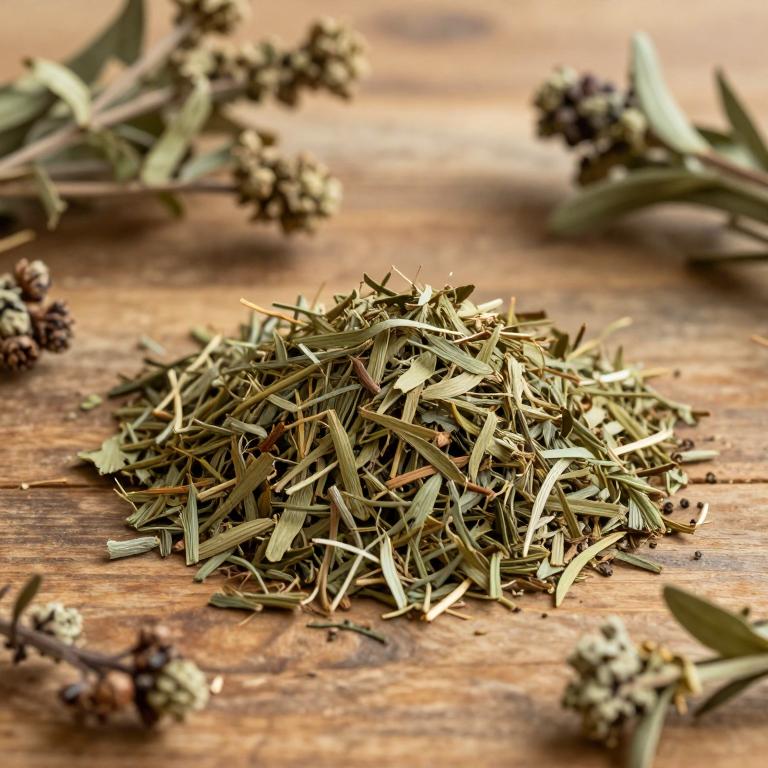
Names and Synonyms
Common Names
- birdflower
- canarybird-bush
- Canary bird bush
Scientific Names
Accepted name
Crotalaria agatifloraRegional and Traditional Names
German:
- Vogelblume
Sources: Wikidata, Catalogue of Life
Taxonomical Classification
This plant belongs to the kingdom Plantae and the phylum Streptophyta, situated within the class Equisetopsida and subclass Magnoliidae. It is further classified under the order Fabales and the family Fabaceae. Ultimately, it is identified as a member of the genus Crotalaria.
| Rank | Classification |
|---|---|
| Kingdom | Plantae |
| Phylum | Streptophyta |
| Class | Equisetopsida |
| Subclass | Magnoliidae |
| Order | Fabales |
| Family | Fabaceae |
| Genus | Crotalaria |
Sources: The World Checklist of Vascular Plants (WCVP)
Distribution
This plant exhibits a wide geographical distribution across several distinct regions of the African continent. In West-Central Tropical Africa, its presence is documented in Burundi, Rwanda, and the Democratic Republic of the Congo. Moving toward the northeast, the species can also be found within the borders of Ethiopia. Additionally, it extends into East Tropical Africa, specifically appearing in Kenya. Together, these locations highlight the plant's ability to thrive in diverse tropical environments.
| Region | Area |
|---|---|
| West-Central Tropical Africa | Burundi |
| West-Central Tropical Africa | Rwanda |
| West-Central Tropical Africa | DR Congo |
| Northeast Tropical Africa | Ethiopia |
| East Tropical Africa | Kenya |
| East Tropical Africa | Tanzania |
| East Tropical Africa | Uganda |
| South Tropical Africa | Malawi |
| South Tropical Africa | Mozambique |
| South Tropical Africa | Zimbabwe |
Sources: The World Checklist of Vascular Plants (WCVP)
Botanical Identification
Ecology
The ecology of Crotalaria agatiflora is characterized by its presence in lowland habitats, where it occupies a specific altitudinal niche. This species thrives within an elevational range that extends from a minimum of 2600 m AMSL to a maximum of 2820 m AMSL. Furthermore, the plant maintains a symbiotic relationship with mycorrhizae, utilizing these fungal associations to support its nutrient uptake and growth within its ecological environment.
- Elevational range max:
- 2820 m AMSL
- Elevational range min:
- 2600 m AMSL
- Habitat :
- Lowland
- Mycorrhiza :
- yes
Life history
The life history of Crotalaria agatiflora is characterized by a perennial lifecycle, allowing the plant to persist through multiple growing seasons. Structurally, it is classified as a chamaephyte, a life form where the regenerative buds are located close to the soil surface, typically just above ground level. This species maintains an evergreen deciduousness, retaining its foliage throughout its development rather than shedding it seasonally.
- Deciduousness :
- evergreen
- Life form :
- chamaephyte
- Lifecycle :
- perennial
Morphology
The morphology of Crotalaria agatiflora is characterized by its growth form as a woody shrub, exhibiting a self-supporting structure rather than functioning as a climber or liana. This terrestrial plant maintains an independent existence, as it is neither an epiphyte nor a parasite. In terms of stature, the plant displays significant variability in height, ranging from a minimum of 0.05 m to a maximum of 2 m, with an average plant height of approximately 2.25 m.
- Aquatic :
- terrestrial
- Climber :
- self-supporting
- Epiphyte :
- terrestrial
- Growth form :
- shrub
- Parasite :
- independent
- Plant height max:
- 2 m
- Plant height mean:
- 2.25 m
- Plant height min:
- 0.05 m
- Woodiness :
- woody
Physiology
The physiology of Crotalaria agatiflora is characterized by a C3 photosynthetic pathway, which dictates its carbon fixation processes and metabolic efficiency. The plant's vegetative structure features leaves that exhibit significant morphological variability, with leaf lengths ranging from a minimum of 1 cm to a maximum of 12 cm, and leaf widths spanning from 1 cm to 3.5 cm. Furthermore, the species functions as a nitrogen fixer, utilizing symbiotic relationships to convert atmospheric nitrogen into a usable form, thereby enhancing its nutrient uptake and contributing to soil fertility.
- Leaf length max:
- 12 cm
- Leaf length min:
- 1 cm
- Leaf width max:
- 3.5 cm
- Leaf width min:
- 1 cm
- Nitrogen fixer :
- yes
- Photosynthetic pathway :
- C3
Reproduction
The reproduction of Crotalaria agatiflora is characterized by a reliance on sexual processes, as asexual reproduction is absent. The plant utilizes a biotic pollination syndrome, specifically mediated by insects, to facilitate fertilization. Following successful pollination, the plant develops fruits in the form of pods, which reach an average length of 8 cm. These fruits are dehiscent, meaning they split open at maturity to release the seeds. The seeds themselves are remarkably uniform in size, with a consistent mean length of 6 mm (ranging from a minimum to a maximum of 6 mm) and a stable mean mass of 0.02715 g. Regarding the movement of offspring, the species employs an unspecialized dispersal syndrome, lacking highly specific mechanisms for transport.
- Dehiscence :
- dehiscent
- Dispersal syndrome :
- unspecialized
- Fruit length mean:
- 8 cm
- Fruit type :
- pod
- Pollination syndrome :
- insect
- Pollination syndrome :
- biotic
- Reproduction asexual :
- absent
- Seed length mean:
- 6 mm
- Seed mass mean:
- 0.02715 g
Sources: Global Inventory of Floras and Traits (GIFT)
Plant Parts
Crotalaria agatiflora has 1 reported plant parts identified across 2 scientific publications and several other databases that are studied for medicinal purposes. The most consistently reported plant part include leaf.
| Plant part | Supporting sources | Consensus |
|---|---|---|
| Leaf | 2 supporting sources | ★☆☆☆☆ |
Leaf
- Spectrochimica acta. Part A, Molecular and biomolecular spectroscopy
- Journal of ethnopharmacology
Chemicals
Crotalaria agatiflora has 3 reported phytochemicals identified across 2 scientific publications and several other databases. The most consistently reported chemicals include Madurensine, Doronenine, Pyrrolizidine alkaloid.
| Chemical | Supporting sources | Consensus |
|---|---|---|
| Madurensine | 2 supporting sources | ★☆☆☆☆ |
| Doronenine | 1 supporting sources | ★☆☆☆☆ |
| Pyrrolizidine alkaloid | 1 supporting sources | ★☆☆☆☆ |
Madurensine
- Spectrochimica acta. Part A, Molecular and biomolecular spectroscopy
- Journal of ethnopharmacology
Doronenine
- Journal of ethnopharmacology
Pyrrolizidine alkaloid
- Spectrochimica acta. Part A, Molecular and biomolecular spectroscopy
Conditions
Crotalaria agatiflora has 1 reported investigations on conditions identified across 2 scientific publications and several other databases. The most consistently reported conditions include cancer.
| Condition | Supporting sources | Consensus |
|---|---|---|
| Cancer | 1 supporting sources | ★☆☆☆☆ |
Cancer
- Journal of ethnopharmacology
Preparations
Crotalaria agatiflora has 4 reported preparations identified across 2 scientific publications and several other databases. The most consistently reported preparations include Water and ethanol extracts of the leaves, ethanol extract, ethanolic extract, ethanolic extract of the leaves.
| Preparation | Supporting sources | Consensus |
|---|---|---|
| Water and ethanol extracts of the leaves | 1 supporting sources | ★☆☆☆☆ |
| Ethanol extract | 1 supporting sources | ★☆☆☆☆ |
| Ethanolic extract | 1 supporting sources | ★☆☆☆☆ |
| Ethanolic extract of the leaves | 1 supporting sources | ★☆☆☆☆ |
Water and ethanol extracts of the leaves
- Journal of ethnopharmacology
Ethanol extract
- Journal of ethnopharmacology
Ethanolic extract
- Journal of ethnopharmacology
Ethanolic extract of the leaves
- Spectrochimica acta. Part A, Molecular and biomolecular spectroscopy