pink hawk’s-beard
Crepis rubra · Accepted scientific name
Scientific literature: Very Sparse (2 studies) · ★☆☆☆☆
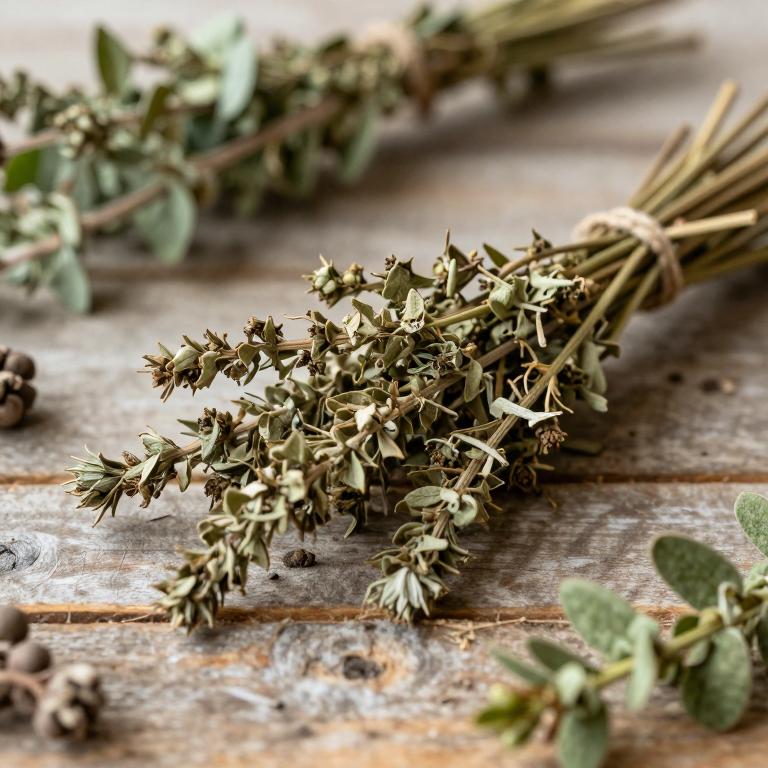
Pink hawk's-beard, scientifically known as Crepis rubra, is a striking perennial herb native to various temperate regions. Characterized by its vibrant reddish-pink flower heads and deeply lobed leaves, this plant plays a vital role in supporting local pollinators, offering a unique aesthetic and ecological value to diverse landscapes.
Names and Synonyms
Common Names
- Pink Hawk's-beard
- red hawk's-beard
- Hawk's Beard
Scientific Names
Accepted name
Crepis rubraSynonyms
- Anisoderis rubra
- Barkhausia rubra
- Picris rubra
- Hostia rubra
- Crepis rubra var. integrifolia
- Hieracium rubellum
- Hieracioides rubra
- Barkhausia auriculifolia
Regional and Traditional Names
German:
- roter Pippau
French:
- crépide rouge
Sources: Wikidata, Catalogue of Life
Taxonomical Classification
This plant belongs to the kingdom Plantae and is classified under the phylum Streptophyta and the class Equisetopsida. Within the subclass Magnoliidae and the order Asterales, it is further categorized into the family Asteraceae. Ultimately, the medicinal species is identified by its genus, Crepis.
| Rank | Classification |
|---|---|
| Kingdom | Plantae |
| Phylum | Streptophyta |
| Class | Equisetopsida |
| Subclass | Magnoliidae |
| Order | Asterales |
| Family | Asteraceae |
| Genus | Crepis |
Sources: The World Checklist of Vascular Plants (WCVP)
Distribution
This plant exhibits a broad distribution across several regions of the European continent. In Northern Europe, its presence can be documented in both Great Britain and Norway. Moving toward the center of the continent, it is also found throughout Middle Europe, specifically in Germany and Switzerland. Additionally, the species extends its range into Southwestern Europe, where it inhabits parts of France. Together, these locations highlight the varied ecological niches occupied by the species.
| Region | Area |
|---|---|
| Northern Europe | Great Britain |
| Northern Europe | Norway |
| Middle Europe | Germany |
| Middle Europe | Switzerland |
| Southwestern Europe | France |
| Southeastern Europe | Albania |
| Southeastern Europe | Bulgaria |
| Southeastern Europe | Greece |
| Southeastern Europe | Italy |
| Southeastern Europe | Kriti |
Sources: The World Checklist of Vascular Plants (WCVP)
Botanical Identification
Life history
The life history of Crepis rubra is characterized by an annual lifecycle, meaning the plant completes its entire developmental sequence—from germination to seed production—within a single growing season. In terms of its biological structure and survival strategy, it is classified as a therophyte, a life form where the plant survives the unfavorable season in the form of seeds. This strategy allows the species to persist in its environment by bypassing harsh conditions through a dormant seed stage, subsequently emerging as a small, ephemeral plant once favorable environmental conditions return.
- Life form :
- therophyte
- Lifecycle :
- annual
Morphology
The morphology of Crepis rubra is characterized by its growth form as a non-woody herb, specifically classified as a forb. It is a self-supporting plant that does not exhibit any climbing behavior, such as being a vine or liana, nor does it function as an obligatory or facultative climber. In terms of its ecological habitat and life strategy, it is a terrestrial species rather than being aquatic, semiaquatic, or an epiphyte. Furthermore, the plant is an independent organism, showing no parasitic tendencies, and maintains a strictly non-woody structure throughout its development.
- Aquatic :
- terrestrial
- Climber :
- self-supporting
- Epiphyte :
- terrestrial
- Growth form :
- herb
- Growth form :
- forb
- Parasite :
- independent
- Woodiness :
- non-woody
Reproduction
The reproduction of Crepis rubra is characterized by the production of specialized seeds that exhibit a highly uniform mass profile. Based on empirical data, the seed mass is remarkably consistent, with a mean value of 0.0015 g. This uniformity is reflected in the extreme narrowness of its distribution, as both the maximum and minimum recorded seed masses are identical at 0.0015 g. Such precise measurements indicate a highly standardized reproductive output per seed, ensuring a consistent physical profile for each individual unit produced during the plant's reproductive cycle.
- Seed mass mean:
- 0.0015 g
Sources: Global Inventory of Floras and Traits (GIFT)
Activities
Crepis rubra has 2 reported activities identified across 0 scientific publications and several other databases. The most consistently reported activities include Antioxidant, Hypolipidemic.
| Activity | Supporting sources | Consensus |
|---|---|---|
| Antioxidant | 1 supporting sources | ★☆☆☆☆ |
| Hypolipidemic | 1 supporting sources | ★☆☆☆☆ |
Antioxidant
- Molecules (Basel, Switzerland)
Hypolipidemic
- Molecules (Basel, Switzerland)