Cratoxylum sumatranum
Cratoxylum sumatranum · Accepted scientific name
Scientific literature: Very Sparse (27 studies) · ★☆☆☆☆
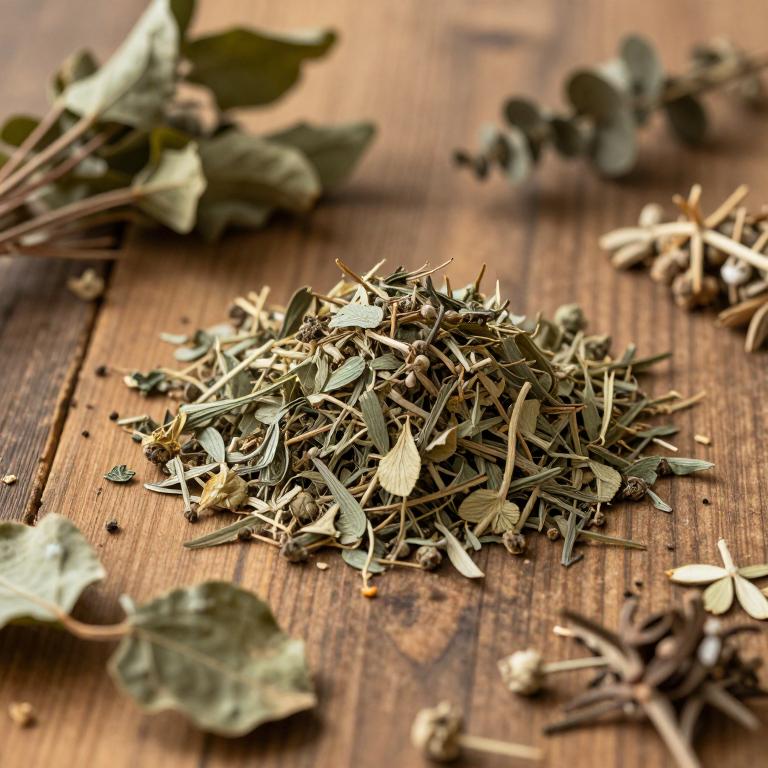
Cratoxylum sumatranum, scientifically known as Cratoxylum sumatranum, is a significant medicinal plant native to Southeast Asian rainforests. Renowned for its diverse pharmacological properties, various parts of this tree are traditionally used to treat inflammation, wounds, and digestive issues, offering promising potential for modern therapeutic research and drug development.
- Family
- Hypericaceae
- Native range
- Asia-Tropical
- Parts used
- Leaf · Stem
- Common names
- Not available
- Scientific synonyms
- Elodes Sumatrana
Names and Synonyms
Scientific Names
Accepted name
Cratoxylum sumatranumSynonyms
- Elodes sumatrana
Sources: Wikidata
Taxonomical Classification
This plant belongs to the kingdom Plantae and the phylum Streptophyta, falling under the class Equisetopsida and subclass Magnoliidae. Within the order Malpighiales, it is classified under the family Hypericaceae. Ultimately, it is identified by its genus, Cratoxylum.
| Rank | Classification |
|---|---|
| Kingdom | Plantae |
| Phylum | Streptophyta |
| Class | Equisetopsida |
| Subclass | Magnoliidae |
| Order | Malpighiales |
| Family | Hypericaceae |
| Genus | Cratoxylum |
Sources: The World Checklist of Vascular Plants (WCVP)
Distribution
This plant is widely distributed across the diverse landscapes of the Malesia botanical region. It can be found growing within the tropical forests of Borneo. Its presence extends to the island of Jawa, contributing to the local biodiversity. The species also inhabits the various islands of the Lesser Sunda archipelago. Finally, its geographical range includes the territories of Malaya and the Philippines.
| Region | Area |
|---|---|
| Malesia | Borneo |
| Malesia | Jawa |
| Malesia | Lesser Sunda Is. |
| Malesia | Malaya |
| Malesia | Philippines |
| Malesia | Sulawesi |
| Malesia | Sumatera |
Sources: The World Checklist of Vascular Plants (WCVP)
Botanical Identification
Life history
The life history of Cratoxylum sumatranum is characterized by its status as a perennial organism, allowing it to persist in its ecosystem over many years. Throughout its developmental stages, the plant exhibits a deciduous nature, undergoing seasonal shedding of its foliage as part of its physiological cycle.
- Deciduousness :
- deciduous
- Lifecycle :
- perennial
Morphology
The morphology of Cratoxylum sumatranum is characterized by its growth form as a woody tree. It exhibits a significant vertical dimension, with a documented mean plant height of 43 m and a maximum height reaching up to 12 m. In terms of its structural habit, the plant is categorized as a self-supporting organism, possessing a woody constitution that allows it to maintain its stature without the need for climbing mechanisms such as lianas or vines.
- Climber :
- self-supporting
- Growth form :
- tree
- Plant height max:
- 12 m
- Plant height mean:
- 43 m
- Woodiness :
- woody
Physiology
The physiology of Cratoxylum sumatranum is characterized by its specific metabolic and nutritional processes, primarily utilizing a C3 photosynthetic pathway for carbon fixation. This indicates that the plant fixes atmospheric carbon dioxide through the Calvin cycle, utilizing the enzyme RuBisCO to facilitate the conversion of CO2 into organic compounds, which is typical for many tropical woody species. In terms of nutrient acquisition, the plant does not function as a nitrogen fixer; it lacks the specialized symbiotic relationship with diazotrophic bacteria, such as Rhizobium, required to convert atmospheric nitrogen into bioavailable forms, and instead relies on the uptake of nitrates and ammonium from the soil through its root system.
- Nitrogen fixer :
- no
- Photosynthetic pathway :
- C3
Reproduction
The reproduction of Cratoxylum sumatranum is characterized by a biotic pollination syndrome, indicating a biological reliance on living organisms to facilitate the transfer of pollen. This reproductive process is primarily driven by insect pollination, involving a diverse array of animal vectors to ensure genetic exchange. Specifically, the plant utilizes a range of insect interactions, including involvement from bees, beetles, ants, butterflies, moths, and flies, which serve as the primary agents for successful fertilization.
- Pollination syndrome :
- insect
- Pollination syndrome :
- biotic
Sources: Global Inventory of Floras and Traits (GIFT)
Plant Parts
Cratoxylum sumatranum has 2 reported plant parts identified across 2 scientific publications and several other databases that are studied for medicinal purposes. The most consistently reported plant part include leaf, stem.
| Plant part | Supporting sources | Consensus |
|---|---|---|
| Leaf | 1 supporting sources | ★☆☆☆☆ |
| Stem | 1 supporting sources | ★☆☆☆☆ |
Leaf
- Journal of natural products
Stem
- Journal of natural products
Chemicals
Cratoxylum sumatranum has 10 reported phytochemicals identified across 2 scientific publications and several other databases. The most consistently reported chemicals include CRATOXYARBORENONE A, CRATOXYARBORENONE B, CRATOXYARBORENONE C, CRATOXYARBORENONE D, CRATOXYARBORENONE F.
| Chemical | Supporting sources | Consensus |
|---|---|---|
| CRATOXYARBORENONE A | 1 supporting sources | ★☆☆☆☆ |
| CRATOXYARBORENONE B | 1 supporting sources | ★☆☆☆☆ |
| CRATOXYARBORENONE C | 1 supporting sources | ★☆☆☆☆ |
| CRATOXYARBORENONE D | 1 supporting sources | ★☆☆☆☆ |
| CRATOXYARBORENONE F | 1 supporting sources | ★☆☆☆☆ |
| CRATOXYARBOREQUINONE B | 1 supporting sources | ★☆☆☆☆ |
| Cratoxyarborenone E | 1 supporting sources | ★☆☆☆☆ |
| Cratoxyarborequinone A | 1 supporting sources | ★☆☆☆☆ |
| VISMIONE B | 1 supporting sources | ★☆☆☆☆ |
| delta-Tocotrienol | 1 supporting sources | ★☆☆☆☆ |
CRATOXYARBORENONE A
- Journal of natural products
CRATOXYARBORENONE B
- Journal of natural products
CRATOXYARBORENONE C
- Journal of natural products
CRATOXYARBORENONE D
- Journal of natural products
CRATOXYARBORENONE F
- Journal of natural products
CRATOXYARBOREQUINONE B
- Journal of natural products
Cratoxyarborenone E
- Journal of natural products
Cratoxyarborequinone A
- Journal of natural products
VISMIONE B
- Journal of natural products
delta-Tocotrienol
- Journal of natural products