Sacred Garlic Pear
Crateva adansonii · Accepted scientific name
Scientific literature: Very Sparse (17 studies) · ★☆☆☆☆
Sacred Garlic Pear, scientifically known as Crateva adansonii, is a versatile medicinal shrub native to tropical Africa. Renowned for its distinct garlic-like aroma, this plant is widely utilized in traditional medicine to treat ailments ranging from digestive issues to respiratory infections, offering significant pharmacological potential for modern therapeutic research.
- Family
- Capparaceae
- Native range
- Africa
- Parts used
- Leaf
- Common names
- Sacred Garlic Pear
- Scientific synonyms
- Not available
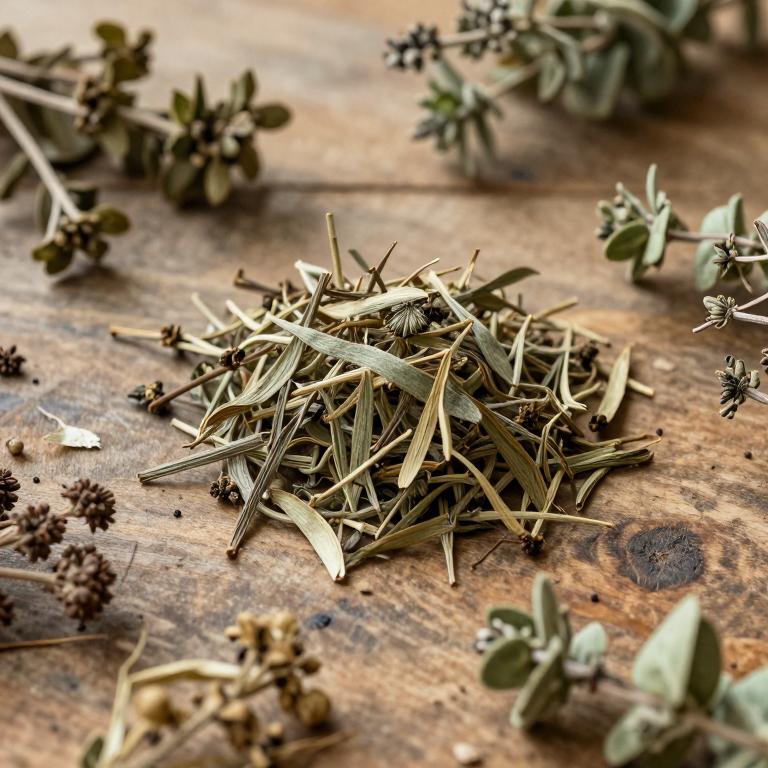
Names and Synonyms
Common Names
- Sacred Garlic Pear
Scientific Names
Accepted name
Crateva adansoniiSources: Wikidata, Catalogue of Life
Taxonomical Classification
This plant belongs to the kingdom Plantae and the phylum Streptophyta within the class Equisetopsida. Classified under the subclass Magnoliidae and the order Brassicales, it is a member of the family Capparaceae. Finally, its specific taxonomic placement is within the genus Crateva.
| Rank | Classification |
|---|---|
| Kingdom | Plantae |
| Phylum | Streptophyta |
| Class | Equisetopsida |
| Subclass | Magnoliidae |
| Order | Brassicales |
| Family | Capparaceae |
| Genus | Crateva |
Sources: The World Checklist of Vascular Plants (WCVP)
Distribution
This plant is primarily distributed throughout the West Tropical Africa region. Specifically, it can be found growing in the country of Benin. Its natural range also extends to Burkina and the Gambia. Additionally, the species is documented to occur within the borders of Ghana. Finally, its geographical presence includes the coastal nation of Guinea-Bissau.
| Region | Area |
|---|---|
| West Tropical Africa | Benin |
| West Tropical Africa | Burkina |
| West Tropical Africa | Gambia |
| West Tropical Africa | Ghana |
| West Tropical Africa | Guinea-Bissau |
| West Tropical Africa | Guinea |
| West Tropical Africa | Ivory Coast |
| West Tropical Africa | Mali |
| West Tropical Africa | Mauritania |
| West Tropical Africa | Nigeria |
Sources: The World Checklist of Vascular Plants (WCVP)
Botanical Identification
Life history
The life history of Crateva adansonii is characterized by its status as a perennial plant, ensuring its presence in the ecosystem across multiple growing seasons. As a phanerophyte, it maintains its photosynthetic organs at a significant height above the ground, typically growing as a woody shrub or small tree. This species exhibits a deciduous nature, shedding its foliage periodically as part of its seasonal physiological cycle. Its developmental strategy is defined by its phanerophyte life form, which allows it to establish a robust structural presence within its natural habitat.
- Deciduousness :
- deciduous
- Life form :
- phanerophyte
- Lifecycle :
- perennial
Morphology
The morphology of Crateva adansonii is characterized by its stature as a woody tree, reaching an average height of approximately 6 m. This species exhibits a terrestrial growth habit, functioning as an independent organism rather than an epiphyte or a parasite. Unlike climbing plants such as lianas or vines, it is a self-supporting structure that does not require external assistance for its upright growth.
- Aquatic :
- terrestrial
- Climber :
- self-supporting
- Epiphyte :
- terrestrial
- Growth form :
- tree
- Parasite :
- independent
- Plant height mean:
- 6 m
- Woodiness :
- woody
Physiology
The physiology of Craveva adansonii is characterized by a robust metabolic framework adapted to its specific environmental niches, primarily focusing on efficient photosynthetic pathways and nutrient assimilation. In terms of its nutrient cycling capabilities, the plant does not function as a nitrogen fixer; it lacks the symbiotic relationship with diazotrophic bacteria, such as Rhizobium, required to convert atmospheric nitrogen into bioavailable forms, meaning it relies entirely on the uptake of nitrates and ammonium from the soil substrate. Its physiological processes involve complex enzymatic activities that regulate transpiration and gas exchange to maintain cellular homeostasis. The plant manages its internal osmotic potential through controlled water movement across cell membranes, ensuring structural integrity and facilitating the transport of minerals and photosynthates through its vascular system. Furthermore, its secondary metabolic pathways are highly active, producing various bioactive compounds as physiological responses to environmental stressors and herbivory.
- Nitrogen fixer :
- no
Sources: Global Inventory of Floras and Traits (GIFT)
Plant Parts
Crateva adansonii has 1 reported plant parts identified across 1 scientific publications and several other databases that are studied for medicinal purposes. The most consistently reported plant part include leaf.
| Plant part | Supporting sources | Consensus |
|---|---|---|
| Leaf | 1 supporting sources | ★☆☆☆☆ |
Leaf
- Journal, genetic engineering & biotechnology
Chemicals
Crateva adansonii has 7 reported phytochemicals identified across 1 scientific publications and several other databases. The most consistently reported chemicals include Daucosterol, Flavonol, Lignans, Lupeol, Sesquiterpene Derivatives.
| Chemical | Supporting sources | Consensus |
|---|---|---|
| Daucosterol | 1 supporting sources | ★☆☆☆☆ |
| Flavonol | 1 supporting sources | ★☆☆☆☆ |
| Lignans | 1 supporting sources | ★☆☆☆☆ |
| Lupeol | 1 supporting sources | ★☆☆☆☆ |
| Sesquiterpene Derivatives | 1 supporting sources | ★☆☆☆☆ |
| kaempferol | 1 supporting sources | ★☆☆☆☆ |
| quercetin | 1 supporting sources | ★☆☆☆☆ |
Daucosterol
- Journal of ethnopharmacology
Flavonol
- Journal of ethnopharmacology
Lignans
- Journal of ethnopharmacology
Lupeol
- Journal, genetic engineering & biotechnology
Sesquiterpene Derivatives
- Journal of ethnopharmacology
kaempferol
- Journal of ethnopharmacology
quercetin
- Journal of ethnopharmacology
Activities
Crateva adansonii has 1 reported activities identified across 1 scientific publications and several other databases. The most consistently reported activities include Analgesic.
| Activity | Supporting sources | Consensus |
|---|---|---|
| Analgesic | 1 supporting sources | ★☆☆☆☆ |
Analgesic
- Journal, genetic engineering & biotechnology
Conditions
Crateva adansonii has 8 reported investigations on conditions identified across 1 scientific publications and several other databases. The most consistently reported conditions include COVID-19, asthma, breast cancer, cancers, constipation.
| Condition | Supporting sources | Consensus |
|---|---|---|
| Covid-19 | 1 supporting sources | ★☆☆☆☆ |
| Asthma | 1 supporting sources | ★☆☆☆☆ |
| Breast cancer | 1 supporting sources | ★☆☆☆☆ |
| Cancers | 1 supporting sources | ★☆☆☆☆ |
| Constipation | 1 supporting sources | ★☆☆☆☆ |
| Inflammation | 1 supporting sources | ★☆☆☆☆ |
| Snakebites | 1 supporting sources | ★☆☆☆☆ |
| Tumors | 1 supporting sources | ★☆☆☆☆ |
Covid-19
- Journal of ethnopharmacology
Asthma
- Journal of ethnopharmacology
Breast cancer
- Journal of ethnopharmacology
Cancers
- Journal of ethnopharmacology
Constipation
- Journal of ethnopharmacology
Inflammation
- Journal, genetic engineering & biotechnology
Snakebites
- Journal of ethnopharmacology
Tumors
- Journal of ethnopharmacology
Preparations
Crateva adansonii has 5 reported preparations identified across 1 scientific publications and several other databases. The most consistently reported preparations include ME and CE leaf extracts, Methanol and chloroform leaf extracts (ME and CE), extract, leaf extract, lupeol fraction (LF).
| Preparation | Supporting sources | Consensus |
|---|---|---|
| Me and ce leaf extracts | 1 supporting sources | ★☆☆☆☆ |
| Methanol and chloroform leaf extracts (me and ce) | 1 supporting sources | ★☆☆☆☆ |
| Extract | 1 supporting sources | ★☆☆☆☆ |
| Leaf extract | 1 supporting sources | ★☆☆☆☆ |
| Lupeol fraction (lf) | 1 supporting sources | ★☆☆☆☆ |
Me and ce leaf extracts
- Journal, genetic engineering & biotechnology
Methanol and chloroform leaf extracts (me and ce)
- Journal, genetic engineering & biotechnology
Extract
- Journal of ethnopharmacology
Leaf extract
- Journal, genetic engineering & biotechnology
Lupeol fraction (lf)
- Journal, genetic engineering & biotechnology