Small-flowered Black Hawthorn
Crataegus pentagyna · Accepted scientific name
Scientific literature: Extensive (152 studies) · ★★★★☆
Small-flowered Black Hawthorn, scientifically known as Crataegus pentagyna, is a deciduous shrub valued in traditional medicine. Renowned for its antioxidant properties, this plant is often utilized to support cardiovascular health and regulate blood pressure. Its bioactive compounds offer potential therapeutic benefits, making it a significant subject in ethnobotanical studies.
- Family
- Rosaceae
- Native range
- Europe
- Parts used
- Not available
- Common names
- Small-Flowered Black Hawthorn · Five-Seeded Hawthorn
- Scientific synonyms
- Phaenopyrum Pentagynum · Mespilus Pentagyna · 1 more
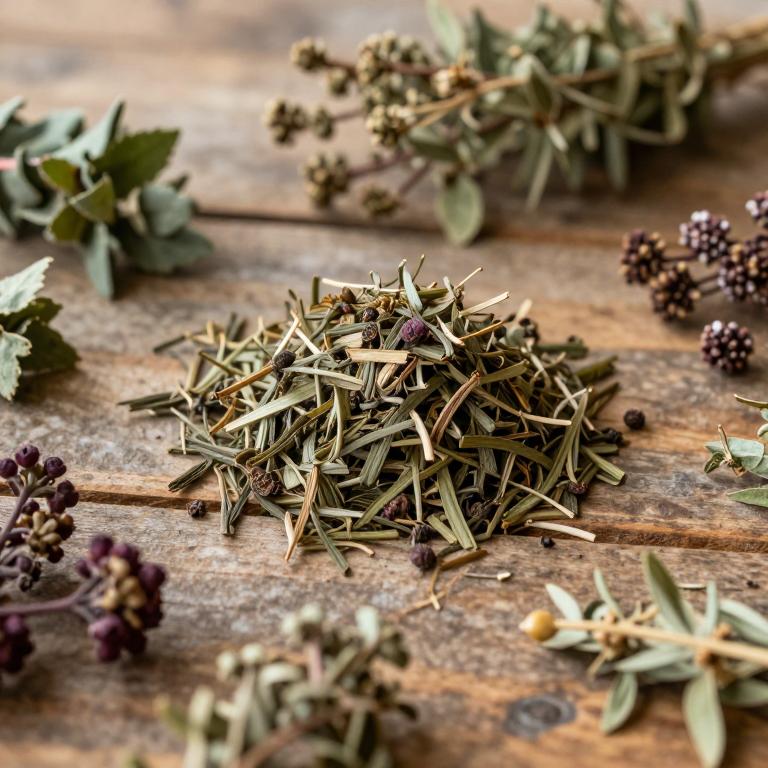
Names and Synonyms
Common Names
- Small-flowered Black Hawthorn
- Five-seeded Hawthorn
Scientific Names
Accepted name
Crataegus pentagynaSynonyms
- Phaenopyrum pentagynum
- Mespilus pentagyna
- Crataegus oxyacantha var. pentagyna
Sources: Wikidata, Catalogue of Life
Taxonomical Classification
This plant belongs to the kingdom Plantae and the phylum Streptophyta, falling under the class Equisetopsida and subclass Magnoliidae. Within the order Rosales and the family Rosaceae, it is classified under the genus Crataegus. Specifically, Crataegus pentagyna represents a distinct species within this complex taxonomic hierarchy.
| Rank | Classification |
|---|---|
| Kingdom | Plantae |
| Phylum | Streptophyta |
| Class | Equisetopsida |
| Subclass | Magnoliidae |
| Order | Rosales |
| Family | Rosaceae |
| Genus | Crataegus |
Sources: The World Checklist of Vascular Plants (WCVP)
Distribution
This plant exhibits a diverse geographical distribution across several regions of the European continent. In Northern Europe, its presence can be found within the borders of Great Britain. Moving into Middle Europe, the species is established in the regions of Czechia and Slovakia. The distribution extends further south into Southeastern Europe, where it is documented in Albania. Finally, the plant is also known to inhabit the Balkan landscapes of Bulgaria and Greece.
| Region | Area |
|---|---|
| Northern Europe | Great Britain |
| Middle Europe | Czechia-Slovakia |
| Southeastern Europe | Albania |
| Southeastern Europe | Bulgaria |
| Southeastern Europe | Greece |
| Southeastern Europe | Romania |
| Southeastern Europe | Türkiye-in-Europe |
| Southeastern Europe | NW. Balkan Pen. |
| Eastern Europe | Krym |
| Eastern Europe | Ukraine |
Sources: The World Checklist of Vascular Plants (WCVP)
Botanical Identification
Ecology
The ecology of Crataegus pentagyna is characterized by its preference for transitional and semi-open landscapes, where it typically thrives within forests, along forest edges, and throughout various shrubberies. By occupying these ecotones, the species benefits from the structural complexity of forest margins, which provide a balance of filtered sunlight and protection from extreme environmental fluctuations. Its presence in shrubby habitats suggests a resilience to moderate disturbance and an ability to compete effectively in dense, woody vegetation. This positioning within the ecosystem allows the plant to integrate into the layered architecture of woodland boundaries, contributing to the structural diversity of its native vegetative communities.
- Habitat :
- forest, forest edges, shrubberies
Life history
The life history of Crataegus pentauna is characterized by its specific ecological adaptation, manifesting primarily as a chamaephyte. Within the classification of plant life forms, it exhibits traits consistent with both the chamamephyte and nanophanerophyte categories, indicating a growth habit where the permanent shoots are located close to the ground, often partially or completely covered by litter or soil during unfavorable seasons. This life history strategy allows the species to persist in its natural habitat by maintaining low-growing woody structures that can withstand environmental stressors while still maintaining the capacity for seasonal development.
- Life form :
- chamaephyte
Morphology
The morphology of Crataegus pentagyna is characterized by a woody growth form, specifically manifesting as a tree. This plant is primarily terrestrial in its habitat, though it can exist within a spectrum ranging from aquatic to semiaquatic environments. As a self-supporting species, it does not exhibit climbing behaviors such as those found in lianas or vines. The plant typically attains a height ranging from a minimum of 3 meters to a maximum of 8 meters.
- Aquatic :
- terrestrial
- Climber :
- self-supporting
- Growth form :
- tree
- Plant height max:
- 8 m
- Plant height min:
- 3 m
- Woodiness :
- woody
Physiology
The physiology of Crataegus pentagyna is characterized by a metabolic framework governed by the C3 photosynthetic pathway, a trait typical of many woody dicotyledonous species in the Rosaceae family. In this C3 pathway, the initial fixation of atmospheric carbon dioxide occurs via the enzyme Ribulose-1,5-bisphosphate carboxylase/oxygenase (RuBisCO), which incorporates $\text{CO}_2$ into a three-carbon molecule, 3-phosphoglycerate, during the Calvin cycle. This process takes place within the mesophyll cells, where light-dependent reactions in the chloroplasts generate the necessary ATP and NADPH to drive the subsequent carbon fixation. Unlike C4 or CAM plants, Crataegus pentagyna does not possess specialized Kranz anatomy or temporal separation of $\text{CO}_2$ uptake, making its photosynthetic efficiency highly dependent on ambient temperature and moisture availability, as the plant must manage photorespiration risks when stomatal conductance decreases under water-limiting conditions.
- Photosynthetic pathway :
- C3
Reproduction
The reproduction of Crataegus pentauna is closely tied to its seasonal phenology, specifically characterized by its brief and concentrated flowering period. The reproductive cycle begins with the emergence of flowers, with the flowering start occurring in June. This blooming phase is highly specific in its timing, as the flowering end also aligns with the month of June, indicating a very narrow window for pollination and subsequent fruit development. While the potential for flowering can be variable depending on environmental conditions, the primary reproductive activity is concentrated within this single month.
- Flowering time :
- Jun
Sources: Global Inventory of Floras and Traits (GIFT)
Chemicals
Crataegus pentagyna has 6 reported phytochemicals identified across 0 scientific publications and several other databases. The most consistently reported chemicals include CHLOROGENIC ACID, Flavonoid, Hyperoside, RUTIN, Vitexin rhamnoside.
| Chemical | Supporting sources | Consensus |
|---|---|---|
| CHLOROGENIC ACID | 1 supporting sources | ★☆☆☆☆ |
| Flavonoid | 1 supporting sources | ★☆☆☆☆ |
| Hyperoside | 1 supporting sources | ★☆☆☆☆ |
| RUTIN | 1 supporting sources | ★☆☆☆☆ |
| Vitexin rhamnoside | 1 supporting sources | ★☆☆☆☆ |
| phenol | 1 supporting sources | ★☆☆☆☆ |
CHLOROGENIC ACID
- Dr. Duke
Flavonoid
- Iranian journal of pharmaceutical research : IJPR
Hyperoside
- Dr. Duke
RUTIN
- Dr. Duke
Vitexin rhamnoside
- Dr. Duke
phenol
- Iranian journal of pharmaceutical research : IJPR
Activities
Crataegus pentagyna has 142 reported activities identified across 0 scientific publications and several other databases. The most consistently reported activities include 5-HT-Inhibitor, Aldehyde-Oxidase-Inhibitor, Aldose-Reductase-Inhibitor, Allelochemic, Allergenic.
| Activity | Supporting sources | Consensus |
|---|---|---|
| 5-HT-Inhibitor | 1 supporting sources | ★☆☆☆☆ |
| Aldehyde-Oxidase-Inhibitor | 1 supporting sources | ★☆☆☆☆ |
| Aldose-Reductase-Inhibitor | 1 supporting sources | ★☆☆☆☆ |
| Allelochemic | 1 supporting sources | ★☆☆☆☆ |
| Allergenic | 1 supporting sources | ★☆☆☆☆ |
| Analgesic | 1 supporting sources | ★☆☆☆☆ |
| AntiCVI | 1 supporting sources | ★☆☆☆☆ |
| AntiEBV | 1 supporting sources | ★☆☆☆☆ |
| AntiHIV | 1 supporting sources | ★☆☆☆☆ |
| AntiLegionella | 1 supporting sources | ★☆☆☆☆ |
5-HT-Inhibitor
- Dr. Duke
Aldehyde-Oxidase-Inhibitor
- Dr. Duke
Aldose-Reductase-Inhibitor
- Dr. Duke
Allelochemic
- Dr. Duke
Allergenic
- Dr. Duke
Analgesic
- Dr. Duke
AntiCVI
- Dr. Duke
AntiEBV
- Dr. Duke
AntiHIV
- Dr. Duke
AntiLegionella
- Dr. Duke
Conditions
Crataegus pentagyna has 3 reported investigations on conditions identified across 0 scientific publications and several other databases. The most consistently reported conditions include blood circulation, cancer, skin diseases.
| Condition | Supporting sources | Consensus |
|---|---|---|
| Blood circulation | 1 supporting sources | ★☆☆☆☆ |
| Cancer | 1 supporting sources | ★☆☆☆☆ |
| Skin diseases | 1 supporting sources | ★☆☆☆☆ |
Blood circulation
- Journal of ethnopharmacology
Cancer
- Iranian journal of pharmaceutical research : IJPR
Skin diseases
- Iranian journal of pharmaceutical research : IJPR
Preparations
Crataegus pentagyna has 1 reported preparations identified across 0 scientific publications and several other databases. The most consistently reported preparations include ultrasonic extract.
| Preparation | Supporting sources | Consensus |
|---|---|---|
| Ultrasonic extract | 1 supporting sources | ★☆☆☆☆ |
Ultrasonic extract
- Iranian journal of pharmaceutical research : IJPR