Crataegus orientalis subsp. orientalis
Crataegus orientalis subsp. orientalis · Accepted scientific name
Scientific literature: Very Sparse (10 studies) · ★☆☆☆☆
, scientifically known as Crataeagus orientalis subsp. orientalis, is a resilient shrub celebrated in traditional medicine for its therapeutic properties. Often found in Eastern mountainous regions, this subspecies is valued for its nutrient-rich berries, which are frequently utilized to support cardiovascular health and provide potent antioxidant benefits.
- Family
- Rosaceae
- Native range
- Europe
- Parts used
- Fruit · Leaf
- Common names
- Not available
- Scientific synonyms
- Phaenopyrum Odoratissimum · Phaenopyrum Tournefortii · 15 more
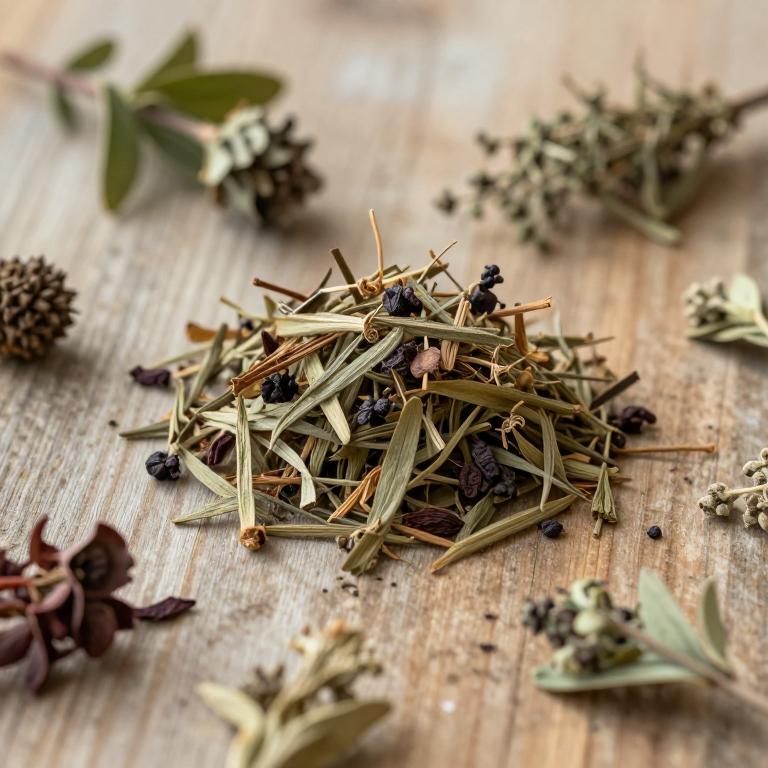
Names and Synonyms
Scientific Names
Accepted name
Crataegus orientalis subsp. orientalisSynonyms
- Phaenopyrum odoratissimum
- Phaenopyrum tournefortii
- Phaenopyrum schraderianum
- Mespilus tanacetifolia var. flabellata
- Mespilus tanacetifolia subvar. tournefortii
- Mespilus tanacetifolia var. typica
- Crataegus orientalis var. sanguinea
- Crataegus orientalis var. tournefortii
- Mespilus odoratissima
- Crataegus tanacetifolia var. taurica
- Crataegus tournefortii
- Crataegus odoratissima
- Crataegus orientalis var. typica
- Crataegus orientalis var. flabellata
- Crataegus orientalis var. obtusata
- Crataegus pycnoloba var. parnassica
- Crataegus schraderiana
Sources: Catalogue of Life
Taxonomical Classification
This plant belongs to the kingdom Plantae and the phylum Streptophyta, falling under the class Equisetopsida and subclass Magnoliidae. Within the order Rosales and family Rosaceae, it is classified under the genus Crataegus. Specifically, it is identified as the subspecies orientalis.
| Rank | Classification |
|---|---|
| Kingdom | Plantae |
| Phylum | Streptophyta |
| Class | Equisetopsida |
| Subclass | Magnoliidae |
| Order | Rosales |
| Family | Rosaceae |
| Genus | Crataegus |
Sources: The World Checklist of Vascular Plants (WCVP)
Distribution
This plant exhibits a wide geographical distribution across several distinct regions of the European continent. In Northern Europe, its presence can be documented within the territories of Great Britain and Ireland. Moving toward the Mediterranean region, the species is also established throughout Southeastern Europe. Specifically, it can be found growing in the landscapes of Albania and Bulgaria. Finally, its range extends further south into the country of Greece.
| Region | Area |
|---|---|
| Northern Europe | Great Britain |
| Northern Europe | Ireland |
| Southeastern Europe | Albania |
| Southeastern Europe | Bulgaria |
| Southeastern Europe | Greece |
| Southeastern Europe | Sicilia |
| Southeastern Europe | NW. Balkan Pen. |
| Central Asia | Uzbekistan |
| Caucasus | Transcaucasus |
| Western Asia | Türkiye |
Sources: The World Checklist of Vascular Plants (WCVP)
Plant Parts
Crataegus orientalis subsp. orientalis has 2 reported plant parts identified across 2 scientific publications and several other databases that are studied for medicinal purposes. The most consistently reported plant part include fruit, leaf.
| Plant part | Supporting sources | Consensus |
|---|---|---|
| Fruit | 1 supporting sources | ★☆☆☆☆ |
| Leaf | 1 supporting sources | ★☆☆☆☆ |
Fruit
- Nutrients
Leaf
- Thrombosis research
Chemicals
Crataegus orientalis subsp. orientalis has 3 reported phytochemicals identified across 2 scientific publications and several other databases. The most consistently reported chemicals include Flavonoids, Proanthocyanidins, fumaric acid.
| Chemical | Supporting sources | Consensus |
|---|---|---|
| Flavonoids | 1 supporting sources | ★☆☆☆☆ |
| Proanthocyanidins | 1 supporting sources | ★☆☆☆☆ |
| fumaric acid | 1 supporting sources | ★☆☆☆☆ |
Flavonoids
- Thrombosis research
Proanthocyanidins
- Thrombosis research
fumaric acid
- Journal of the science of food and agriculture
Activities
Crataegus orientalis subsp. orientalis has 4 reported activities identified across 2 scientific publications and several other databases. The most consistently reported activities include Antioxidant, Antibacterial, Antidiabetic, Antithrombotic.
| Activity | Supporting sources | Consensus |
|---|---|---|
| Antioxidant | 2 supporting sources | ★☆☆☆☆ |
| Antibacterial | 1 supporting sources | ★☆☆☆☆ |
| Antidiabetic | 1 supporting sources | ★☆☆☆☆ |
| Antithrombotic | 1 supporting sources | ★☆☆☆☆ |
Antioxidant
- Journal of the science of food and agriculture
- Nutrients
Antibacterial
- Nutrients
Antidiabetic
- Journal of the science of food and agriculture
Antithrombotic
- Thrombosis research
Preparations
Crataegus orientalis subsp. orientalis has 1 reported preparations identified across 2 scientific publications and several other databases. The most consistently reported preparations include ethanol extract.
| Preparation | Supporting sources | Consensus |
|---|---|---|
| Ethanol extract | 1 supporting sources | ★☆☆☆☆ |
Ethanol extract
- Thrombosis research