Crataegus meyeri
Crataegus meyeri · Accepted scientific name
Scientific literature: Very Sparse (10 studies) · ★☆☆☆☆
, scientifically known as Crataeagus meyeri, is a remarkable medicinal plant valued for its diverse therapeutic properties. Often utilized in traditional healing practices, this species contains bioactive compounds believed to support cardiovascular health and antioxidant functions. Understanding its botanical characteristics is essential for exploring its potential in modern herbal pharmacology.
- Family
- Rosaceae
- Native range
- Europe
- Parts used
- Not available
- Common names
- Not available
- Scientific synonyms
- Crataegus Monogyna Var. Hirsutior · Crataegus Persica · 4 more
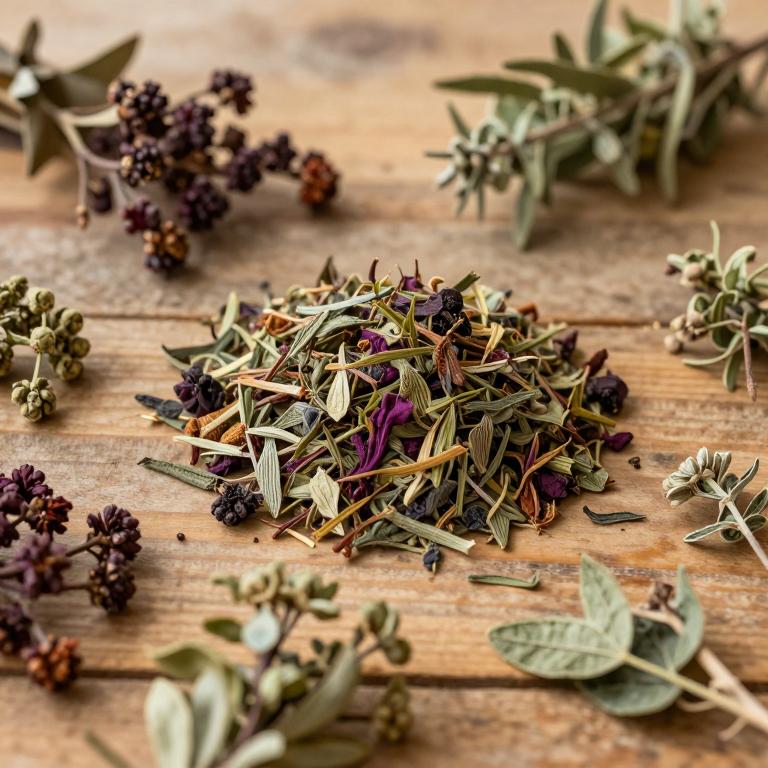
Names and Synonyms
Scientific Names
Accepted name
Crataegus meyeriSynonyms
- Crataegus monogyna var. hirsutior
- Crataegus persica
- Crataegus ucrainica
- Crataegus eriantha
- Crataegus dikmensis
- Crataegus ambigua var. hohenackeri
Sources: Wikidata, Catalogue of Life
Taxonomical Classification
This plant belongs to the kingdom Plantae and the phylum Streptophyta, placing it within the class Equisetopsida and subclass Magnoliidae. Following the order Rosales, it is a member of the family Rosaceae. Ultimately, it is classified under the genus Crataegus as the species Crataegus meyeri.
| Rank | Classification |
|---|---|
| Kingdom | Plantae |
| Phylum | Streptophyta |
| Class | Equisetopsida |
| Subclass | Magnoliidae |
| Order | Rosales |
| Family | Rosaceae |
| Genus | Crataegus |
Sources: The World Checklist of Vascular Plants (WCVP)
Distribution
This plant exhibits a specific distribution pattern that spans several key regions across Eastern Europe and the Caucasus. Within Eastern Europe, its range includes Belarus, Ukraine, and Central European Russia. The species also extends southward into the Caucasus region, where it can be found in the North Caucasus. Furthermore, its presence is documented within the Transcaucasus area. Together, these locations define the primary geographical footprint of Crataegus meyeri.
| Region | Area |
|---|---|
| Eastern Europe | Belarus |
| Eastern Europe | Central European Russia |
| Eastern Europe | Ukraine |
| Caucasus | North Caucasus |
| Caucasus | Transcaucasus |
| Western Asia | Iran |
| Western Asia | Iraq |
| Western Asia | Türkiye |
Sources: The World Checklist of Vascular Plants (WCVP)
Botanical Identification
Ecology
The ecology of Crataegus meyeri is characterized by its presence in diverse montane environments, where it thrives within a specific altitudinal gradient. This species is typically found at elevations ranging from a minimum of 800 m AMSL to a maximum of 2000 m AMSL. Its preferred habitats are varied, allowing it to occupy several ecological niches including dense forests, transitional forest edges, and shrubberies. Additionally, the plant is frequently associated with riparian zones, establishing itself along the banks of rivers where moisture availability is often higher.
- Elevational range max:
- 2000 m AMSL
- Elevational range min:
- 800 m AMSL
- Habitat :
- forest, forest edges, rivers, shrubberies
Morphology
The morphology of Crataegus meyeri is characterized by its woody growth form, typically manifesting as a shrub. The plant exhibits a robust structure with a height that ranges from a minimum of 1.5 m to a maximum of 3 m.
- Growth form :
- shrub
- Plant height max:
- 3 m
- Plant height min:
- 1.5 m
- Woodiness :
- woody
Reproduction
The reproduction of Crataegus meyeri is characterized by a highly concentrated flowering period that occurs primarily during the month of June. Based on its phenological patterns, the flowering start is recorded in June, and the flowering end also concludes within June, indicating a brief and synchronized blooming window. This specific timing suggests that the plant's reproductive effort is concentrated into a single month, which likely serves to optimize pollination opportunities within its specific ecological niche.
- Flowering time :
- Jun
Sources: Global Inventory of Floras and Traits (GIFT)
Chemicals
Crataegus meyeri has 8 reported phytochemicals identified across 0 scientific publications and several other databases. The most consistently reported chemicals include Anthocyanins, CATECHIN, CHLOROGENIC ACID, RUTIN, p-coumaric acid.
| Chemical | Supporting sources | Consensus |
|---|---|---|
| Anthocyanins | 1 supporting sources | ★☆☆☆☆ |
| CATECHIN | 1 supporting sources | ★☆☆☆☆ |
| CHLOROGENIC ACID | 1 supporting sources | ★☆☆☆☆ |
| RUTIN | 1 supporting sources | ★☆☆☆☆ |
| p-coumaric acid | 1 supporting sources | ★☆☆☆☆ |
| polyphenols | 1 supporting sources | ★☆☆☆☆ |
| quercetin | 1 supporting sources | ★☆☆☆☆ |
| vitamin C | 1 supporting sources | ★☆☆☆☆ |
Anthocyanins
- Food science & nutrition
CATECHIN
- Food science & nutrition
CHLOROGENIC ACID
- Food science & nutrition
RUTIN
- Food science & nutrition
p-coumaric acid
- Food science & nutrition
polyphenols
- Food science & nutrition
quercetin
- Food science & nutrition
vitamin C
- Food science & nutrition
Activities
Crataegus meyeri has 2 reported activities identified across 0 scientific publications and several other databases. The most consistently reported activities include Analgesic, Antispasmodic.
| Activity | Supporting sources | Consensus |
|---|---|---|
| Analgesic | 1 supporting sources | ★☆☆☆☆ |
| Antispasmodic | 1 supporting sources | ★☆☆☆☆ |
Analgesic
- Food science & nutrition
Antispasmodic
- Food science & nutrition