Crassocephalum vitellinum
Crassocephalum vitellinum · Accepted scientific name
Scientific literature: Very Sparse (6 studies) · ★☆☆☆☆
Crassocephalum vitellinum, scientifically known as Crassocephalum vitellinum, is a versatile medicinal herb renowned for its therapeutic properties. Often utilized in traditional healing practices, this plant offers significant bioactive compounds. It is widely studied for its potential to treat various ailments, highlighting its importance in natural pharmacology and wellness.
- Family
- Asteraceae
- Native range
- Africa
- Parts used
- Leaf
- Common names
- Not available
- Scientific synonyms
- Gynura Vitellina · Senecio Vitellinus
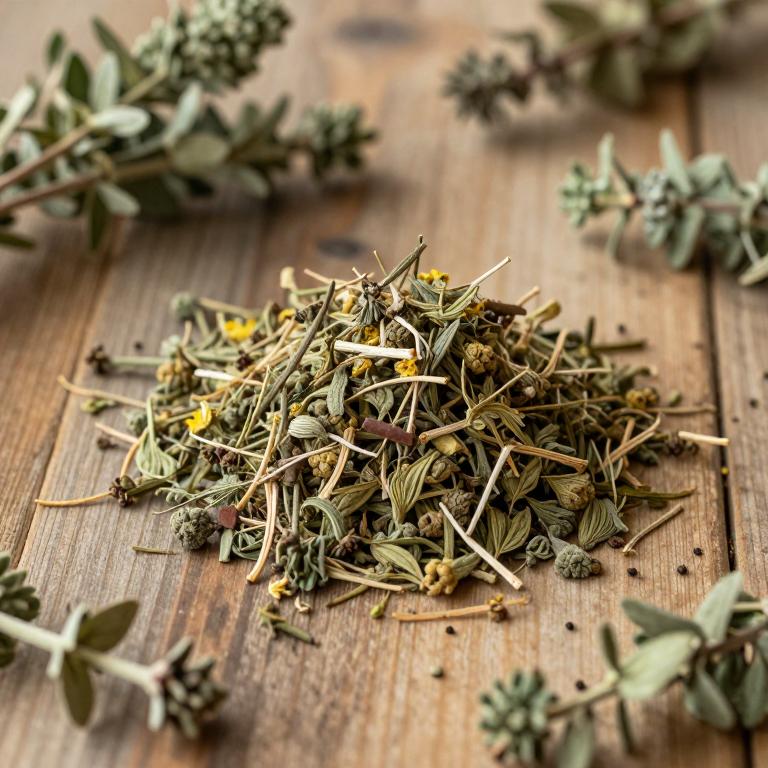
Names and Synonyms
Scientific Names
Accepted name
Crassocephalum vitellinumSynonyms
- Gynura vitellina
- Senecio vitellinus
Sources: Wikidata
Taxonomical Classification
This plant belongs to the kingdom Plantae and the phylum Streptophyta, falling under the class Equisetopsida and subclass Magnoliidae. Within the order Asterales, it is classified under the family Asteraceae. Finally, its specific taxonomic identity is defined by the genus Crassocephalum.
| Rank | Classification |
|---|---|
| Kingdom | Plantae |
| Phylum | Streptophyta |
| Class | Equisetopsida |
| Subclass | Magnoliidae |
| Order | Asterales |
| Family | Asteraceae |
| Genus | Crassocephalum |
Sources: The World Checklist of Vascular Plants (WCVP)
Distribution
This plant exhibits a diverse geographical distribution across several regions of the African continent. In West Tropical Africa, it can be specifically identified within Nigeria. Moving into West-Central Tropical Africa, the species is documented in Burundi and Rwanda. It is also found throughout the Gulf of Guinea Islands within this same central region. Finally, its presence is confirmed in Cameroon, rounding out its documented range in West-Central Tropical Africa.
| Region | Area |
|---|---|
| West Tropical Africa | Nigeria |
| West-Central Tropical Africa | Burundi |
| West-Central Tropical Africa | Cameroon |
| West-Central Tropical Africa | Gulf of Guinea Is. |
| West-Central Tropical Africa | Rwanda |
| West-Central Tropical Africa | DR Congo |
| Northeast Tropical Africa | Sudan-South Sudan |
| East Tropical Africa | Kenya |
| East Tropical Africa | Tanzania |
| East Tropical Africa | Uganda |
Sources: The World Checklist of Vascular Plants (WCVP)
Botanical Identification
Life history
The life history of Crassocephalum vitellinum is characterized by an annual lifecycle, meaning it completes its entire biological progression from germination to seed production within a single growing season. In terms of its structural growth habit and ecological strategy, the plant is classified as a therophyte, a life form defined by plants that survive the unfavorable season as ephemeral seeds. This strategy allows it to rapidly colonize disturbed or open habitats, utilizing its seasonal growth to maximize reproductive output before the onset of environmental stress.
- Life form :
- therophyte
- Lifecycle :
- annual
Morphology
The morphology of Crassocephalum vitellinum is characterized by its growth form as a non-woody herb, manifesting as both a general herb and a specific forb. This plant is strictly terrestrial, functioning as an independent organism that does not exhibit parasitic or epiphytic tendencies. In terms of its physical structure, it is a self-supporting species rather than a climber. The plant's height varies significantly depending on environmental conditions, with a minimum height of 0.3 m, a maximum height of approximately 0.91 m, and an average height of 1.5 m.
- Aquatic :
- terrestrial
- Climber :
- self-supporting
- Epiphyte :
- terrestrial
- Growth form :
- herb
- Parasite :
- independent
- Plant height max:
- 0.914411119 m
- Plant height mean:
- 1.5 m
- Plant height min:
- 0.3 m
- Woodiness :
- non-woody
Reproduction
The reproduction of Crassocephalum vitellinum is characterized by specific mechanisms of seed movement and distribution strategies. The dispersal syndrome of this species is primarily identified as anemochorous, meaning that its seeds are adapted for transport via wind currents. Within the broader ecological context of its reproductive cycle, the plant exhibits an anemochorous dispersal pattern, distinguishing it from other potential modes such as zoochorous, autochorous, hydrochorous, or unspecialized methods. This reliance on wind for dissemination ensures that the seeds can be carried away from the parent plant to colonize new habitats.
- Dispersal syndrome :
- anemochorous
Sources: Global Inventory of Floras and Traits (GIFT)
Plant Parts
Crassocephalum vitellinum has 1 reported plant parts identified across 2 scientific publications and several other databases that are studied for medicinal purposes. The most consistently reported plant part include leaf.
| Plant part | Supporting sources | Consensus |
|---|---|---|
| Leaf | 2 supporting sources | ★☆☆☆☆ |
Leaf
- Food chemistry
- Experimental and toxicologic pathology : official journal of the Gesellschaft fur Toxikologische Pathologie
Chemicals
Crassocephalum vitellinum has 2 reported phytochemicals identified across 2 scientific publications and several other databases. The most consistently reported chemicals include LIMONENE, MYRCENE.
| Chemical | Supporting sources | Consensus |
|---|---|---|
| LIMONENE | 1 supporting sources | ★☆☆☆☆ |
| MYRCENE | 1 supporting sources | ★☆☆☆☆ |
LIMONENE
- Food chemistry
MYRCENE
- Food chemistry
Conditions
Crassocephalum vitellinum has 2 reported investigations on conditions identified across 2 scientific publications and several other databases. The most consistently reported conditions include hepatitis, liver diseases.
| Condition | Supporting sources | Consensus |
|---|---|---|
| Hepatitis | 1 supporting sources | ★☆☆☆☆ |
| Liver diseases | 1 supporting sources | ★☆☆☆☆ |
Hepatitis
- Journal of ethnopharmacology
Liver diseases
- Journal of ethnopharmacology
Preparations
Crassocephalum vitellinum has 3 reported preparations identified across 2 scientific publications and several other databases. The most consistently reported preparations include Aqueous extracts, essential oils obtained from leaves, methanolic extracts.
| Preparation | Supporting sources | Consensus |
|---|---|---|
| Aqueous extracts | 1 supporting sources | ★☆☆☆☆ |
| Essential oils obtained from leaves | 1 supporting sources | ★☆☆☆☆ |
| Methanolic extracts | 1 supporting sources | ★☆☆☆☆ |
Aqueous extracts
- Experimental and toxicologic pathology : official journal of the Gesellschaft fur Toxikologische Pathologie
Essential oils obtained from leaves
- Food chemistry
Methanolic extracts
- Food chemistry