yoruban bologi
Crassocephalum rubens · Accepted scientific name
Scientific literature: Very Sparse (20 studies) · ★☆☆☆☆
Yoruban bologi, scientifically known as Crassocephalum rubens, is a versatile medicinal herb widely utilized in traditional African medicine. Renowned for its potent therapeutic properties, this plant is frequently employed to treat various ailments, including respiratory issues, skin inflammations, and digestive upsets, offering a natural approach to holistic healing.
- Family
- Asteraceae
- Native range
- Africa
- Parts used
- Leaf
- Common names
- Yoruban Bologi
- Scientific synonyms
- Senecio Rubens · Gynura Rubens
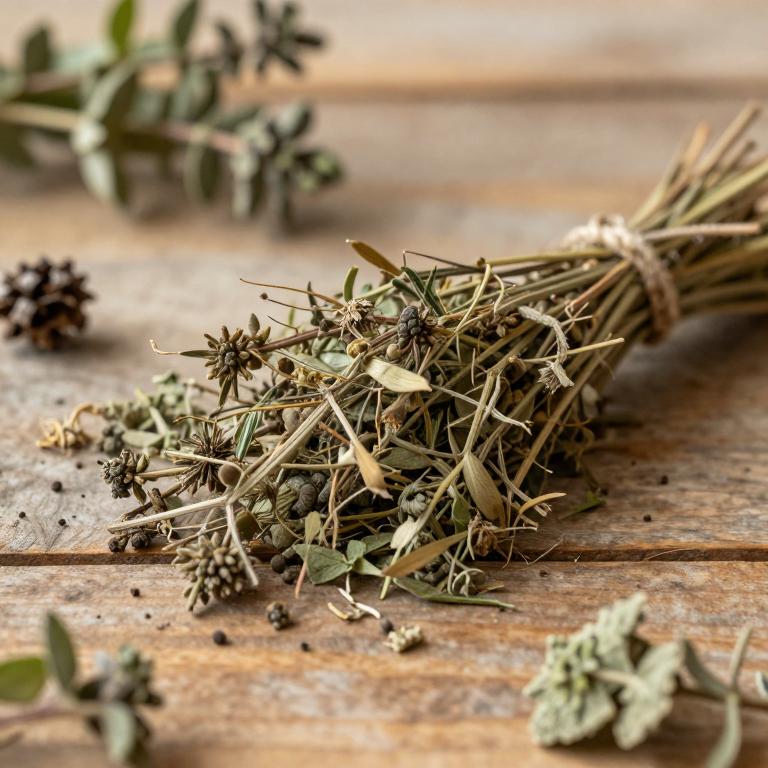
Names and Synonyms
Common Names
- yoruban bologi
Scientific Names
Accepted name
Crassocephalum rubensSynonyms
- Senecio rubens
- Gynura rubens
Regional and Traditional Names
French:
- brède yorouba
Sources: Wikidata, Catalogue of Life
Taxonomical Classification
This plant belongs to the kingdom Plantae and is classified within the phylum Streptophyta and the class Equisetopsida. Under the subclass Magnoliidae, it is organized into the order Asterales and the family Asteraceae. Finally, it is identified by its specific genus, Crassocephalum.
| Rank | Classification |
|---|---|
| Kingdom | Plantae |
| Phylum | Streptophyta |
| Class | Equisetopsida |
| Subclass | Magnoliidae |
| Order | Asterales |
| Family | Asteraceae |
| Genus | Crassocephalum |
Sources: The World Checklist of Vascular Plants (WCVP)
Distribution
This plant exhibits a broad geographical distribution across several key regions in the Atlantic and African tropics. In the Macaronesian archipelago, its presence is specifically noted within the islands of Cape Verde. Moving toward the mainland, it is widely distributed throughout West Tropical Africa. This includes documented occurrences in Guinea-Bissau, Guinea, and Benin. Finally, its range extends further south to include the coastal territories of Ivory Coast.
| Region | Area |
|---|---|
| Macaronesia | Cape Verde |
| West Tropical Africa | Benin |
| West Tropical Africa | Guinea-Bissau |
| West Tropical Africa | Guinea |
| West Tropical Africa | Ivory Coast |
| West Tropical Africa | Liberia |
| West Tropical Africa | Mali |
| West Tropical Africa | Nigeria |
| West Tropical Africa | Senegal |
| West Tropical Africa | Sierra Leone |
Sources: The World Checklist of Vascular Plants (WCVP)
Botanical Identification
Ecology
The ecology of Crassocephalum rubens is characterized by its broad adaptability to diverse topographical landscapes, allowing it to colonize a wide variety of habitats. It exhibits a significant vertical distribution across different terrains, spanning an elevational range that begins as low as 2 m AMSL and extends up to a maximum of 1200 m AMSL. This wide altitudinal gradient suggests that the species is capable of thriving in both lowland coastal or tropical regions and more temperate mid-elevation environments. Such ecological plasticity enables the plant to occupy various niches, often favoring disturbed areas or open spaces where sunlight is abundant, facilitating its spread across diverse climatic zones within its range.
- Elevational range max:
- 1200 m AMSL
- Elevational range min:
- 2 m AMSL
Life history
The life history of Crassocephalum rubens is characterized by its classification as an annual plant, meaning it completes its entire biological cycle—from germination to seed production—within a single growing season. As a therophyte, it follows a specialized life strategy where the plant survives unfavorable environmental conditions primarily in the form of seeds, rather than through persistent vegetative structures like rhizomes or woody stems. This life form allows the species to rapidly colonize disturbed habitats, utilizing its ephemeral growth to exploit seasonal resources before receding back into a dormant seed state.
- Life form :
- therophyte
- Lifecycle :
- annual
Morphology
The morphology of Crassocephalum rubens is characterized by its growth form as a non-woody herb. This terrestrial plant is self-supporting rather than acting as a climber, liana, or vine, and it functions as an independent organism without parasitic tendencies. In terms of stature, it reaches a maximum height of approximately 1 meter, with a minimum height recorded at 0.75 meters, resulting in a mean plant height of roughly 0.65 meters. It does not exhibit epiphytic behavior, maintaining a strictly terrestrial existence.
- Aquatic :
- terrestrial
- Climber :
- self-supporting
- Epiphyte :
- terrestrial
- Growth form :
- herb
- Parasite :
- independent
- Plant height max:
- 1 m
- Plant height mean:
- 0.652401853 m
- Plant height min:
- 0.75 m
- Woodiness :
- non-woody
Physiology
The physiology of Crassocephalum rubens is characterized by specialized metabolic processes that facilitate its survival in disturbed or nutrient-poor environments, though it does not function as a nitrogen fixer. Unlike legumes that engage in symbiotic relationships with rhizobia to convert atmospheric nitrogen into bioavailable forms, this species lacks the specific physiological mechanisms or root nodule structures required for nitrogen fixation; therefore, its nitrogen fixation status is categorized as "no." Instead, the plant relies on efficient nutrient uptake from the soil through its root system and utilizes rapid vegetative growth and seed dispersal to colonize new areas. Its physiological resilience is further supported by robust photosynthetic pathways that allow it to maintain biomass production even under varying environmental stressors, prioritizing the assimilation of available soil nitrates to support its life cycle.
- Nitrogen fixer :
- no
Reproduction
The reproduction of Crassocephalum rubens is characterized by a biotic pollination syndrome, primarily mediated by insects, with a specific reliance on bees to facilitate pollen transfer. Following successful fertilization, the plant produces seeds that exhibit a highly variable mass, ranging from a minimum of 0.00011 g to a maximum of 0.00025 g, with an average seed mass of 0.000205 g. Dispersal of these seeds is achieved through an anemochorous syndrome, meaning they are specialized for wind dispersal, which allows the small, lightweight seeds to be transported effectively away from the parent plant to new environments.
- Dispersal syndrome :
- anemochorous
- Pollination syndrome :
- insect
- Pollination syndrome :
- bee
- Pollination syndrome :
- biotic
- Seed mass max:
- 0.00025 g
- Seed mass mean:
- 0.000205 g
- Seed mass min:
- 0.00011 g
Sources: Global Inventory of Floras and Traits (GIFT)
Plant Parts
Crassocephalum rubens has 1 reported plant parts identified across 3 scientific publications and several other databases that are studied for medicinal purposes. The most consistently reported plant part include leaf.
| Plant part | Supporting sources | Consensus |
|---|---|---|
| Leaf | 3 supporting sources | ★★☆☆☆ |
Leaf
- Molecules (Basel, Switzerland)
- Journal of ethnopharmacology
- Journal of food biochemistry
Chemicals
Crassocephalum rubens has 3 reported phytochemicals identified across 3 scientific publications and several other databases. The most consistently reported chemicals include CATALASE, Superoxide dismutase, linolenic acid.
| Chemical | Supporting sources | Consensus |
|---|---|---|
| CATALASE | 1 supporting sources | ★☆☆☆☆ |
| Superoxide dismutase | 1 supporting sources | ★☆☆☆☆ |
| linolenic acid | 1 supporting sources | ★☆☆☆☆ |
CATALASE
- Journal of food biochemistry
Superoxide dismutase
- Journal of food biochemistry
linolenic acid
- Molecules (Basel, Switzerland)
Activities
Crassocephalum rubens has 2 reported activities identified across 3 scientific publications and several other databases. The most consistently reported activities include Antioxidant, Chemopreventive.
| Activity | Supporting sources | Consensus |
|---|---|---|
| Antioxidant | 1 supporting sources | ★☆☆☆☆ |
| Chemopreventive | 1 supporting sources | ★☆☆☆☆ |
Antioxidant
- Molecules (Basel, Switzerland)
Chemopreventive
- Journal of food biochemistry
Conditions
Crassocephalum rubens has 12 reported investigations on conditions identified across 3 scientific publications and several other databases. The most consistently reported conditions include anticholinesterase, antidiabetic, antioxidant, breast cancer, burns.
| Condition | Supporting sources | Consensus |
|---|---|---|
| Anticholinesterase | 1 supporting sources | ★☆☆☆☆ |
| Antidiabetic | 1 supporting sources | ★☆☆☆☆ |
| Antioxidant | 1 supporting sources | ★☆☆☆☆ |
| Breast cancer | 1 supporting sources | ★☆☆☆☆ |
| Burns | 1 supporting sources | ★☆☆☆☆ |
| Drought | 1 supporting sources | ★☆☆☆☆ |
| Earache | 1 supporting sources | ★☆☆☆☆ |
| Heat stress | 1 supporting sources | ★☆☆☆☆ |
| Leprosy | 1 supporting sources | ★☆☆☆☆ |
| Lipid peroxidation | 1 supporting sources | ★☆☆☆☆ |
Anticholinesterase
- Molecules (Basel, Switzerland)
Antidiabetic
- Molecules (Basel, Switzerland)
Antioxidant
- Molecules (Basel, Switzerland)
Breast cancer
- Journal of ethnopharmacology
Burns
- Journal of ethnopharmacology
Drought
- Frontiers in plant science
Earache
- Journal of ethnopharmacology
Heat stress
- Frontiers in plant science
Leprosy
- Journal of ethnopharmacology
Lipid peroxidation
- Journal of food biochemistry