Southern Chamomile
Cota altissima · Accepted scientific name
Scientific literature: Very Sparse (16 studies) · ★☆☆☆☆
Southern Chamomile, scientifically known as Cota altissima, is a versatile medicinal herb native to South America. Renowned for its soothing properties, it is frequently utilized in traditional remedies to alleviate digestive discomfort, reduce inflammation, and calm anxiety. This potent plant offers a natural approach to holistic wellness and healing.
- Family
- Asteraceae
- Native range
- Europe
- Parts used
- Not available
- Common names
- Southern Chamomile
- Scientific synonyms
- Anacyclus Altissimus · Anthemis Altissima · 7 more
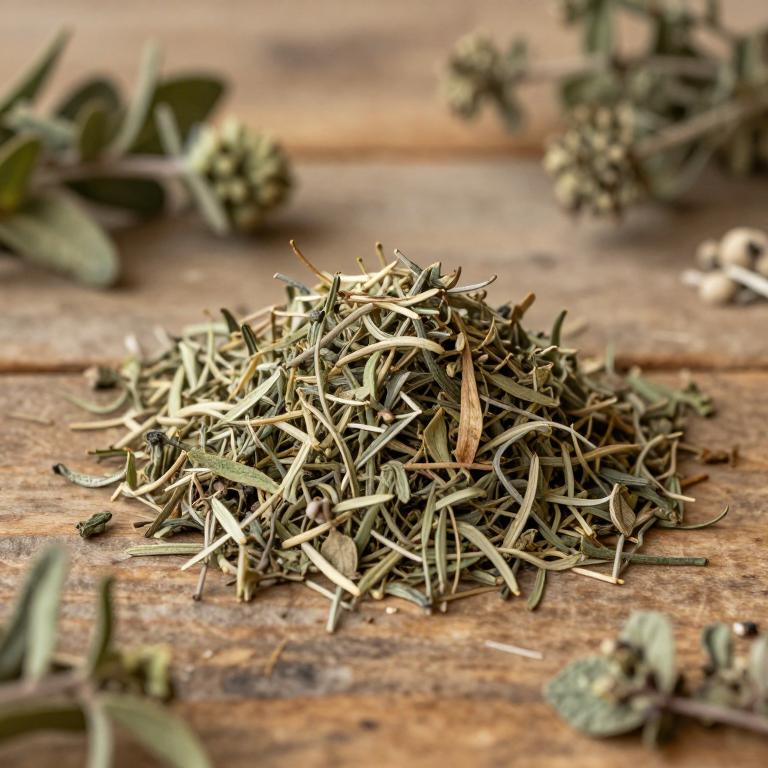
Names and Synonyms
Common Names
- Southern Chamomile
Scientific Names
Accepted name
Cota altissimaSynonyms
- Anacyclus altissimus
- Anthemis altissima
- Anthemis cota var. brevicuspidata
- Anthemis reflexa
- Anthemis cota var. longicuspidata
- Chamaemelum altissimum
- Chamaemelum cota
- Pyrethrum cota
- Anthemis altissima var. discoidea
Regional and Traditional Names
German:
- Hohe Hundskamille
French:
- Anthémis géante
Sources: Wikidata, Catalogue of Life
Taxonomical Classification
This plant belongs to the kingdom Plantae and the phylum Streptophyta, falling under the class Equisetopsida and subclass Magnoliidae. Within the order Asterales, it is classified under the family Asteraceae. Specifically, its taxonomic identity is defined by the genus Cota, with the species name altissima.
| Rank | Classification |
|---|---|
| Kingdom | Plantae |
| Phylum | Streptophyta |
| Class | Equisetopsida |
| Subclass | Magnoliidae |
| Order | Asterales |
| Family | Asteraceae |
| Genus | Cota |
Sources: The World Checklist of Vascular Plants (WCVP)
Distribution
This plant exhibits a specific distribution across several regions of the European continent. In Northern Europe, its presence can be documented within Great Britain. Moving into Middle Europe, the species is found in Belgium. It also inhabits the territories of Germany and Poland. Finally, the geographical range of this medicinal plant extends into Switzerland.
| Region | Area |
|---|---|
| Northern Europe | Great Britain |
| Middle Europe | Belgium |
| Middle Europe | Germany |
| Middle Europe | Poland |
| Middle Europe | Switzerland |
| Southwestern Europe | Corse |
| Southwestern Europe | France |
| Southwestern Europe | Spain |
| Southeastern Europe | Albania |
| Southeastern Europe | Bulgaria |
Sources: The World Checklist of Vascular Plants (WCVP)
Botanical Identification
Ecology
The ecology of Cota altiissima is characterized by its ability to colonize disturbed environments, specifically thriving within ruderal sites. This species demonstrates a broad altitudinal distribution, occupying diverse topographical gradients across its range. It can be found at elevations as low as 400 m AMSL, extending upward to a maximum elevation of 1700 m AMSL.
- Elevational range max:
- 1700 m AMSL
- Elevational range min:
- 400 m AMSL
- Habitat :
- ruderal sites
Life history
The life history of Cota altissima is characterized by an annual lifecycle, meaning the plant completes its entire biological development—from germination and vegetative growth to flowering and seed production—within a single growing season. In terms of its structural life form, it is classified as a therophyte, a strategy where the plant survives unfavorable environmental conditions as ephemeral seeds, rapidly emerging to exploit seasonal resources before the onset of stress. This life form is consistently identified through its therophytic growth habit, which emphasizes a short-lived, rapid reproductive strategy tailored to transient or seasonal habitats.
- Life form :
- therophyte
- Lifecycle :
- annual
Morphology
The morphology of Cota altissima is characterized by its growth form as a non-woody herb and forb. This plant is self-supporting rather than a climber and functions as an independent organism, neither acting as a parasite nor as an epiphyte, as it maintains a terrestrial existence. Its habitat profile ranges from aquatic and semiaquatic environments to terrestrial settings. In terms of stature, the plant is relatively small, with a height that typically ranges from a minimum of 0.3 m to a maximum of 0.6 m.
- Aquatic :
- terrestrial
- Climber :
- self-supporting
- Epiphyte :
- terrestrial
- Growth form :
- herb
- Growth form :
- forb
- Parasite :
- independent
- Plant height max:
- 0.6 m
- Plant height min:
- 0.3 m
- Woodiness :
- non-woody
Reproduction
The reproduction of Cota altissima is characterized by a specific seasonal flowering cycle that dictates its reproductive success. The flowering period typically commences in May, marking the beginning of its reproductive phase, and continues through the warmer months until it reaches its conclusion in September. While the timing of these floral displays can be variable depending on environmental conditions, this window from May to September represents the primary period for pollination and subsequent seed development.
- Flowering time :
- May
- Flowering time :
- Sep
Sources: Global Inventory of Floras and Traits (GIFT)
Chemicals
Cota altissima has 16 reported phytochemicals identified across 0 scientific publications and several other databases. The most consistently reported chemicals include (-)-sivasinolide, 1-epi-tatridin B, 1alpha,10beta-Epoxy-6-hydroxy-1,10H-inunolide, CHLOROGENIC ACID, ERIODICTYOL.
| Chemical | Supporting sources | Consensus |
|---|---|---|
| (-)-sivasinolide | 1 supporting sources | ★☆☆☆☆ |
| 1-epi-tatridin B | 1 supporting sources | ★☆☆☆☆ |
| 1alpha,10beta-Epoxy-6-hydroxy-1,10H-inunolide | 1 supporting sources | ★☆☆☆☆ |
| CHLOROGENIC ACID | 1 supporting sources | ★☆☆☆☆ |
| ERIODICTYOL | 1 supporting sources | ★☆☆☆☆ |
| Isoquercetrin | 1 supporting sources | ★☆☆☆☆ |
| Kaempferol 4'-methyl ether | 1 supporting sources | ★☆☆☆☆ |
| Quercetin 3-methyl ether | 1 supporting sources | ★☆☆☆☆ |
| Rhamnetin | 1 supporting sources | ★☆☆☆☆ |
| Spiciformin | 1 supporting sources | ★☆☆☆☆ |
(-)-sivasinolide
- Journal of natural products
1-epi-tatridin B
- Journal of natural products
1alpha,10beta-Epoxy-6-hydroxy-1,10H-inunolide
- Journal of natural products
CHLOROGENIC ACID
- Journal of natural products
ERIODICTYOL
- Journal of natural products
Isoquercetrin
- Journal of natural products
Kaempferol 4'-methyl ether
- Journal of natural products
Quercetin 3-methyl ether
- Journal of natural products
Rhamnetin
- Journal of natural products
Spiciformin
- Journal of natural products