Costus spiralis
Costus spiralis · Accepted scientific name
Scientific literature: Very Sparse (22 studies) · ★☆☆☆☆
Costus spiralis, scientifically known as Costus spiralis, is a striking tropical plant celebrated for its vibrant, spiraling blooms and lush foliage. Beyond its ornamental beauty, this species holds significant medicinal value in traditional practices, often utilized for its potent bioactive compounds to treat various ailments and promote holistic wellness.
- Family
- Costaceae
- Native range
- Southern America
- Parts used
- Leaf
- Common names
- Not available
- Scientific synonyms
- Amomum Spirale · Gissanthe Spiralis · 1 more
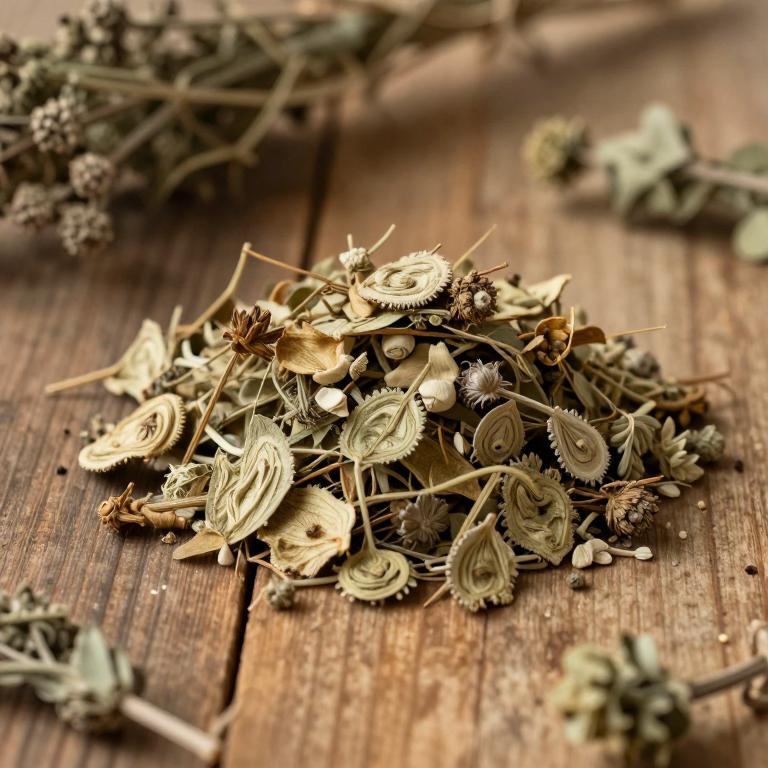
Names and Synonyms
Scientific Names
Accepted name
Costus spiralisSynonyms
- Amomum spirale
- Gissanthe spiralis
- Alpinia spiralis
Sources: Wikidata, Catalogue of Life
Taxonomical Classification
This plant belongs to the kingdom Plantae and is classified under the phylum Streptophyta and class Equisetopsida. Within the subclass Magnoliidae, it is ordered under Zingiberales and placed in the family Costaceae. Finally, it is categorized under the genus Costus as Costus spiralis.
| Rank | Classification |
|---|---|
| Kingdom | Plantae |
| Phylum | Streptophyta |
| Class | Equisetopsida |
| Subclass | Magnoliidae |
| Order | Zingiberales |
| Family | Costaceae |
| Genus | Costus |
Sources: The World Checklist of Vascular Plants (WCVP)
Distribution
This plant is native to several specific regions across the Caribbean and Northern South America. Within the Caribbean, its range includes the island of Cuba as well as the Venezuelan Antilles. Moving toward the mainland, the species is also found throughout Northern South America. Specifically, it inhabits the territories of French Guiana and Guyana. Finally, its geographical distribution extends into the country of Suriname.
| Region | Area |
|---|---|
| Caribbean | Cuba |
| Caribbean | Venezuelan Antilles |
| Northern South America | French Guiana |
| Northern South America | Guyana |
| Northern South America | Suriname |
| Northern South America | Venezuela |
| Western South America | Bolivia |
| Western South America | Colombia |
| Western South America | Peru |
| Brazil | Brazil West-Central |
Sources: The World Checklist of Vascular Plants (WCVP)
Botanical Identification
Ecology
The ecology of Costus spiralis is characterized by a diverse range of environmental conditions and highly varied habitats. This species demonstrates significant adaptability to different forest structures, thriving in environments such as coastal forests (Floresta Ciliar ou Galeria), terra firme forests, and seasonal semi-deciduous forests (Floresta Estacional Semidecidual). Furthermore, it can be found in ombrophilous or rain forests (Floresta Ombrófila), palm groves (Palmeiral), and coastal restinga ecosystems. Its altitudinal distribution is quite broad, ranging from sea level (0 m AMSL) up to an elevation of 1800 m AMSL, allowing it to occupy various ecological niches across different topographical gradients.
- Elevational range max:
- 1800 m AMSL
- Elevational range min:
- 0 m AMSL
- Habitat :
- Floresta Ciliar ou Galeria, Floresta de Terra Firme, Floresta Estacional Semidecidual, Floresta Ombrófila (= Floresta Pluvial), Palmeiral, Restinga
Life history
The life history of Costus spiralis is characterized by its classification as a perennial plant, allowing it to persist through multiple growing seasons. Structurally, the species exhibits a complex life form, functioning as both a geophyte and a cryptophyte. As a geophyte, it relies on underground storage organs to survive unfavorable environmental conditions, ensuring its long-term survival and ability to regenerate. This cryptophytic nature further defines its strategy, as its vital buds and regenerative tissues remain protected below the soil surface, shielded from external stressors such as drought or temperature fluctuations.
- Life form :
- geophyte
- Life form :
- cryptophyte
- Lifecycle :
- perennial
Morphology
The morphology of Costus spiralis is characterized by its growth form as a non-woody herb, exhibiting a primarily terrestrial habit. It functions as an independent organism, lacking any parasitic tendencies, and maintains a self-supporting structure rather than acting as a climber, vine, or liana. As a terrestrial species, it does not exhibit epiphytic qualities, such as being a holoepiphyte or hemiepiphyte, but instead thrives in soil-based environments. Its physical constitution is defined by its herbaceous nature, lacking woody tissue, which contributes to its distinct upright or spreading stature within its natural habitat.
- Aquatic :
- terrestrial
- Climber :
- self-supporting
- Epiphyte :
- terrestrial
- Growth form :
- herb
- Parasite :
- independent
- Woodiness :
- non-woody
Physiology
The physiology of Costus spiralis is characterized by a metabolic framework centered on the C3 photosynthetic pathway, where carbon fixation occurs through the direct carboxylation of ribulose-1,5-bisphosphate by the enzyme RuBisCO within the mesophyll cells. This C3 mechanism dictates the plant's gas exchange patterns and water-use efficiency, as it relies on the continuous opening of stomata during daylight hours to facilitate the diffusion of CO2, which inherently exposes the plant to transpirational water loss. The plant's physiological processes are driven by this primary carbon assimilation route, influencing its nutrient uptake, biomass accumulation, and overall growth rate in response to environmental variables such as light intensity and humidity. Unlike plants utilizing C4 or CAM pathways, the metabolic regulation in Costus spiralis is optimized for environments where water availability is sufficient to support the standard C3 cycle without the need for specialized carbon-concentrating mechanisms or nocturnal acid accumulation.
- Photosynthetic pathway :
- C3
Sources: Global Inventory of Floras and Traits (GIFT)
Plant Parts
Costus spiralis has 1 reported plant parts identified across 2 scientific publications and several other databases that are studied for medicinal purposes. The most consistently reported plant part include leaf.
| Plant part | Supporting sources | Consensus |
|---|---|---|
| Leaf | 2 supporting sources | ★☆☆☆☆ |
Leaf
- Journal of ethnopharmacology
- Fitoterapia
Chemicals
Costus spiralis has 6 reported phytochemicals identified across 2 scientific publications and several other databases. The most consistently reported chemicals include Condensed Tannins, Flavonoids, Saponins, Schaftoside, Steroids.
| Chemical | Supporting sources | Consensus |
|---|---|---|
| Condensed Tannins | 1 supporting sources | ★☆☆☆☆ |
| Flavonoids | 1 supporting sources | ★☆☆☆☆ |
| Saponins | 1 supporting sources | ★☆☆☆☆ |
| Schaftoside | 1 supporting sources | ★☆☆☆☆ |
| Steroids | 1 supporting sources | ★☆☆☆☆ |
| Vicenin II | 1 supporting sources | ★☆☆☆☆ |
Condensed Tannins
- Journal of ethnopharmacology
Flavonoids
- Journal of ethnopharmacology
Saponins
- Journal of ethnopharmacology
Schaftoside
- Journal of ethnopharmacology
Steroids
- Journal of ethnopharmacology
Vicenin II
- Journal of ethnopharmacology
Activities
Costus spiralis has 1 reported activities identified across 2 scientific publications and several other databases. The most consistently reported activities include Antinociceptive.
| Activity | Supporting sources | Consensus |
|---|---|---|
| Antinociceptive | 1 supporting sources | ★☆☆☆☆ |
Antinociceptive
- Journal of ethnopharmacology
Conditions
Costus spiralis has 11 reported investigations on conditions identified across 2 scientific publications and several other databases. The most consistently reported conditions include arthritis, calculi, cough, inflammation, kidney diseases.
| Condition | Supporting sources | Consensus |
|---|---|---|
| Arthritis | 1 supporting sources | ★☆☆☆☆ |
| Calculi | 1 supporting sources | ★☆☆☆☆ |
| Cough | 1 supporting sources | ★☆☆☆☆ |
| Inflammation | 1 supporting sources | ★☆☆☆☆ |
| Kidney diseases | 1 supporting sources | ★☆☆☆☆ |
| Kidney stones | 1 supporting sources | ★☆☆☆☆ |
| Nociception | 1 supporting sources | ★☆☆☆☆ |
| Pain | 1 supporting sources | ★☆☆☆☆ |
| Peritonitis | 1 supporting sources | ★☆☆☆☆ |
| Pyelonephritis | 1 supporting sources | ★☆☆☆☆ |
Arthritis
- Journal of ethnopharmacology
Calculi
- Journal of ethnopharmacology
Cough
- Journal of ethnopharmacology
Inflammation
- Journal of ethnopharmacology
Kidney diseases
- Journal of ethnopharmacology
Kidney stones
- Journal of ethnopharmacology
Nociception
- Journal of ethnopharmacology
Pain
- Journal of ethnopharmacology
Peritonitis
- Journal of ethnopharmacology
Pyelonephritis
- Journal of ethnopharmacology
Preparations
Costus spiralis has 2 reported preparations identified across 2 scientific publications and several other databases. The most consistently reported preparations include Costus spiralis extract leaves, leaves.
| Preparation | Supporting sources | Consensus |
|---|---|---|
| Costus spiralis extract leaves | 1 supporting sources | ★☆☆☆☆ |
| Leaves | 1 supporting sources | ★☆☆☆☆ |
Costus spiralis extract leaves
- Journal of ethnopharmacology
Leaves
- Fitoterapia