Ulam Raja
Cosmos caudatus · Accepted scientific name
Scientific literature: Very Sparse (19 studies) · ★☆☆☆☆
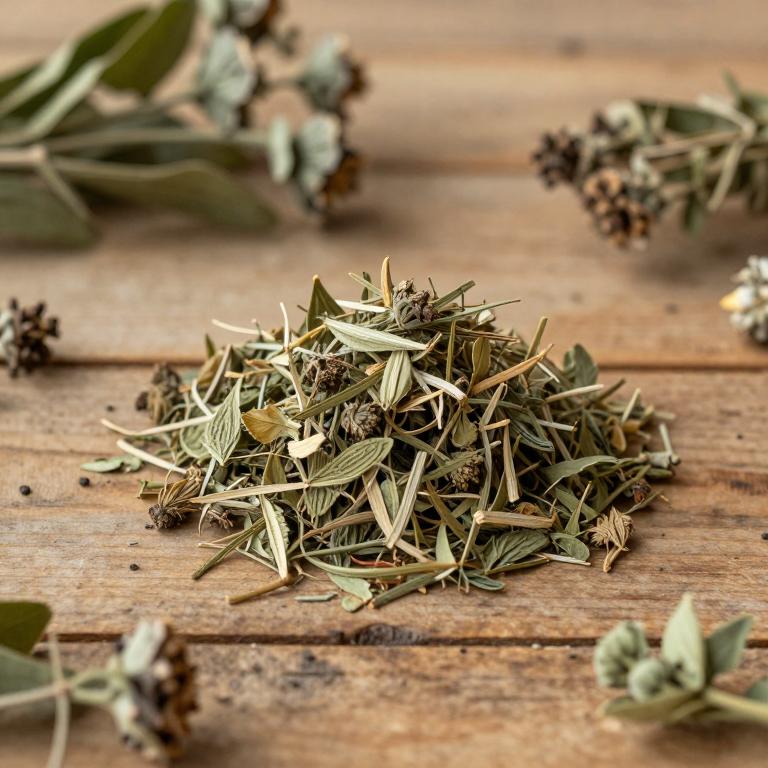
Ulam Raja, scientifically known as Cosmos caudatus, is a vibrant medicinal herb native to Southeast Asia. Renowned for its nutritional density, this leafy green is a staple in traditional diets. Rich in antioxidants and flavonoids, it is widely celebrated for supporting bone health, improving circulation, and promoting overall wellness.
Names and Synonyms
Common Names
- Foxtail
- cosmos
- king's salad
Scientific Names
Accepted name
Cosmos caudatusSynonyms
- Bidens artemisiifolia var. intermedia
- Cosmos pacificus var. chiapensis
- Bidens artemisiifolia var. rosea
- Bidens berteroana
- Bidens carnea
- Cosmea caudata
- Bidens caudata
- Bidens artemisiifolia var. caudata
- Bidens artemisiifolia f. rubra
- Bidens artemisiifolia var. rubra
Regional and Traditional Names
Spanish:
- estrella de mar
German:
- Cosmee
- Schmuckblume
Sources: Wikidata, Catalogue of Life
Taxonomical Classification
This plant belongs to the kingdom Plantae and the phylum Streptophyta, falling under the class Equisetopsida and subclass Magnoliidae. Within the order Asterales, it is a member of the Asteraceae family. Specifically, its taxonomic classification is placed within the genus Cosmos.
| Rank | Classification |
|---|---|
| Kingdom | Plantae |
| Phylum | Streptophyta |
| Class | Equisetopsida |
| Subclass | Magnoliidae |
| Order | Asterales |
| Family | Asteraceae |
| Genus | Cosmos |
Sources: The World Checklist of Vascular Plants (WCVP)
Distribution
This plant exhibits a diverse geographical distribution across several distinct regions. Within the Western Indian Ocean, it can be found on the island of Mauritius. Its presence also extends to Madagascar and the island of Réunion. Furthermore, it is documented in the territory of Rodrigues. Finally, the species is located within the Indian Subcontinent, specifically in the state of Assam.
| Region | Area |
|---|---|
| Western Indian Ocean | Mauritius |
| Western Indian Ocean | Madagascar |
| Western Indian Ocean | Réunion |
| Western Indian Ocean | Rodrigues |
| Indian Subcontinent | Assam |
| Indian Subcontinent | India |
| Indian Subcontinent | Sri Lanka |
| Indo-China | Myanmar |
| Indo-China | Thailand |
| Indo-China | Vietnam |
Sources: The World Checklist of Vascular Plants (WCVP)
Botanical Identification
Ecology
The ecology of Cosmos caudatus is characterized by its significant adaptability to varying topographic gradients, occupying an elevational range that spans from sea level (0 m AMSL) up to a maximum altitude of 2200 m AMSL. This broad vertical distribution allows the species to thrive across diverse climatic zones, ranging from lowland tropical environments to cooler montane regions. Regarding its preferred environmental settings, the plant is frequently found in "Área Antrópica" (anthropic areas), indicating a strong ecological affinity for disturbed sites, agricultural lands, and landscapes modified by human activity. This tendency to colonize anthropogenic habitats suggests that the species excels in disturbed soil conditions and can successfully integrate into human-managed ecosystems.
- Elevational range max:
- 2200 m AMSL
- Elevational range min:
- 0 m AMSL
- Habitat :
- Área Antrópica
Life history
The life history of Cosmos caudatus is characterized by an annual lifecycle, meaning the plant completes its entire developmental process—from germination and vegetative growth to flowering and seed production—within a single growing season. Following germination, the plant undergoes a rapid period of vegetative development, establishing a bushy structure with elongated, pinnate leaves. As the season progresses, it transitions into its reproductive phase, producing prolific blooms that serve to attract pollinators and facilitate the production of seeds. Once the seeds have matured, the plant reaches the end of its biological cycle and dies, leaving the seeds to enter a period of dormancy in the soil to await the next growing season, thereby ensuring the continuity of the species through a new generation of seedlings.
- Lifecycle :
- annual
Morphology
The morphology of Cosmos caudatus is characterized by its growth as a non-woody herb and specifically a forb, typically reaching an average plant height of 1 meter. It functions as a self-supporting plant, lacking any climbing tendencies such as liana or vine habits. As a terrestrial species, it does not exhibit aquatic, semiaquatic, or epiphytic lifestyles, maintaining an independent existence without acting as a parasite.
- Aquatic :
- terrestrial
- Climber :
- self-supporting
- Epiphyte :
- terrestrial
- Growth form :
- herb
- Growth form :
- forb
- Parasite :
- independent
- Plant height mean:
- 1 m
- Woodiness :
- non-woody
Physiology
The physiology of Cosmos caudatus is characterized by its efficient metabolic processes and its specific role within the nitrogen cycle of its ecosystem. Regarding its nutrient acquisition strategies, the plant is not a nitrogen fixer; it lacks the symbiotic relationship with rhizobia or other nitrogen-fixing bacteria typically found in leguminous species, meaning it must rely on the uptake of inorganic nitrogen, such as nitrates and ammonium, directly from the soil through its root system. Its physiological makeup supports rapid growth and biomass production, driven by robust photosynthetic activity and a specialized secondary metabolism that produces high concentrations of antioxidant compounds, including chlorogenic acid and flavonoids. These metabolic pathways are essential for managing oxidative stress and facilitating the plant's survival in varying environmental conditions, while its water regulation and mineral transport systems are optimized to support its characteristic herbaceous structure.
- Nitrogen fixer :
- no
Reproduction
Reproduction in Cosmos caudatus is facilitated through a complex interplay of various dispersal mechanisms that ensure the spread of its progeny across diverse environments. The plant exhibits a multifaceted dispersal syndrome, characterized by being both anemochorous and zoochorous, meaning its seeds are dispersed through the movement of wind and animals, respectively. Additionally, the species utilizes autochorous methods, where seeds are expelled through internal plant mechanisms, and may occasionally undergo hydrochorous dispersal via water currents. Due to this wide range of vectors, the plant can also be classified as having an unspecialized dispersal strategy, allowing it to colonize new habitats effectively by not relying on a single, specific mode of transport.
- Dispersal syndrome :
- zoochorous
Sources: Global Inventory of Floras and Traits (GIFT)
Plant Parts
Cosmos caudatus has 1 reported plant parts identified across 2 scientific publications and several other databases that are studied for medicinal purposes. The most consistently reported plant part include leaf.
| Plant part | Supporting sources | Consensus |
|---|---|---|
| Leaf | 2 supporting sources | ★☆☆☆☆ |
Leaf
- BMC complementary and alternative medicine
- Scientific reports
Chemicals
Cosmos caudatus has 6 reported phytochemicals identified across 2 scientific publications and several other databases. The most consistently reported chemicals include Quercetin 3-O-glucoside, Quercetin 3-O-rhamnoside, RUTIN, quercetin 3-O-arabinofuranoside, quercetin-3-o-xyloside.
| Chemical | Supporting sources | Consensus |
|---|---|---|
| Quercetin 3-O-glucoside | 1 supporting sources | ★☆☆☆☆ |
| Quercetin 3-O-rhamnoside | 1 supporting sources | ★☆☆☆☆ |
| RUTIN | 1 supporting sources | ★☆☆☆☆ |
| quercetin 3-O-arabinofuranoside | 1 supporting sources | ★☆☆☆☆ |
| quercetin-3-o-xyloside | 1 supporting sources | ★☆☆☆☆ |
| quercitrin | 1 supporting sources | ★☆☆☆☆ |
Quercetin 3-O-glucoside
- BMC complementary and alternative medicine
Quercetin 3-O-rhamnoside
- BMC complementary and alternative medicine
RUTIN
- BMC complementary and alternative medicine
quercetin 3-O-arabinofuranoside
- BMC complementary and alternative medicine
quercetin-3-o-xyloside
- BMC complementary and alternative medicine
quercitrin
- Scientific reports
Activities
Cosmos caudatus has 1 reported activities identified across 2 scientific publications and several other databases. The most consistently reported activities include Antioxidant.
| Activity | Supporting sources | Consensus |
|---|---|---|
| Antioxidant | 1 supporting sources | ★☆☆☆☆ |
Antioxidant
- Current research in physiology
Conditions
Cosmos caudatus has 8 reported investigations on conditions identified across 2 scientific publications and several other databases. The most consistently reported conditions include type 2 diabetes, aging, arthritis, diabetes mellitus, high blood pressure.
| Condition | Supporting sources | Consensus |
|---|---|---|
| Type 2 diabetes | 2 supporting sources | ★☆☆☆☆ |
| Aging | 1 supporting sources | ★☆☆☆☆ |
| Arthritis | 1 supporting sources | ★☆☆☆☆ |
| Diabetes mellitus | 1 supporting sources | ★☆☆☆☆ |
| High blood pressure | 1 supporting sources | ★☆☆☆☆ |
| Hyperglycemia | 1 supporting sources | ★☆☆☆☆ |
| Hypertension | 1 supporting sources | ★☆☆☆☆ |
| Postmenopausal osteoporosis | 1 supporting sources | ★☆☆☆☆ |
Type 2 diabetes
- BMC complementary and alternative medicine
- Malaysian journal of nutrition
Aging
- Molecules (Basel, Switzerland)
Arthritis
- BMC complementary and alternative medicine
Diabetes mellitus
- BMC complementary and alternative medicine
High blood pressure
- BMC complementary and alternative medicine
Hyperglycemia
- Malaysian journal of nutrition
Hypertension
- Malaysian journal of nutrition
Postmenopausal osteoporosis
- Pakistan journal of pharmaceutical sciences
Preparations
Cosmos caudatus has 4 reported preparations identified across 2 scientific publications and several other databases. The most consistently reported preparations include 80% ethanol, 80% methanol, Cosmos caudatus extract, leaf aqueous ethanolic extracts.
| Preparation | Supporting sources | Consensus |
|---|---|---|
| 80% ethanol | 1 supporting sources | ★☆☆☆☆ |
| 80% methanol | 1 supporting sources | ★☆☆☆☆ |
| Cosmos caudatus extract | 1 supporting sources | ★☆☆☆☆ |
| Leaf aqueous ethanolic extracts | 1 supporting sources | ★☆☆☆☆ |
80% ethanol
- Molecules (Basel, Switzerland)
80% methanol
- Molecules (Basel, Switzerland)
Cosmos caudatus extract
- Current research in physiology
Leaf aqueous ethanolic extracts
- BMC complementary and alternative medicine