false calumba
Coscinium fenestratum · Accepted scientific name
Scientific literature: Very Sparse (28 studies) · ★☆☆☆☆
False calumba, scientifically known as Coscinium fenestraatum, is a climbing woody vine native to South Asia. Renowned in traditional Ayurvedic medicine, this potent botanical is prized for its bitter principles. It is frequently utilized to treat digestive issues, skin disorders, and inflammatory conditions, offering significant therapeutic potential in pharmacology.
- Family
- Menispermaceae
- Native range
- Asia-Tropical
- Parts used
- Stem
- Common names
- False Calumba · Yellow Vine
- Scientific synonyms
- Coscinium Fenestratum Var. Macrophyllum · Coscinium Fenestratum Var. Ovalifolium · 8 more
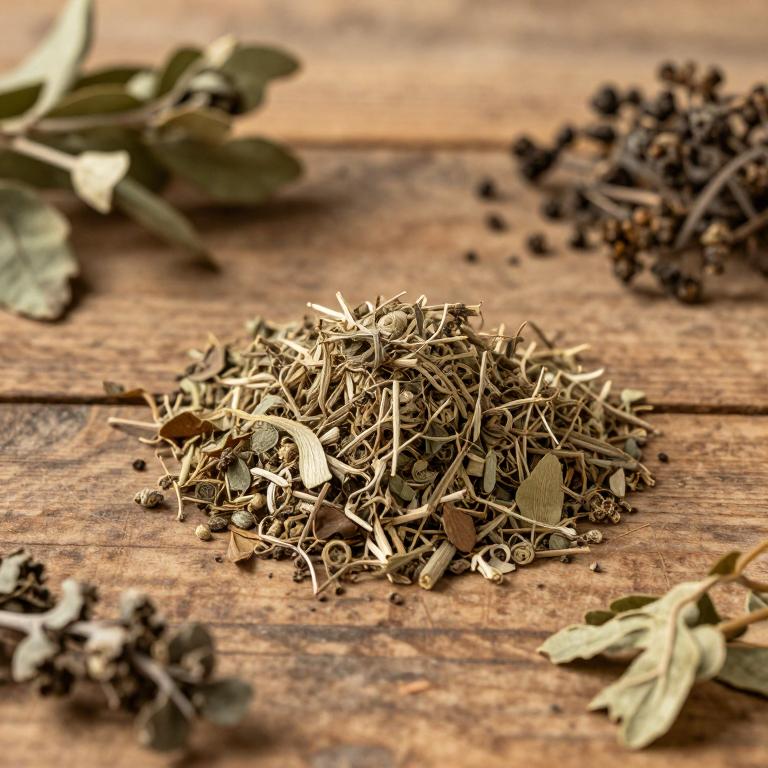
Names and Synonyms
Common Names
- false calumba
- Yellow Vine
Scientific Names
Accepted name
Coscinium fenestratumSynonyms
- Coscinium fenestratum var. macrophyllum
- Coscinium fenestratum var. ovalifolium
- Coscinium maingayi
- Coscinium wightianum
- Menispermum fenestratum
- Pereiria medica
- Coscinium miosepalum
- Coscinium peltatum
- Coscinium usitatum
- Coscinium wallichianum
Sources: Wikidata, Catalogue of Life
Taxonomical Classification
This plant belongs to the kingdom Plantae and the phylum Streptophyta, falling under the class Equisetopsida and subclass Magnoliidae. Within the order Ranunculales, it is classified under the family Menispermaceae. Its scientific name is derived from the genus Coscinium, specifically the species Coscinium fenestratum.
| Rank | Classification |
|---|---|
| Kingdom | Plantae |
| Phylum | Streptophyta |
| Class | Equisetopsida |
| Subclass | Magnoliidae |
| Order | Ranunculales |
| Family | Menispermaceae |
| Genus | Coscinium |
Sources: The World Checklist of Vascular Plants (WCVP)
Distribution
This plant exhibits a diverse geographical distribution across several key regions in Asia. Within the Indian Subcontinent, it can be found growing in both India and Sri Lanka. Its presence also extends significantly into the Indo-China region. Specifically, it is documented to inhabit the territories of Cambodia and Laos. Furthermore, the species is widely distributed throughout Thailand.
| Region | Area |
|---|---|
| Indian Subcontinent | India |
| Indian Subcontinent | Sri Lanka |
| Indo-China | Cambodia |
| Indo-China | Laos |
| Indo-China | Thailand |
| Indo-China | Vietnam |
| Malesia | Borneo |
| Malesia | Jawa |
| Malesia | Malaya |
| Malesia | Sumatera |
Sources: The World Checklist of Vascular Plants (WCVP)
Botanical Identification
Life history
The life history of Coscinium fenestraatum is characterized by its classification as a phanerophyte, a growth form where the perennating buds are located high above the ground on woody stems. Within this ecological framework, it exhibits a complex life strategy that can be categorized specifically as a phanerophyte (Life_form_1) and further distinguished as a phanerophyte (Life_form_2), reflecting its development as a climbing woody vine that relies on elevated structural supports to maintain its photosynthetic organs. This perennial habit allows the plant to persist through varying environmental conditions by maintaining its reproductive and vegetative potential in its elevated woody structures.
- Life form :
- phanerophyte
Morphology
The morphology of Coscinium fenestratum is characterized by its robust, woody structure, functioning as an obligatory liana. This climbing plant reaches a significant plant height, with a mean height of approximately 15 m, as it utilizes its woody stems to ascend. Although it exhibits characteristics often associated with a shrub-like growth form in its developmental stages, it primarily functions as a vine to navigate its environment. As a terrestrial species, it is not an epiphyte, instead establishing itself firmly within the ground substrate to support its extensive climbing habit.
- Climber :
- liana
- Climber :
- obligatory
- Epiphyte :
- terrestrial
- Growth form :
- shrub
- Plant height mean:
- 15 m
- Woodiness :
- woody
Physiology
The physiology of Coscinium fenestratum is characterized by its specific metabolic and nutritional strategies adapted to its forest habitat. The plant utilizes the C3 photosynthetic pathway, a method of carbon fixation where the first stable compound produced is a three-carbon molecule, typically functioning efficiently under the shaded, temperate, or tropical forest understories where this species is commonly found. Furthermore, Coscinium fenestratum does not function as a nitrogen fixer; it lacks the specialized symbiotic relationships with nitrogen-fixing bacteria required to convert atmospheric nitrogen into a usable form, relying instead on the uptake of nitrates and ammonium from the soil through its root system.
- Nitrogen fixer :
- no
- Photosynthetic pathway :
- C3
Reproduction
The reproduction of Coscinium fenestratum involves the production of specialized seeds that play a critical role in its dispersal and establishment within its natural habitat. Based on empirical data, the seeds produced by this species exhibit a highly consistent mass, characterized by a uniform seed mass mean of 6.5 g. This consistency is further evidenced by the fact that both the maximum and minimum recorded seed mass values are exactly 6.5 g, indicating a lack of significant variance in the weight of the individual seeds. Such precise uniformity in seed mass suggests a stable reproductive strategy, ensuring that each offspring is equipped with a standardized amount of nutrient reserves to support early germination and growth.
- Seed mass mean:
- 6.5 g
Sources: Global Inventory of Floras and Traits (GIFT)
Plant Parts
Coscinium fenestratum has 1 reported plant parts identified across 4 scientific publications and several other databases that are studied for medicinal purposes. The most consistently reported plant part include stem.
| Plant part | Supporting sources | Consensus |
|---|---|---|
| Stem | 4 supporting sources | ★★☆☆☆ |
Stem
- Evidence-based complementary and alternative medicine : eCAM
- Journal of ethnopharmacology
- Indian journal of experimental biology
- Food and chemical toxicology : an international journal published for the British Industrial Biological Research Association
Chemicals
Coscinium fenestratum has 8 reported phytochemicals identified across 4 scientific publications and several other databases. The most consistently reported chemicals include berberine, Alanine Aminotransferase, CATALASE, Peroxidase, Superoxide dismutase.
| Chemical | Supporting sources | Consensus |
|---|---|---|
| berberine | 3 supporting sources | ★★☆☆☆ |
| Alanine Aminotransferase | 1 supporting sources | ★☆☆☆☆ |
| CATALASE | 1 supporting sources | ★☆☆☆☆ |
| Peroxidase | 1 supporting sources | ★☆☆☆☆ |
| Superoxide dismutase | 1 supporting sources | ★☆☆☆☆ |
| TOCOPHEROL | 1 supporting sources | ★☆☆☆☆ |
| Tetraacetyl-d-xylonic nitrile | 1 supporting sources | ★☆☆☆☆ |
| ascorbic acid | 1 supporting sources | ★☆☆☆☆ |
berberine
- Journal of Ayurveda and integrative medicine
- Chemico-biological interactions
- Journal of ethnopharmacology
Alanine Aminotransferase
- Evidence-based complementary and alternative medicine : eCAM
CATALASE
- Evidence-based complementary and alternative medicine : eCAM
Peroxidase
- Evidence-based complementary and alternative medicine : eCAM
Superoxide dismutase
- Evidence-based complementary and alternative medicine : eCAM
TOCOPHEROL
- Evidence-based complementary and alternative medicine : eCAM
Tetraacetyl-d-xylonic nitrile
- Plants (Basel, Switzerland)
ascorbic acid
- Evidence-based complementary and alternative medicine : eCAM
Activities
Coscinium fenestratum has 2 reported activities identified across 4 scientific publications and several other databases. The most consistently reported activities include Antihyperglycemic, Cytotoxic.
| Activity | Supporting sources | Consensus |
|---|---|---|
| Antihyperglycemic | 1 supporting sources | ★☆☆☆☆ |
| Cytotoxic | 1 supporting sources | ★☆☆☆☆ |
Antihyperglycemic
- Acta poloniae pharmaceutica
Cytotoxic
- Evidence-based complementary and alternative medicine : eCAM
Conditions
Coscinium fenestratum has 9 reported investigations on conditions identified across 4 scientific publications and several other databases. The most consistently reported conditions include hypertension, Gonorrhea, acne, cholesterol, diabetes mellitus.
| Condition | Supporting sources | Consensus |
|---|---|---|
| Hypertension | 2 supporting sources | ★☆☆☆☆ |
| Gonorrhea | 1 supporting sources | ★☆☆☆☆ |
| Acne | 1 supporting sources | ★☆☆☆☆ |
| Cholesterol | 1 supporting sources | ★☆☆☆☆ |
| Diabetes mellitus | 1 supporting sources | ★☆☆☆☆ |
| Eye infection | 1 supporting sources | ★☆☆☆☆ |
| Hypercholesterolemia | 1 supporting sources | ★☆☆☆☆ |
| Malaria | 1 supporting sources | ★☆☆☆☆ |
| Ulcerative colitis | 1 supporting sources | ★☆☆☆☆ |
Hypertension
- Chemico-biological interactions
- Journal of traditional and complementary medicine
Gonorrhea
- Journal of ethnopharmacology
Acne
- BioMed research international
Cholesterol
- Plants (Basel, Switzerland)
Diabetes mellitus
- Acta poloniae pharmaceutica
Eye infection
- Pathogens and global health
Hypercholesterolemia
- Chemico-biological interactions
Malaria
- Journal of ethnopharmacology
Ulcerative colitis
- Preventive nutrition and food science
Preparations
Coscinium fenestratum has 13 reported preparations identified across 4 scientific publications and several other databases. The most consistently reported preparations include Alcoholic extract of the stems, Alcoholic stem extract, Maramanjal/Daruharidra, alcoholic stem extract, crude extract.
| Preparation | Supporting sources | Consensus |
|---|---|---|
| Alcoholic extract of the stems | 1 supporting sources | ★☆☆☆☆ |
| Alcoholic stem extract | 1 supporting sources | ★☆☆☆☆ |
| Maramanjal/daruharidra | 1 supporting sources | ★☆☆☆☆ |
| Alcoholic stem extract | 1 supporting sources | ★☆☆☆☆ |
| Crude extract | 1 supporting sources | ★☆☆☆☆ |
| Crude extracts | 1 supporting sources | ★☆☆☆☆ |
| Crude water extract | 1 supporting sources | ★☆☆☆☆ |
| Extracted with water | 1 supporting sources | ★☆☆☆☆ |
| Extracts | 1 supporting sources | ★☆☆☆☆ |
| Fractions | 1 supporting sources | ★☆☆☆☆ |
Alcoholic extract of the stems
- Evidence-based complementary and alternative medicine : eCAM
Alcoholic stem extract
- Evidence-based complementary and alternative medicine : eCAM
Maramanjal/daruharidra
- Journal of Ayurveda and integrative medicine
Alcoholic stem extract
- Journal of ethnopharmacology
Crude extract
- Journal of ethnopharmacology
Crude extracts
- Journal of traditional and complementary medicine
Crude water extract
- Evidence-based complementary and alternative medicine : eCAM
Extracted with water
- Plants (Basel, Switzerland)
Extracts
- Pathogens and global health
Fractions
- Journal of traditional and complementary medicine