Corynanthe johimbe
Corynanthe johimbe · Accepted scientific name
Scientific literature: Sparse (94 studies) · ★★☆☆☆
, scientifically known as Corynanthe johimbe, is a medicinal shrub native to West Africa. Renowned for its bark, which contains the alkaloid yohimbine, this plant has a long history in traditional medicine. It is primarily utilized for its stimulant properties and its potential role in addressing various physiological conditions.
- Family
- Not available
- Native range
- Africa
- Parts used
- Root
- Common names
- Not available
- Scientific synonyms
- Not available
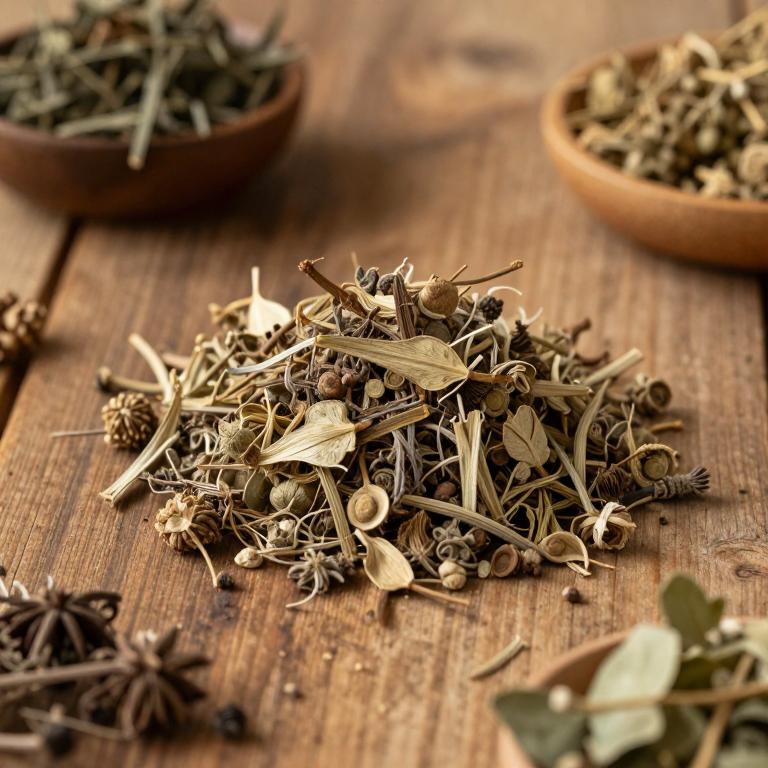
Names and Synonyms
Scientific Names
Accepted name
Corynanthe johimbeDistribution
This plant, known as Corynanthe johimbé, exhibits a specific distribution across several regions of the African continent. In West Tropical Africa, it can be found growing within the borders of Nigeria. Its range extends into West-Central Tropical Africa, where it is present in the province of Cabinda. Furthermore, the species is documented throughout Cameroon and the Republic of the Congo. Finally, its geographical footprint includes the territory of Equatorial Guinea.
| Region | Area |
|---|---|
| West Tropical Africa | Nigeria |
| West-Central Tropical Africa | Cabinda |
| West-Central Tropical Africa | Cameroon |
| West-Central Tropical Africa | Congo |
| West-Central Tropical Africa | Equatorial Guinea |
| West-Central Tropical Africa | Gabon |
| West-Central Tropical Africa | DR Congo |
Sources: The World Checklist of Vascular Plants (WCVP)
Botanical Identification
Life history
The life history of Corynanthe johimbe is characterized by its existence as a perennial plant, ensuring its presence in the ecosystem over multiple growing seasons. As a phanerophyte, its regenerative buds are located on aerial shoots well above the ground, a structural adaptation that defines its growth habit. This species maintains an evergreen status, retaining its foliage throughout the year rather than undergoing seasonal shedding. Furthermore, its classification as a phanerophyte is consistently reflected in its structural development, supporting a sustained and long-lived biological cycle within its natural habitat.
- Deciduousness :
- evergreen
- Life form :
- phanerophyte
- Lifecycle :
- perennial
Morphology
The morphology of Corynanthe johimbe is characterized by a robust growth form, primarily manifesting as a woody tree. This plant exhibits a significant vertical stature, with an average height of approximately 25 m and a maximum recorded height reaching up to 27.43 m. While it displays characteristics consistent with a self-supporting liana or vine, its fundamental growth habit is that of a tree. It functions as an independent organism, neither acting as a parasite nor an epiphyte, and is strictly terrestrial in its habitat.
- Climber :
- self-supporting
- Epiphyte :
- terrestrial
- Growth form :
- tree
- Parasite :
- independent
- Plant height max:
- 27.43233358 m
- Plant height mean:
- 25 m
- Woodiness :
- woody
Physiology
The physiology of Corynanthe johimbe is characterized by its metabolic processes focused on the synthesis of complex indole alkaloids, primarily yohimbine, which are produced through specialized secondary metabolic pathways within its tissues. As a woody perennial, its physiological functions are geared toward long-term growth and the maintenance of structural integrity in tropical forest environments. Regarding its nutrient acquisition and symbiotic relationships, the plant does not function as a nitrogen fixer; it lacks the specialized root nodules or symbiotic associations with diazotrophic bacteria required to convert atmospheric nitrogen into bioavailable forms. Instead, its physiological nitrogen uptake is dependent on the absorption of nitrates and ammonium from the soil through its root system. Its carbon assimilation is driven by photosynthetic processes that support both primary growth and the energy-intensive biosynthesis of its alkaloid profile.
- Nitrogen fixer :
- no
Sources: Global Inventory of Floras and Traits (GIFT)
Plant Parts
Corynanthe johimbe has 1 reported plant parts identified across 1 scientific publications and several other databases that are studied for medicinal purposes. The most consistently reported plant part include root.
| Plant part | Supporting sources | Consensus |
|---|---|---|
| Root | 1 supporting sources | ★☆☆☆☆ |
Root
- Sexual medicine reviews
Chemicals
Corynanthe johimbe has 10 reported phytochemicals identified across 1 scientific publications and several other databases. The most consistently reported chemicals include Alloyohimbine, Corynantheine, Dihydrocorynantheine, PSEUDOYOHIMBINE, Quebrachine.
| Chemical | Supporting sources | Consensus |
|---|---|---|
| Alloyohimbine | 1 supporting sources | ★☆☆☆☆ |
| Corynantheine | 1 supporting sources | ★☆☆☆☆ |
| Dihydrocorynantheine | 1 supporting sources | ★☆☆☆☆ |
| PSEUDOYOHIMBINE | 1 supporting sources | ★☆☆☆☆ |
| Quebrachine | 1 supporting sources | ★☆☆☆☆ |
| Tannin | 1 supporting sources | ★☆☆☆☆ |
| Yohimbine | 1 supporting sources | ★☆☆☆☆ |
| ajmaline | 1 supporting sources | ★☆☆☆☆ |
| alpha-Yohimbine | 1 supporting sources | ★☆☆☆☆ |
| corynanthine | 1 supporting sources | ★☆☆☆☆ |
Alloyohimbine
- Dr. Duke
Corynantheine
- Dr. Duke
Dihydrocorynantheine
- Dr. Duke
PSEUDOYOHIMBINE
- Dr. Duke
Quebrachine
- Dr. Duke
Tannin
- Dr. Duke
Yohimbine
- Dr. Duke
ajmaline
- Dr. Duke
alpha-Yohimbine
- Dr. Duke
corynanthine
- Dr. Duke
Activities
Corynanthe johimbe has 83 reported activities identified across 1 scientific publications and several other databases. The most consistently reported activities include (-)-Chronotropic, Adrenergic-Blocker, Adrenolytic, Allergenic, Anesthetic.
| Activity | Supporting sources | Consensus |
|---|---|---|
| (-)-Chronotropic | 1 supporting sources | ★☆☆☆☆ |
| Adrenergic-Blocker | 1 supporting sources | ★☆☆☆☆ |
| Adrenolytic | 1 supporting sources | ★☆☆☆☆ |
| Allergenic | 1 supporting sources | ★☆☆☆☆ |
| Anesthetic | 1 supporting sources | ★☆☆☆☆ |
| Anthelmintic | 1 supporting sources | ★☆☆☆☆ |
| AntiHIV | 1 supporting sources | ★☆☆☆☆ |
| Antiacetylcholinesterase | 1 supporting sources | ★☆☆☆☆ |
| Antianginal | 1 supporting sources | ★☆☆☆☆ |
| Antiarrhythmic | 1 supporting sources | ★☆☆☆☆ |
(-)-Chronotropic
- Dr. Duke
Adrenergic-Blocker
- Dr. Duke
Adrenolytic
- Dr. Duke
Allergenic
- Dr. Duke
Anesthetic
- Dr. Duke
Anthelmintic
- Dr. Duke
AntiHIV
- Dr. Duke
Antiacetylcholinesterase
- Dr. Duke
Antianginal
- Dr. Duke
Antiarrhythmic
- Dr. Duke