Coronilla securidaca
Coronilla securidaca · Accepted scientific name
Scientific literature: Very Sparse (24 studies) · ★☆☆☆☆
Coronilla securicauda, scientifically known as Coronilla securicauda, is a resilient medicinal shrub native to the Mediterranean region. Renowned for its nitrogen-fixing capabilities and vibrant yellow blooms, this plant is traditionally utilized in folk medicine for its potential therapeutic properties, offering valuable insights into natural healing and botanical biodiversity.
- Family
- Fabaceae
- Native range
- Europe
- Parts used
- Seed
- Common names
- Not available
- Scientific synonyms
- Securigera Securidaca · Securina Securidaca · 5 more
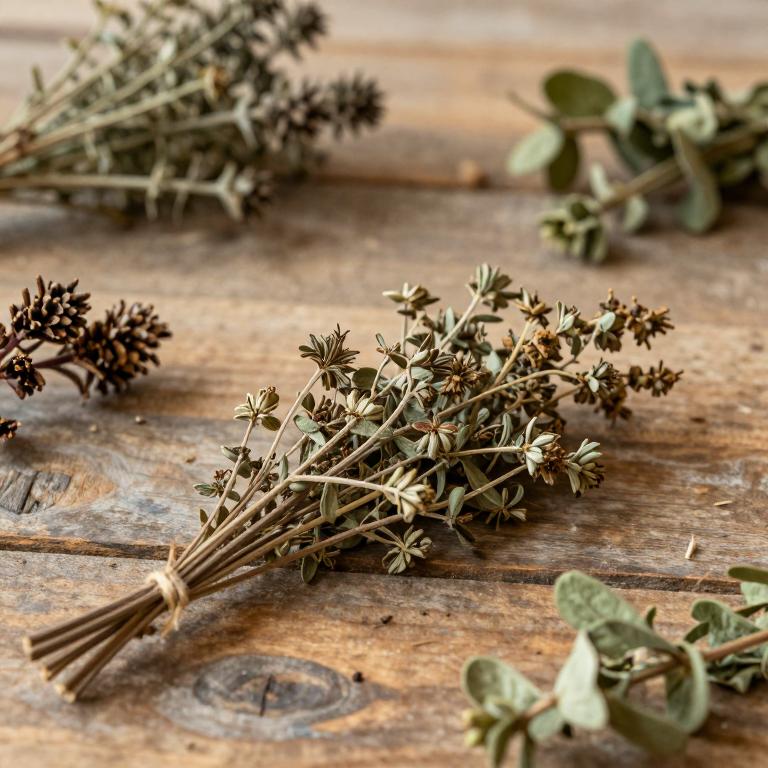
Names and Synonyms
Scientific Names
Accepted name
Coronilla securidacaSynonyms
- Securigera securidaca
- Securina securidaca
- Bonaveria securidaca
- Securina lutea
- Securigera legitima
- Securidaca lutea
- Securidaca legitima
Sources: Wikidata
Taxonomical Classification
This plant belongs to the kingdom Plantae and the phylum Streptophyta, falling under the class Equisetopsida and subclass Magnoliidae. Within the order Fabales, it is a member of the Fabaceae family. Its taxonomic classification is completed by its designation under the genus Coronilla.
| Rank | Classification |
|---|---|
| Kingdom | Plantae |
| Phylum | Streptophyta |
| Class | Equisetopsida |
| Subclass | Magnoliidae |
| Order | Fabales |
| Family | Fabaceae |
| Genus | Coronilla |
Sources: The World Checklist of Vascular Plants (WCVP)
Distribution
This plant exhibits a diverse geographical range across several distinct regions of the European continent. In Middle Europe, its presence is specifically noted within Germany. Moving towards the Mediterranean, it can be found in Southwestern Europe, spanning across France, Spain, and the island of Corse. Additionally, its distribution extends into Southeastern Europe, where it is located in Albania. Together, these locations highlight the varied habitats where the species thrives.
| Region | Area |
|---|---|
| Middle Europe | Germany |
| Southwestern Europe | Corse |
| Southwestern Europe | France |
| Southwestern Europe | Spain |
| Southeastern Europe | Albania |
| Southeastern Europe | Bulgaria |
| Southeastern Europe | Greece |
| Southeastern Europe | Italy |
| Southeastern Europe | Kriti |
| Southeastern Europe | Sicilia |
Sources: The World Checklist of Vascular Plants (WCVP)
Botanical Identification
Ecology
The ecology of Coronilla securicauda is characterized by its versatile adaptability to diverse anthropogenically influenced and semi-natural environments. This species is commonly found colonizing a variety of landscapes, including cropfields, forests, oldfields, and parks. Its ability to thrive in these varied settings suggests a resilient growth strategy capable of managing different soil conditions and light availabilities, ranging from the disturbed soils of agricultural zones to the more stable environments of woodland edges and managed parklands. Through its presence in both open oldfields and more sheltered forest margins, the plant demonstrates a broad ecological niche that allows it to integrate into both cultivated and semi-wild ecosystems.
- Habitat :
- cropfields,forest,oldfields,parks
Life history
The life history of Coronilla securicauda is characterized by its classification as an annual plant, completing its entire biological cycle within a single growing season. In terms of its structural life form, it is categorized as a therophyte, meaning it survives unfavorable seasons through ephemeral seeds rather than persistent above-ground or below-ground vegetative structures. This lifecycle strategy allows the species to exploit seasonal resources rapidly, transitioning from germination to flowering and seed production within its annual duration.
- Life form :
- therophyte
- Lifecycle :
- annual
Morphology
The morphology of Coronilla securicauda is characterized by a growth form categorized as both a herb and a forb, exhibiting a non-woody structure. It is a terrestrial plant that functions as an independent organism, neither acting as a parasite nor an epiphyte. Regarding its structural support, the plant is self-supporting, lacking the climbing characteristics of a liana or vine.
- Aquatic :
- terrestrial
- Climber :
- self-supporting
- Epiphyte :
- terrestrial
- Growth form :
- herb
- Growth form :
- forb
- Parasite :
- independent
- Woodiness :
- non-woody
Physiology
The physiology of Coronilla secundiflora is fundamentally characterized by its utilization of the C3 photosynthetic pathway, a process where carbon dioxide is fixed directly into a three-carbon compound during the initial stage of the Calvin cycle. As a member of the Fabaceae family, its physiological profile is further defined by its ability to engage in symbiotic nitrogen fixation through associations with Rhizobium bacteria within specialized root nodules. This metabolic capability allows the plant to convert atmospheric nitrogen into bioavailable forms, enhancing its nutrient uptake and supporting robust growth in nitrogen-poor soils. Additionally, its physiological processes include efficient transpiration regulation and osmotic adjustment, which facilitate survival in varied Mediterranean-style climates.
- Photosynthetic pathway :
- C3
Reproduction
The reproduction of Coronilla securicauda is characterized by a specific seasonal flowering period that typically begins in May and concludes in June. During this reproductive phase, the plant produces seeds that exhibit significant variability in weight, with a minimum seed mass of 0.0014 g, a mean mass of 0.00761 g, and a maximum mass reaching up to 0.0135 g. The dispersal of these seeds follows a zoochorous syndrome, indicating that the plant relies on animals as the primary agents for transporting its offspring to new locations.
- Dispersal syndrome :
- zoochorous
- Flowering time :
- May
- Flowering time :
- Jun
- Seed mass max:
- 0.0135 g
- Seed mass mean:
- 0.00761 g
- Seed mass min:
- 0.0014 g
Sources: Global Inventory of Floras and Traits (GIFT)
Plant Parts
Coronilla securidaca has 1 reported plant parts identified across 6 scientific publications and several other databases that are studied for medicinal purposes. The most consistently reported plant part include seed.
| Plant part | Supporting sources | Consensus |
|---|---|---|
| Seed | 6 supporting sources | ★★★☆☆ |
Seed
- Cholesterol
- BioMed research international
- Journal of natural medicines
- Drug research
- Advanced biomedical research
View 1 additional sources
- Journal of animal physiology and animal nutrition
Chemicals
Coronilla securidaca has 6 reported phytochemicals identified across 6 scientific publications and several other databases. The most consistently reported chemicals include Flavonoids, Cardiac Glycosides, Fatty acids, Sterols, Tannins.
| Chemical | Supporting sources | Consensus |
|---|---|---|
| Flavonoids | 2 supporting sources | ★☆☆☆☆ |
| Cardiac Glycosides | 1 supporting sources | ★☆☆☆☆ |
| Fatty acids | 1 supporting sources | ★☆☆☆☆ |
| Sterols | 1 supporting sources | ★☆☆☆☆ |
| Tannins | 1 supporting sources | ★☆☆☆☆ |
| polyphenols | 1 supporting sources | ★☆☆☆☆ |
Flavonoids
- BioMed research international
- Drug research
Cardiac Glycosides
- Journal of natural medicines
Fatty acids
- Drug research
Sterols
- Drug research
Tannins
- Drug research
polyphenols
- Drug research
Activities
Coronilla securidaca has 5 reported activities identified across 6 scientific publications and several other databases. The most consistently reported activities include Hypoglycemic, Antidiabetic, Antihyperglycemic, Hypolipidemic, Antihyperlipidemic.
| Activity | Supporting sources | Consensus |
|---|---|---|
| Hypoglycemic | 3 supporting sources | ★★☆☆☆ |
| Antidiabetic | 2 supporting sources | ★☆☆☆☆ |
| Antihyperglycemic | 2 supporting sources | ★☆☆☆☆ |
| Hypolipidemic | 2 supporting sources | ★☆☆☆☆ |
| Antihyperlipidemic | 1 supporting sources | ★☆☆☆☆ |
Hypoglycemic
- Journal of natural medicines
- Drug research
- Advanced biomedical research
Antidiabetic
- Journal of natural medicines
- Drug research
Antihyperglycemic
- Journal of natural medicines
- Advanced biomedical research
Hypolipidemic
- Drug research
- Advanced biomedical research
Antihyperlipidemic
- Advanced biomedical research
Preparations
Coronilla securidaca has 1 reported preparations identified across 6 scientific publications and several other databases. The most consistently reported preparations include SS seed extract.
| Preparation | Supporting sources | Consensus |
|---|---|---|
| Ss seed extract | 1 supporting sources | ★☆☆☆☆ |
Ss seed extract
- BioMed research international