green osier
Cornus alternifolia · Accepted scientific name
Scientific literature: Very Sparse (2 studies) · ★☆☆☆☆
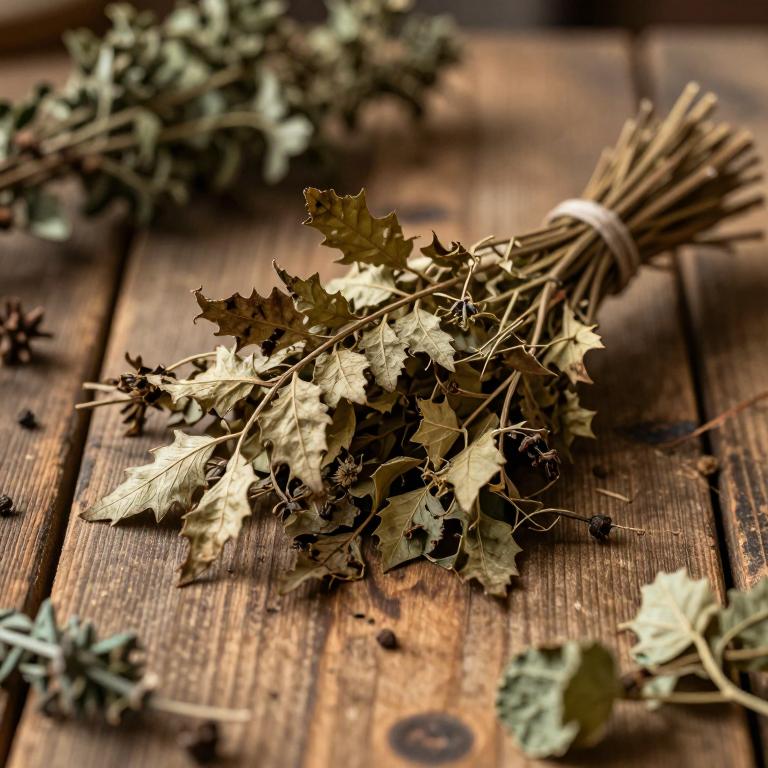
Green osier, scientifically known as Cornus alternifolia, is a versatile deciduous shrub native to North America. Renowned for its distinctive exfoliating bark and vibrant autumn foliage, this plant holds significant ethnobotanical value. Traditionally used in various medicinal preparations, it offers unique properties within the diverse dogwood family.
Names and Synonyms
Common Names
- alternate-leaved dogwood
- green osier
- pagoda dogwood
- Alternateleaf Dogwood
- alternative-leaf dogwood
Scientific Names
Accepted name
Cornus alternifoliaSynonyms
- Cornus undulata
- Cornus alternifolia var. corallina
- Cornus alternifolia var. argentea
- Cornus alternifolia f. ochrocarpa
- Cornus alternifolia var. ochroleuca
- Cornus alternifolia f. argentea
- Cornus alternifolia var. virescens
- Cornus punctata
- Swida alternifolia
- Cornus alternifolia var. variegata
- Bothrocaryum alternifolium
- Cornus riparia
- Cornus alternifolia f. albomarginata
- Cornus riparia var. rugosa
- Cornus alternifolia f. albovariegata
- Cornus rotundifolia
- Cornus plicata
- Cornus alterna
Regional and Traditional Names
Spanish:
- Cornus riparia var. rugosa
- Cornus riparia
- Bothrocaryum alternifolium
- Cornejo de hojas alternas
- Cornus riparia var rugosa
- Cornus undulata
- Cornus plicata
- Cornus punctata
- Corno pagoda
- Cornus alterna
- Cornus rotundifolia
- Swida alternifolia
- Cornejo de Hojas Alternas
German:
- Wechselblättriger Hartriegel
- wechselblättriger Hartriegel
French:
- cornouiller à feuilles alternes
Sources: Wikidata, Catalogue of Life
Taxonomical Classification
This plant, known as Cornus alternifolia, belongs to the kingdom Plantae and the phylum Streptophyta. Within the class Equisetopsida and subclass Magnoliidae, it is classified under the order Cornales and the family Cornaceae. Finally, it is placed within the genus Cornus.
| Rank | Classification |
|---|---|
| Kingdom | Plantae |
| Phylum | Streptophyta |
| Class | Equisetopsida |
| Subclass | Magnoliidae |
| Order | Cornales |
| Family | Cornaceae |
| Genus | Cornus |
Sources: The World Checklist of Vascular Plants (WCVP)
Distribution
This plant, known as Cornus alternifolia, exhibits a broad geographical range across several regions of Canada. In Western Canada, its presence can be found within the province of Manitoba. Moving toward the east, the species is widely distributed throughout Ontario. Its reach extends even further into the Atlantic provinces, including New Brunswick and Nova Scotia. Finally, the plant can also be located on the island of Newfoundland in Eastern Canada.
| Region | Area |
|---|---|
| Western Canada | Manitoba |
| Eastern Canada | New Brunswick |
| Eastern Canada | Newfoundland |
| Eastern Canada | Nova Scotia |
| Eastern Canada | Ontario |
| Eastern Canada | Prince Edward I. |
| Eastern Canada | Québec |
| North-Central U.S.A. | Illinois |
| North-Central U.S.A. | Iowa |
| North-Central U.S.A. | Minnesota |
Sources: The World Checklist of Vascular Plants (WCVP)
Botanical Identification
Life history
The life history of Cornus alternifolia is characterized by its status as a perennial organism, ensuring its presence in the ecosystem through multiple growing seasons. In terms of its structural development and survival strategy, the plant exhibits life forms consistent with both phanerophyte and nanophanerophyte classifications, depending on the specific developmental stage and environmental conditions influencing its growth habit. This lifecycle allows it to establish a persistent woody structure that can withstand seasonal variations over many years.
- Life form :
- nanophanerophyte
- Life form :
- phanerophyte
- Lifecycle :
- perennial
Morphology
The morphology of Cornus alternifolia is characterized by a woody growth form that manifests as both a tree and a shrub. This plant reaches an average height of approximately 8.37 m and functions as a self-supporting organism rather than a climber. As an independent species, it does not exhibit parasitic behavior, and it maintains a terrestrial lifestyle as an epiphyte.
- Climber :
- self-supporting
- Epiphyte :
- terrestrial
- Growth form :
- tree
- Growth form :
- shrub
- Parasite :
- independent
- Plant height mean:
- 8.37 m
- Woodiness :
- woody
Physiology
The physiology of Cornus alternifolia is fundamentally characterized by a C3 photosynthetic pathway, a mechanism typical of most temperate woody angiosperms where carbon fixation occurs directly through the Calvin cycle within the mesophyll cells. This metabolic strategy involves the primary carboxylation of ribulose-1,5-bisphosphate (RuBP) by the enzyme RuBisCO, which results in the production of two molecules of 3-phosphoglycerate. Because this plant utilizes the C3 pathway, it is physiologically optimized for environments with moderate temperatures and sufficient moisture, though it remains susceptible to photorespiration when stomatal conductance decreases under high heat or water stress. The plant's physiological processes are closely tied to its seasonal phenology, with metabolic activity and transpiration rates fluctuating significantly in response to photoperiod and temperature changes throughout the growing season.
- Photosynthetic pathway :
- C3
Reproduction
The reproduction of Cornus alternifolia is characterized by a specific seasonal flowering window and specialized seed dispersal mechanisms. The plant's flowering period begins in May and concludes in June, marking a concentrated reproductive phase in the late spring and early summer. Following successful pollination, the plant produces seeds with a highly specific mass profile; the mean seed mass is approximately 0.050198 g, with individual seeds ranging from a minimum of 0.03626 g to a maximum of 0.07252 g. Dispersal of these seeds is facilitated through a zoochorous syndrome, meaning they are primarily spread by animals, which plays a crucial role in the plant's ability to colonize new habitats.
- Dispersal syndrome :
- zoochorous
- Flowering time :
- May
- Flowering time :
- Jun
- Seed mass max:
- 0.07252 g
- Seed mass mean:
- 0.0501983333333333 g
- Seed mass min:
- 0.03626 g
Sources: Global Inventory of Floras and Traits (GIFT)
Plant Parts
Cornus alternifolia has 1 reported plant parts identified across 1 scientific publications and several other databases that are studied for medicinal purposes. The most consistently reported plant part include leaf.
| Plant part | Supporting sources | Consensus |
|---|---|---|
| Leaf | 1 supporting sources | ★☆☆☆☆ |
Leaf
- Biochimica et biophysica acta
Chemicals
Cornus alternifolia has 1 reported phytochemicals identified across 1 scientific publications and several other databases. The most consistently reported chemicals include Iridolactone.
| Chemical | Supporting sources | Consensus |
|---|---|---|
| Iridolactone | 1 supporting sources | ★☆☆☆☆ |
Iridolactone
- Biochimica et biophysica acta
Preparations
Cornus alternifolia has 1 reported preparations identified across 1 scientific publications and several other databases. The most consistently reported preparations include extracts.
| Preparation | Supporting sources | Consensus |
|---|---|---|
| Extracts | 1 supporting sources | ★☆☆☆☆ |
Extracts
- Biochimica et biophysica acta