Cornulaca monacantha
Cornulaca monacantha · Accepted scientific name
Scientific literature: Very Sparse (1 studies) · ★☆☆☆☆
Cornula, scientifically known as Cornula monacantha, is a unique medicinal plant valued for its diverse therapeutic properties. Often found in specific tropical habitats, this species is traditionally used in folk medicine to treat various ailments. Understanding its phytochemical profile is essential for exploring its potential in modern pharmacological applications.
- Family
- Not available
- Native range
- Africa
- Parts used
- Stem
- Common names
- Not available
- Scientific synonyms
- Not available
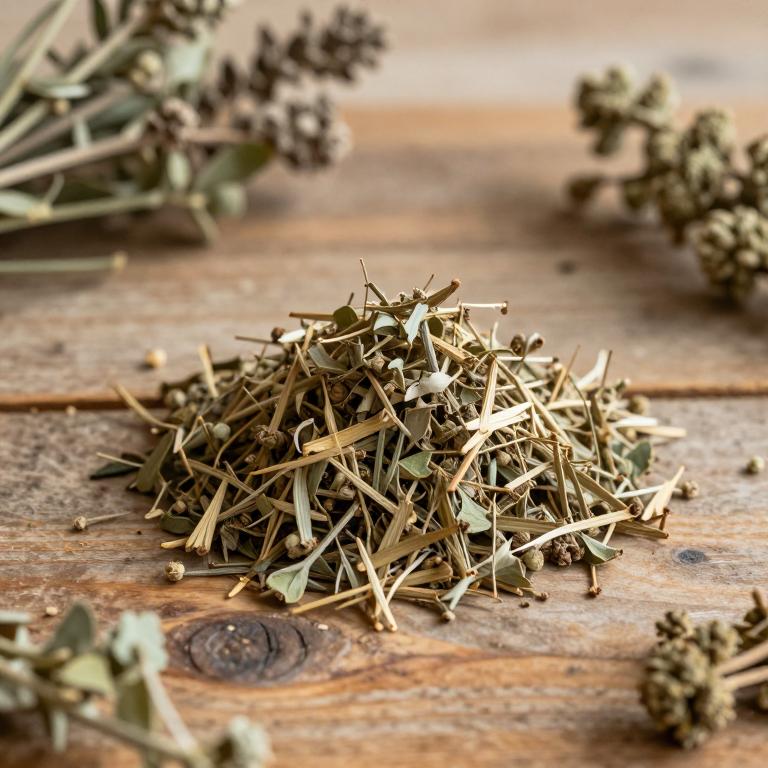
Names and Synonyms
Scientific Names
Accepted name
Cornulaca monacanthaDistribution
This plant, known as Cornulaca monacantha, exhibits a specific geographical distribution across the North African region. It can be found growing within the diverse landscapes of Algeria. Additionally, the species is distributed throughout the territories of Egypt and Libya. Its presence also extends to the coastal and arid areas of Morocco. Finally, the plant is documented across the terrain of Tunisia, completing its regional range.
| Region | Area |
|---|---|
| Northern Africa | Algeria |
| Northern Africa | Egypt |
| Northern Africa | Libya |
| Northern Africa | Morocco |
| Northern Africa | Tunisia |
| Northern Africa | Western Sahara |
| West Tropical Africa | Mali |
| West Tropical Africa | Mauritania |
| West Tropical Africa | Niger |
| Northeast Tropical Africa | Chad |
Sources: The World Checklist of Vascular Plants (WCVP)
Botanical Identification
Ecology
The ecology of Cornulaca monacantha is defined by its specific altitudinal distribution, as it thrives within a distinct vertical niche. This species is typically found inhabiting environments situated at an elevation ranging from a minimum of 600 m AMSL to a maximum of 1300 m AMSL. This specific elevational range suggests that the plant is adapted to the particular climatic conditions, such as temperature fluctuations and moisture availability, characteristic of these mid-altitude zones.
- Elevational range max:
- 1300 m AMSL
- Elevational range min:
- 600 m AMSL
Life history
The life history of Cornulaca monacantha is characterized by its status as a perennial plant, allowing it to persist through multiple growing seasons within its ecological niche. In terms of its structural classification and survival strategy, the species is categorized as a phanerophyte, specifically exhibiting traits consistent with the phanerophyte life form. This indicates that its regenerative buds are located high above the ground on aerial shoots, a characteristic that assists in its survival and growth patterns within its natural habitat.
- Life form :
- phanerophyte
- Lifecycle :
- perennial
Morphology
The morphology of Cornucopia monacantha is characterized by a growth form that functions as a subshrub, exhibiting woody characteristics throughout its structure. The plant typically reaches an average height of 0.6 m and is classified as a terrestrial species, growing in land-based environments rather than aquatic or semiaquatic habitats. Although it possesses a certain degree of structural complexity, it is categorized as a self-supporting plant rather than an obligatory or facultative climber. Additionally, it maintains an independent lifestyle, functioning as a non-parasitic organism that does not rely on a host for survival.
- Aquatic :
- terrestrial
- Climber :
- self-supporting
- Growth form :
- shrub
- Growth form :
- subshrub
- Parasite :
- independent
- Plant height mean:
- 0.6 m
- Woodiness :
- woody
Physiology
The physiology of Cornulaca monacantha is characterized by highly specialized adaptations to arid and semi-arid environments, most notably through its distinct photosynthetic pathway. This plant utilizes the C4 photosynthetic pathway, a complex mechanism that allows it to concentrate carbon dioxide around the enzyme RuBisCO within specialized bundle sheath cells, thereby significantly reducing photorespiration and increasing water-use efficiency compared to C3 plants. This C4 metabolism enables the species to maintain high rates of carbon fixation even under high temperatures and intense solar radiation, which are typical of its native desert habitats. Furthermore, its physiological makeup includes robust osmotic regulation and succulent-like tendencies to manage moisture scarcity, ensuring that metabolic processes remain functional despite extreme thermal fluctuations and limited water availability.
- Photosynthetic pathway :
- C4
Reproduction
The reproduction of Cornucarpia monacantha is characterized by a distinct seasonal flowering pattern that dictates its reproductive cycle. The flowering period is highly variable, yet it follows a specific temporal window for the onset and conclusion of bloom. The flowering process typically begins in October, marking the start of the plant's reproductive effort. This phase continues through the late autumn months, with the flowering period reaching its end in November. Because the timing can be variable, the exact duration of this cycle may shift depending on environmental conditions, but the core reproductive window is centered around this late-year transition.
- Flowering time :
- Oct
- Flowering time :
- Nov
Sources: Global Inventory of Floras and Traits (GIFT)
Plant Parts
Cornulaca monacantha has 1 reported plant parts identified across 1 scientific publications and several other databases that are studied for medicinal purposes. The most consistently reported plant part include stem.
| Plant part | Supporting sources | Consensus |
|---|---|---|
| Stem | 1 supporting sources | ★☆☆☆☆ |
Stem
- Scientific reports
Preparations
Cornulaca monacantha has 1 reported preparations identified across 1 scientific publications and several other databases. The most consistently reported preparations include plant extracts.
| Preparation | Supporting sources | Consensus |
|---|---|---|
| Plant extracts | 1 supporting sources | ★☆☆☆☆ |
Plant extracts
- Acta biologica Hungarica