servicetree
Cormus domestica · Accepted scientific name
Scientific literature: Very Sparse (8 studies) · ★☆☆☆☆
Service tree, scientifically known as Cormus domestica, is a remarkable medicinal plant celebrated for its diverse therapeutic properties. Renowned for its antioxidant richness, it offers significant benefits for cardiovascular health and immune support. This resilient species serves as a vital botanical resource in traditional healing and modern herbal pharmacology.
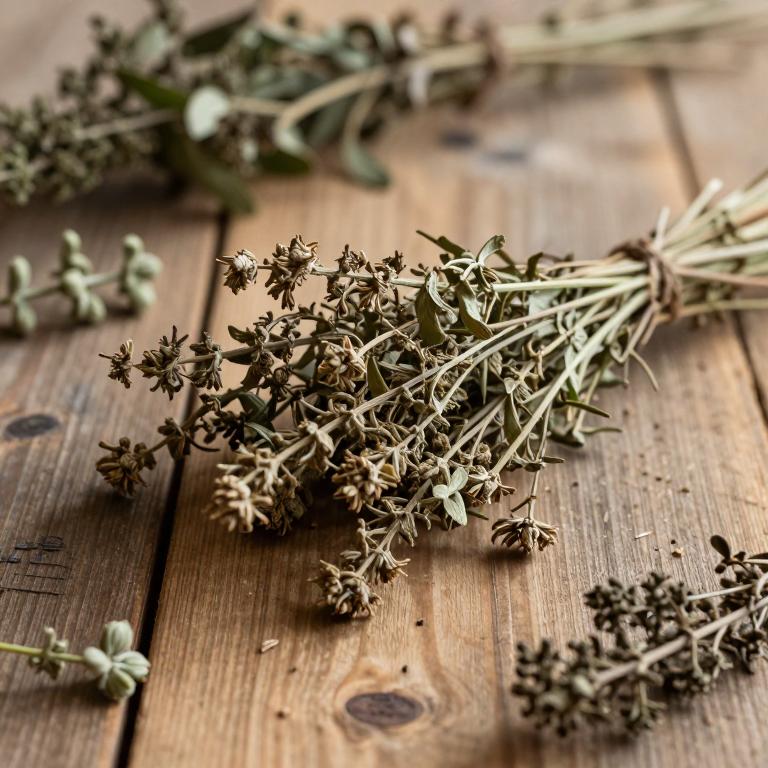
Names and Synonyms
Common Names
- servicetree
- Service-tree
- Sorb Tree
- Whitty Pear
- true service-tree
Scientific Names
Accepted name
Cormus domesticaSynonyms
- Malus sorbus
- Pyrus domestica syrmiensis
- Pyrus sorbus var. maliformis
- Sorbus syrmiensis
- Sorbus domestica
- Sorbus domestica pomifera
- Pyrus sorbus var. pyriformis
- Sorbus domestica var. elongata
- Sorbus domestica var. macrocarpa
- Sorbus domestica var. maliformis
- Sorbus domestica f. maliformis
- Sorbus domestica var. microcarpa
- Sorbus domestica var. obtinui
- Sorbus domestica var. obtusata
- Sorbus domestica var. albida
- Pyrus domestica piriformis
- Pyrenia sorbus
- Prunus sorbus
- Pyrus sorbus
- Sorbus domestica f. piriformis
- Sorbus domestica var. pomifera
- Sorbus domestica f. pomifera
- Sorbus domestica pyrifera
- Sorbus domestica var. pyrifera
- Sorbus domestica f. pyrifera
- Sorbus domestica var. pyriformis
- Sorbus domestica f. pyriformis
- Sorbus domestica var. serotina
Regional and Traditional Names
Spanish:
- serbal común
- Serbal
German:
- Speierling
- Sperbelbaum
- Sperberbaum
- Spierapfel
- Spierling
- Sporapfel
- Spreigel
French:
- cormier
- Sorbier domestique
Sources: Wikidata, Catalogue of Life
Taxonomical Classification
This plant belongs to the kingdom Plantae and the phylum Streptophyta. Within the class Equisetopsida and subclass Magnoliidae, it is classified under the order Rosales. It is further identified as a member of the family Rosaceae and falls within the genus Cormus.
| Rank | Classification |
|---|---|
| Kingdom | Plantae |
| Phylum | Streptophyta |
| Class | Equisetopsida |
| Subclass | Magnoliidae |
| Order | Rosales |
| Family | Rosaceae |
| Genus | Cormus |
Sources: The World Checklist of Vascular Plants (WCVP)
Distribution
This plant exhibits a broad distribution across several regions of the European continent. In Northern Europe, its presence can be documented within Great Britain. Moving into Middle Europe, the species is found spanning across Germany and Belgium. It also maintains a significant range throughout the Czechia-Slovakia region. Finally, its geographical reach extends further into Middle Europe to include Austria.
| Region | Area |
|---|---|
| Northern Europe | Great Britain |
| Middle Europe | Austria |
| Middle Europe | Belgium |
| Middle Europe | Czechia-Slovakia |
| Middle Europe | Germany |
| Middle Europe | Hungary |
| Middle Europe | Switzerland |
| Southwestern Europe | Baleares |
| Southwestern Europe | Corse |
| Southwestern Europe | France |
Sources: The World Checklist of Vascular Plants (WCVP)
Botanical Identification
Ecology
The ecology of Cormus domestica is fundamentally defined by its preference for high-altitude and densely vegetated environments, specifically thriving within forest and mountain ecosystems. In these habitats, the plant utilizes the complex structural layers of the forest to find optimal light availability and moisture retention, often occurring in areas where the soil is enriched by organic forest litter. The mountainous terrain provides the necessary topographic variation and drainage patterns required for its growth, allowing it to colonize diverse microclimates ranging from sheltered valley slopes to more exposed montane zones. This association with forest-mountain interfaces suggests a reliance on the stable humidity and temperature moderations provided by canopy cover and alpine geological features.
- Habitat :
- forest, mountains
Life history
The life history of Cormus domestica is characterized by a perennial lifecycle, allowing the plant to persist through multiple growing seasons. It functions primarily as a phanerophyte, a life form where the permanent buds are located on aerial branches well above the ground, which further categorizes it as a phanerophyte in terms of its structural growth habit. Throughout its development, the plant exhibits a deciduous nature, shedding its foliage periodically as part of its seasonal adaptation.
- Deciduousness :
- deciduous
- Life form :
- phanerophyte
- Lifecycle :
- perennial
Morphology
The morphology of Cormus domestica is characterized by a versatile growth form that can manifest as both a tree and a shrub, exhibiting a woody texture throughout its structure. As a terrestrial organism, it functions as an independent species, neither acting as a parasite nor as an epiphyte. The plant displays significant vertical variation in stature, with heights ranging from a minimum of 4 m to a maximum of 20 m, maintaining an average height of approximately 11.5 m. Although it possesses self-supporting structural characteristics rather than functioning as a liana or vine, its robust development allows it to maintain its upright posture without external assistance.
- Aquatic :
- terrestrial
- Climber :
- self-supporting
- Epiphyte :
- terrestrial
- Growth form :
- tree
- Growth form :
- shrub
- Parasite :
- independent
- Plant height max:
- 20 m
- Plant height mean:
- 11.5 m
- Plant height min:
- 4 m
- Woodiness :
- woody
Physiology
The physiology of Cormus domestica is characterized by a C3 photosynthetic pathway, which dictates its carbon fixation processes and metabolic efficiency under standard environmental conditions. Its foliar morphology is defined by relatively small leaves, with lengths ranging from a minimum of 3 cm to a maximum of 5 cm, and widths spanning from 1 cm to 2 cm. These morphological dimensions contribute to a mean Specific Leaf Area (SLA) of 99 cm²/g, a metric that reflects the plant's investment in leaf thickness and surface area relative to its dry mass, ultimately influencing its light-use efficiency and resource acquisition strategies.
- Leaf length max:
- 5 cm
- Leaf length min:
- 3 cm
- Leaf width max:
- 2 cm
- Leaf width min:
- 1 cm
- Photosynthetic pathway :
- C3
- Specific Leaf Area (SLA) mean:
- 99 cm²/g
Reproduction
The reproduction of Cormus domestica is characterized by a specific seasonal flowering period that occurs during the month of May, with both the onset and conclusion of flowering concentrated within this timeframe. The plant relies on biotic pollination, specifically employing an insect pollination syndrome to facilitate fertilization; notably, self-fertilization is absent, necessitating external agents for successful reproduction. Following pollination, the plant produces a fleshy, indehiscent fruit classified as a berry. These fruits possess an average length of 2.11 cm and an average width of 1.93 cm. The seeds contained within the fruit exhibit a mean mass of approximately 0.0263 g, ranging from a minimum of 0.0038 g to a maximum of 0.03322 g, with a consistent mean seed volume of 31 mm³. Dispersal is achieved through a zoochorous syndrome, specifically via endozoochory, where seeds are dispersed after being ingested by animals.
- Dehiscence :
- indehiscent
- Dispersal syndrome :
- zoochorous
- Dispersal syndrome :
- endozoochorous
- Flowering time :
- May
- Fruit dryness :
- fleshy
- Fruit length mean:
- 2.11 cm
- Fruit type :
- berry
- Fruit width mean:
- 1.93 cm
- Pollination syndrome :
- insect
- Pollination syndrome :
- biotic
- Seed mass max:
- 0.03322 g
- Seed mass mean:
- 0.0262866666666667 g
- Seed mass min:
- 0.0038 g
- Seed volume max:
- 31 mm³
- Self fertilization :
- absent
Sources: Global Inventory of Floras and Traits (GIFT)
Plant Parts
Cormus domestica has 1 reported plant parts identified across 1 scientific publications and several other databases that are studied for medicinal purposes. The most consistently reported plant part include leaf.
| Plant part | Supporting sources | Consensus |
|---|---|---|
| Leaf | 1 supporting sources | ★☆☆☆☆ |
Leaf
- Molecules (Basel, Switzerland)
Chemicals
Cormus domestica has 6 reported phytochemicals identified across 1 scientific publications and several other databases. The most consistently reported chemicals include (-)-Epicatechin, CHLOROGENIC ACID, Flavonoids, Isoquercitrin, Polyphenol.
| Chemical | Supporting sources | Consensus |
|---|---|---|
| (-)-Epicatechin | 1 supporting sources | ★☆☆☆☆ |
| CHLOROGENIC ACID | 1 supporting sources | ★☆☆☆☆ |
| Flavonoids | 1 supporting sources | ★☆☆☆☆ |
| Isoquercitrin | 1 supporting sources | ★☆☆☆☆ |
| Polyphenol | 1 supporting sources | ★☆☆☆☆ |
| quercetin | 1 supporting sources | ★☆☆☆☆ |
(-)-Epicatechin
- Molecules (Basel, Switzerland)
CHLOROGENIC ACID
- Molecules (Basel, Switzerland)
Flavonoids
- Molecules (Basel, Switzerland)
Isoquercitrin
- Molecules (Basel, Switzerland)
Polyphenol
- Molecules (Basel, Switzerland)
quercetin
- Molecules (Basel, Switzerland)
Preparations
Cormus domestica has 2 reported preparations identified across 1 scientific publications and several other databases. The most consistently reported preparations include Dry leaf extracts, diethyl ether and ethyl acetate fractions.
| Preparation | Supporting sources | Consensus |
|---|---|---|
| Dry leaf extracts | 1 supporting sources | ★☆☆☆☆ |
| Diethyl ether and ethyl acetate fractions | 1 supporting sources | ★☆☆☆☆ |
Dry leaf extracts
- Molecules (Basel, Switzerland)
Diethyl ether and ethyl acetate fractions
- Molecules (Basel, Switzerland)