Corispermum squarrosum
Corispermum squarrosum · Accepted scientific name
Scientific literature: Very Sparse (27 studies) · ★☆☆☆☆
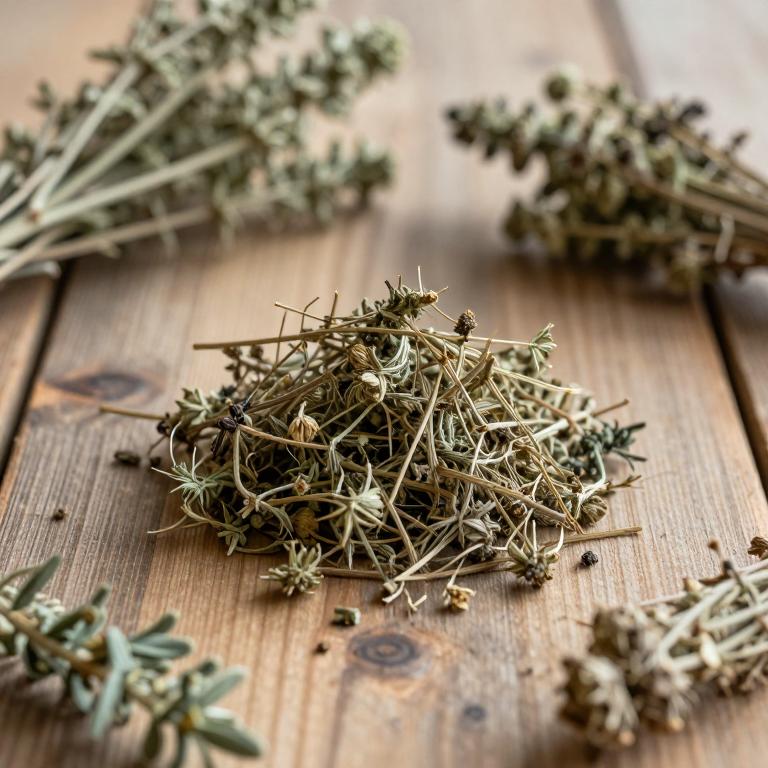
Coripearmum squarrosum, scientifically known as Coripearmum squarrosum, is a versatile medicinal herb valued in traditional healing practices. Renowned for its potent bioactive compounds, this plant offers significant therapeutic benefits, including anti-inflammatory and antimicrobial properties. It serves as a vital resource for treating various ailments in diverse herbal formulations.
- Family
- Amaranthaceae
- Native range
- Europe
- Parts used
- Not available
- Common names
- Not available
- Scientific synonyms
- Agriophyllum Squarrosum · Corispermum Uralense · 5 more
Names and Synonyms
Scientific Names
Accepted name
Corispermum squarrosumSynonyms
- Agriophyllum squarrosum
- Corispermum uralense
- Corispermum uralense subsp. silvicola
- Corispermum squarrosum subsp. uralense
- Corispermum squarrosum subsp. monticola
- Corispermum squarrosum subsp. silvicola
- Corispermum uralense subsp. monticola
Sources: Wikidata
Taxonomical Classification
This plant belongs to the kingdom Plantae and the phylum Streptophyta within the class Equisetopsida. It is further classified under the subclass Magnoliidae and the order Caryophyllales. Finally, it is a member of the Amaranthaceae family within the genus CoriSPErmum.
| Rank | Classification |
|---|---|
| Kingdom | Plantae |
| Phylum | Streptophyta |
| Class | Equisetopsida |
| Subclass | Magnoliidae |
| Order | Caryophyllales |
| Family | Amaranthaceae |
| Genus | Corispermum |
Sources: The World Checklist of Vascular Plants (WCVP)
Distribution
This plant exhibits a broad geographical distribution across several key regions of Eastern Europe and Northern Asia. Within Eastern Europe, it can be found growing throughout East European Russia. Its presence also extends into the territories of South European Russia. In the vast expanse of Siberia, the species is documented in the Irkutsk and Krasnoyarsk regions. Additionally, the plant is widely distributed across West Siberia.
| Region | Area |
|---|---|
| Eastern Europe | East European Russia |
| Eastern Europe | South European Russia |
| Siberia | Irkutsk |
| Siberia | Krasnoyarsk |
| Siberia | West Siberia |
| Central Asia | Kazakhstan |
Sources: The World Checklist of Vascular Plants (WCVP)
Botanical Identification
Ecology
The ecology of Coriospermum squarrosum is fundamentally defined by its specialization to unstable, xeric environments, specifically thriving within coastal or inland dunes and sandy substrates. As a plant adapted to sand-dominated landscapes, it occupies niches characterized by high permeability, rapid drainage, and potentially nutrient-poor soils. This habitat selection necessitates physiological adaptations to withstand periodic substrate movement and the physiological drought induced by the low water-retention capacity of sandy terrain. By colonizing these dunes, the species plays a functional role in stabilizing loose sediments and contributing to the gradual development of organic matter within these shifting ecological zones.
- Habitat :
- dunes, sand
Life history
The life history of Coriospermum squarrosum is characterized by an annual lifecycle, meaning the plant completes its entire developmental process—from germination and vegetative growth to flowering and seed production—within a single growing season. Following the dispersal of seeds, the plant emerges to establish its structure, focusing its biological energy on rapid growth and the development of its distinctive morphological features. Once it reaches maturity, the plant undergoes a reproductive phase, producing flowers and subsequent seeds to ensure the continuity of the species. After the successful completion of its reproductive cycle and the release of its progeny, the individual plant dies, leaving the next generation to begin the cycle anew in the following season.
- Lifecycle :
- annual
Morphology
The morphology of Coriospermum squarrosum is characterized by its growth form as a non-woody herb, functioning as an independent organism without parasitic tendencies. It exhibits a versatile ecological habit, ranging from terrestrial to semiaquatic and aquatic environments, while remaining a terrestrial epiphyte. The plant is a self-supporting herb that does not require climbing structures, as it maintains a self-supporting stature rather than acting as a liana or vine. In terms of physical dimensions, it is a relatively small species, with a plant height ranging from a minimum of 0.05 m to a maximum of 1 m.
- Aquatic :
- terrestrial
- Climber :
- self-supporting
- Epiphyte :
- terrestrial
- Growth form :
- herb
- Parasite :
- independent
- Plant height max:
- 1 m
- Plant height min:
- 0.05 m
- Woodiness :
- non-woody
Physiology
The physiology of Coriospermum squarrosum is characterized by a C3 photosynthetic pathway, indicating a standard carbon fixation process typical of many woody plants. Its leaf morphology features an elliptic-lanceolate form with entire margins and the presence of spines, although it lacks leaf thorns. The leaf architecture is further defined by a specific leaf area (SLA) that is consistently recorded at a value of 115.8216271 cm²/g, representing the minimum, mean, and maximum measurements for the species.
- Leaf form :
- elliptic-lanceolate
- Leaf margin :
- entire
- Leaf spines :
- yes
- Leaf thorns :
- no
- Photosynthetic pathway :
- C3
- Specific Leaf Area (SLA) min:
- 115.8216271 cm²/g
Reproduction
The reproduction of Coriospermum squarrosum is characterized by a specific seasonal flowering pattern that dictates its reproductive cycle. The flowering period is highly concentrated, with the onset of flowering occurring in August. This period concludes within the same month, as the flowering end is also recorded in August, indicating a relatively brief and synchronized blooming window. While the broader seasonal context allows for variable timing, the specific data indicates that the plant's reproductive activity is most prominent during this mid-to-late year transition.
- Flowering time :
- Aug
Sources: Global Inventory of Floras and Traits (GIFT)
Chemicals
Corispermum squarrosum has 19 reported phytochemicals identified across 0 scientific publications and several other databases. The most consistently reported chemicals include Flavonoids, Isorhamnetin, RUTIN, quercetin, Astragalin.
| Chemical | Supporting sources | Consensus |
|---|---|---|
| Flavonoids | 2 supporting sources | ★☆☆☆☆ |
| Isorhamnetin | 2 supporting sources | ★☆☆☆☆ |
| RUTIN | 2 supporting sources | ★☆☆☆☆ |
| quercetin | 2 supporting sources | ★☆☆☆☆ |
| Astragalin | 1 supporting sources | ★☆☆☆☆ |
| Hyperoside | 1 supporting sources | ★☆☆☆☆ |
| Isoquercitrin | 1 supporting sources | ★☆☆☆☆ |
| Isovitexin | 1 supporting sources | ★☆☆☆☆ |
| Protocatechualdehyde | 1 supporting sources | ★☆☆☆☆ |
| STARCH | 1 supporting sources | ★☆☆☆☆ |
Flavonoids
- Genes
- Food science & nutrition
Isorhamnetin
- Frontiers in plant science
- Genes
RUTIN
- Frontiers in plant science
- Journal of the science of food and agriculture
quercetin
- Frontiers in plant science
- Genes
Astragalin
- Genes
Hyperoside
- Journal of the science of food and agriculture
Isoquercitrin
- Frontiers in plant science
Isovitexin
- Frontiers in plant science
Protocatechualdehyde
- Journal of plant research
STARCH
- Food science & nutrition
Activities
Corispermum squarrosum has 2 reported activities identified across 0 scientific publications and several other databases. The most consistently reported activities include Anticancer, Antioxidant.
| Activity | Supporting sources | Consensus |
|---|---|---|
| Anticancer | 1 supporting sources | ★☆☆☆☆ |
| Antioxidant | 1 supporting sources | ★☆☆☆☆ |
Anticancer
- Food science & nutrition
Antioxidant
- Food science & nutrition