Grey-Leaved Cordia
Cordia sinensis · Accepted scientific name
Scientific literature: Very Sparse (4 studies) · ★☆☆☆☆
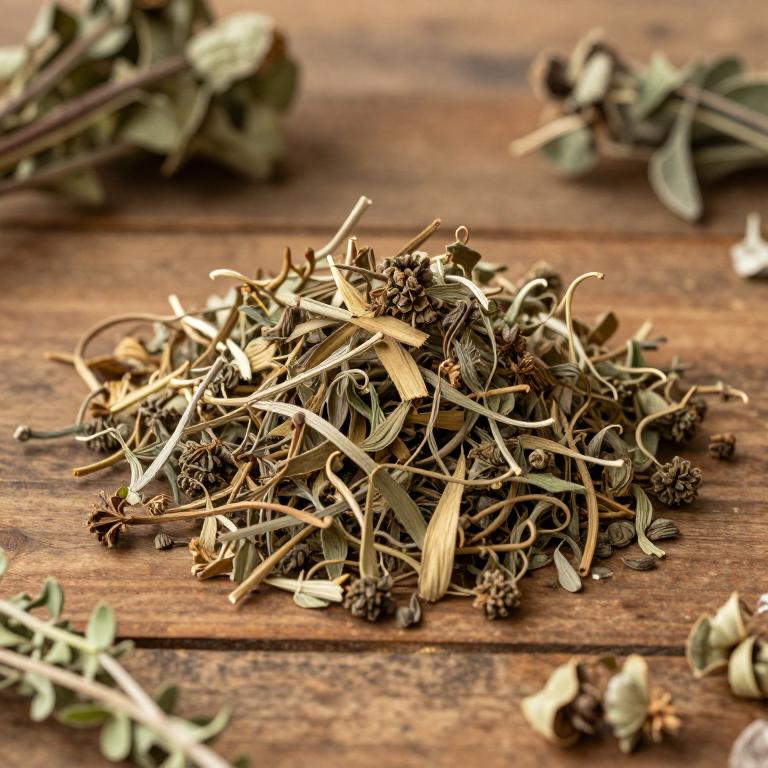
Grey-Leaved Cordia, scientifically known as Cordia sinensis, is a versatile evergreen shrub prized in traditional medicine. Renowned for its distinctive silvery foliage, this plant offers diverse therapeutic benefits, particularly in treating inflammatory conditions and skin ailments. Its bioactive compounds make it a significant subject in ethnobotanical research and pharmacology.
Names and Synonyms
Common Names
- Grey-Leaved Cordia
- Grey-Leaved Saucerberry
- Long-Leaved Saucerberry
- narrow-leaved sepistan
Scientific Names
Accepted name
Cordia sinensisSynonyms
- Quarena sinensis
- Gerascanthus gharaf
- Lithocardium rothii
- Cordia senegalensis var. pelida
- Cordia rothii
- Cordia subopposita
- Cordia gharaf
- Cordia cuneata
- Gerascanthus sinensis
Sources: Wikidata, Catalogue of Life
Taxonomical Classification
This plant belongs to the kingdom Plantae and the phylum Streptophyta, placing it within the class Equisetopsida and subclass Magnoliidae. It is further classified under the order Boraginales and the family Boraginaceae. Finally, its taxonomic identity is established within the genus Cordia.
| Rank | Classification |
|---|---|
| Kingdom | Plantae |
| Phylum | Streptophyta |
| Class | Equisetopsida |
| Subclass | Magnoliidae |
| Order | Boraginales |
| Family | Boraginaceae |
| Genus | Cordia |
Sources: The World Checklist of Vascular Plants (WCVP)
Distribution
This plant exhibits a diverse geographical distribution across the African continent. In Northern Africa, it can be found growing within the territories of Algeria and Egypt. Moving toward the western region, its presence extends into West Tropical Africa. Specifically, it is documented in the countries of Burkina, Gambia, and Ghana. These locations highlight the plant's ability to thrive in various tropical and northern environments.
| Region | Area |
|---|---|
| Northern Africa | Algeria |
| Northern Africa | Egypt |
| West Tropical Africa | Burkina |
| West Tropical Africa | Gambia |
| West Tropical Africa | Ghana |
| West Tropical Africa | Mali |
| West Tropical Africa | Mauritania |
| West Tropical Africa | Nigeria |
| West Tropical Africa | Niger |
| West Tropical Africa | Senegal |
Sources: The World Checklist of Vascular Plants (WCVP)
Botanical Identification
Ecology
The ecology of Cordia sinensis is characterized by its preference for specific topographical and moisture-regulated environments, typically found within an elevational range spanning from 250 m to a maximum of 1000 m AMSL. It is a species commonly distributed in dry areas, flourishing in habitats such as dry bushland, bushland, or scattered tree grassland. Despite its affinity for these arid settings, it frequently establishes itself in riparian corridors, often occurring along luggas or rivers where localized moisture availability supports its growth.
- Elevational range max:
- 1000 m AMSL
- Elevational range min:
- 250 m AMSL
- Habitat :
- common in dry areas (dry bushland, bushed or scattered tree grassland), often along luggas or rivers
Life history
The life history of Cordia sinensis is characterized by its status as a perennial organism, allowing it to persist through multiple growing seasons and establish a stable presence in its ecosystem. As a phanerophyte, the plant maintains its photosynthetic organs on elevated woody stems that remain above the ground level during unfavorable environmental conditions, ensuring long-term survival and structural resilience. This life strategy enables the species to invest in significant biomass and complex branching patterns over time, contributing to its enduring lifecycle and architectural complexity.
- Life form :
- phanerophyte
- Lifecycle :
- perennial
Morphology
The morphology of Cordia sinensis is characterized by a woody growth habit that manifests as both a shrub and a tree. It is a terrestrial plant that functions as an independent organism, rather than acting as a parasite or an epiphyte. This species is self-supporting and does not exhibit climbing behavior. In terms of stature, the plant reaches a minimum height of 1.5 m, with a mean height of approximately 4 m, and can reach a maximum height of up to 4.876859303 m.
- Aquatic :
- terrestrial
- Climber :
- self-supporting
- Epiphyte :
- terrestrial
- Growth form :
- shrub
- Growth form :
- tree
- Parasite :
- independent
- Plant height max:
- 4.876859303 m
- Plant height mean:
- 4 m
- Plant height min:
- 1.5 m
- Woodiness :
- woody
Physiology
The physiology of Cordia sinensis is characterized by its metabolic processes as a perennial woody shrub, primarily focused on efficient nutrient acquisition and structural growth. In terms of its symbiotic relationships with soil microorganisms, the plant does not function as a nitrogen fixer; it lacks the specialized root nodules required to host diazotrophic bacteria for atmospheric nitrogen conversion. Instead, it relies on the uptake of dissolved nitrates and ammonium from the soil through its root system to support its physiological demands. Its photosynthetic processes drive the synthesis of organic compounds, supporting the development of its characteristic leathery leaves and woody stems. The plant's physiological regulation involves managing transpiration rates to maintain turgor pressure and optimizing carbon assimilation to facilitate the production of secondary metabolites used in its various biological functions.
- Nitrogen fixer :
- no
Reproduction
Reproduction in Cordia sineensis is characterized by the production of seeds that exhibit significant variation in weight, which is a critical factor in its dispersal and germination potential. The seed mass within a population shows a notable range, with a recorded minimum value of 0.05432 g and a maximum value reaching up to 0.1492 g. When considering the collective data for the species, the seed mass mean is calculated at 0.094238571 g. This variation in mass suggests a diversity in resource allocation during seed development, influencing the establishment success of the progeny in its natural habitat.
- Seed mass max:
- 0.1492 g
- Seed mass mean:
- 0.094238571 g
- Seed mass min:
- 0.05432 g
Sources: Global Inventory of Floras and Traits (GIFT)
Plant Parts
Cordia sinensis has 1 reported plant parts identified across 1 scientific publications and several other databases that are studied for medicinal purposes. The most consistently reported plant part include root.
| Plant part | Supporting sources | Consensus |
|---|---|---|
| Root | 1 supporting sources | ★☆☆☆☆ |
Root
- Pharmaceutical biology
Activities
Cordia sinensis has 3 reported activities identified across 1 scientific publications and several other databases. The most consistently reported activities include Antibacterial, Antimicrobial, Antioxidant.
| Activity | Supporting sources | Consensus |
|---|---|---|
| Antibacterial | 1 supporting sources | ★☆☆☆☆ |
| Antimicrobial | 1 supporting sources | ★☆☆☆☆ |
| Antioxidant | 1 supporting sources | ★☆☆☆☆ |
Antibacterial
- Pharmaceutical biology
Antimicrobial
- Pharmaceutical biology
Antioxidant
- Pharmaceutical biology
Preparations
Cordia sinensis has 1 reported preparations identified across 1 scientific publications and several other databases. The most consistently reported preparations include water extracts.
| Preparation | Supporting sources | Consensus |
|---|---|---|
| Water extracts | 1 supporting sources | ★☆☆☆☆ |
Water extracts
- BMC complementary and alternative medicine