yellow-cordia
Cordia lutea · Accepted scientific name
Scientific literature: Very Sparse (12 studies) · ★☆☆☆☆
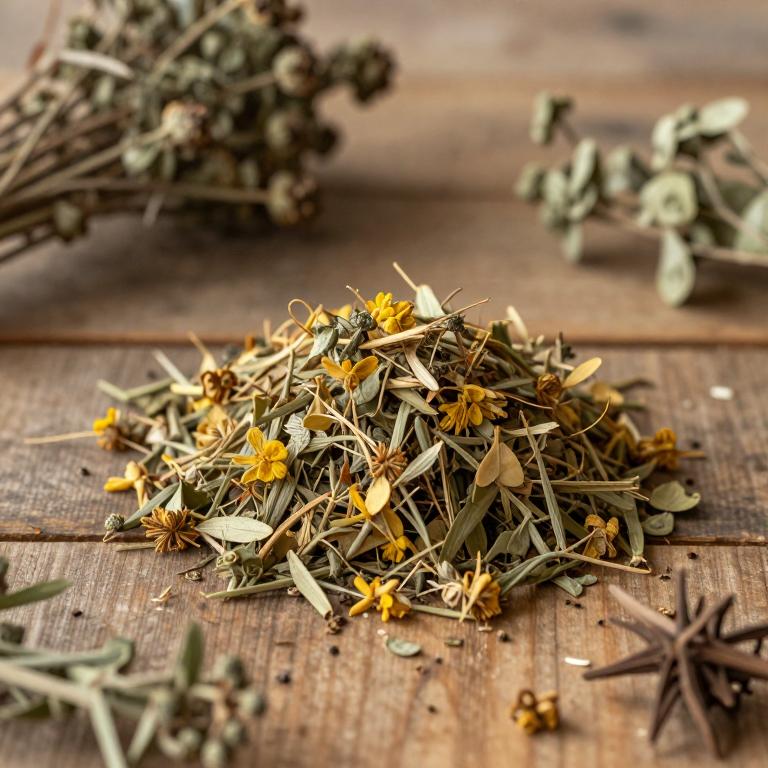
yellow-cordia, scientifically known as Cordia lutea, is a versatile medicinal shrub native to tropical regions. Renowned for its vibrant yellow blooms, this plant is traditionally utilized in folk medicine to treat skin ailments, inflammation, and digestive issues. Its bioactive compounds offer significant therapeutic potential for modern pharmacological research.
Names and Synonyms
Common Names
- yellow-cordia
- yellow cordia
- yellow geiger
Scientific Names
Accepted name
Cordia luteaSynonyms
- Varronia rotundifolia
- Calyptracordia rotundifolia
- Coilanthera rotundifolia
- Ectemis lutea
- Varronia flava
- Lithocardium rotundifolium
- Gerascanthus luteus
- Lithocardium flavum
- Gerascanthus rotundifolius
- Cordia marchionica
- Cordia flava
Regional and Traditional Names
Spanish:
- oberal
- overal
- overo
- flor de overo
- muyuyo
- uva
French:
- Cordia jaune
Sources: Wikidata, Catalogue of Life
Taxonomical Classification
This plant belongs to the kingdom Plantae and is classified under the phylum Streptophyta and class Equisetopsida. Within the subclass Magnoliidae, it falls under the order Boraginales and the family Boraginaceae. Finally, it is identified by the genus Cordia, specifically as the species Cordia lutea.
| Rank | Classification |
|---|---|
| Kingdom | Plantae |
| Phylum | Streptophyta |
| Class | Equisetopsida |
| Subclass | Magnoliidae |
| Order | Boraginales |
| Family | Boraginaceae |
| Genus | Cordia |
Sources: The World Checklist of Vascular Plants (WCVP)
Distribution
This plant exhibits a wide and diverse geographical distribution spanning several oceanic and continental regions. Within the North-Central Pacific, it can be found growing in the islands of Hawaii. Its presence extends to the South-Central Pacific, specifically within the Marquesas. Moving toward the Americas, the species is established across Western South America, including Colombia and Ecuador. Finally, the plant is also documented in the Galápagos archipelago.
| Region | Area |
|---|---|
| South-Central Pacific | Marquesas |
| North-Central Pacific | Hawaii |
| Western South America | Colombia |
| Western South America | Ecuador |
| Western South America | Galápagos |
| Western South America | Peru |
Sources: The World Checklist of Vascular Plants (WCVP)
Botanical Identification
Ecology
The ecology of Cordia lutea is defined by its broad altitudinal distribution, allowing it to occupy diverse topographical niches within its habitat. The species is primarily found in low-lying areas, with a mean elevational range centered at approximately 100 m AMSL. However, it exhibits significant ecological plasticity, as its presence extends from coastal or near-sea-level environments starting as low as 3 m AMSL up to significant highland elevations reaching a maximum of 1500 m AMSL. This wide vertical gradient suggests that the plant is capable of adapting to varying temperature regimes and atmospheric pressures across different mountain profiles.
- Elevational range max:
- 1500 m AMSL
- Elevational range mean:
- 100 m AMSL
- Elevational range min:
- 3 m AMSL
Morphology
The morphology of Cordia lutea is characterized by a woody growth form that manifests primarily as a tree or a shrub. This plant is strictly terrestrial in its habitat, functioning as an independent organism rather than acting as a parasite or an epiphyte. The structural development of the species is defined by a self-supporting habit, which precludes it from being classified as a liana, vine, or climber. Regarding its architectural development, the shoot orientation is notably ascending. In terms of physical dimensions, the plant reaches a maximum height of approximately 6 meters.
- Aquatic :
- terrestrial
- Climber :
- self-supporting
- Epiphyte :
- terrestrial
- Growth form :
- tree
- Growth form :
- shrub
- Parasite :
- independent
- Plant height max:
- 6 m
- Shoot orientation :
- ascending
- Woodiness :
- woody
Physiology
The physiology of Cordia lutea is characterized by specific morphological adaptations in its foliage that support its metabolic processes and environmental interactions. The leaves exhibit a variable size range, which is critical for optimizing photosynthetic efficiency and transpiration rates. Specifically, the leaf length varies from a minimum of 4 cm to a maximum of 10.5 cm, providing a flexible surface area for light interception. Complementing this longitudinal variation, the leaf width ranges from a minimum of 2 cm to a maximum of 7 cm, contributing to the overall structural integrity and gas exchange capacity of the plant. These dimensional parameters facilitate the regulation of water potential and nutrient transport within the leaf tissue, ensuring the plant maintains physiological equilibrium under varying environmental conditions.
- Leaf length max:
- 10.5 cm
- Leaf length min:
- 4 cm
- Leaf width max:
- 7 cm
- Leaf width min:
- 2 cm
Reproduction
The reproduction of Cordia lutea is characterized by the production of small, yellow flowers that typically measure between 0.1 cm and 0.4 cm in length. Following successful pollination, the plant develops fruits that range in length from 1.2 cm to a maximum of 2 cm. Within each fruit, the seed count is relatively low, generally ranging from 1 to 10 seeds. The individual seeds are distinct in size, with a length spanning from 10 mm to 12 mm and a width varying between 5 mm and 7 mm.
- Flower colour :
- yellow
- Flower length max:
- 0.4 cm
- Flower length min:
- 0.1 cm
- Fruit length max:
- 2 cm
- Fruit length min:
- 1.2 cm
- Seed length max:
- 12 mm
- Seed length min:
- 10 mm
- Seed width max:
- 7 mm
- Seed width min:
- 5 mm
- Seeds_per_fruit :
- 1-10
Sources: Global Inventory of Floras and Traits (GIFT)
Plant Parts
Cordia lutea has 1 reported plant parts identified across 3 scientific publications and several other databases that are studied for medicinal purposes. The most consistently reported plant part include flower.
| Plant part | Supporting sources | Consensus |
|---|---|---|
| Flower | 3 supporting sources | ★★☆☆☆ |
Flower
- Journal of natural products
- Evidence-based complementary and alternative medicine : eCAM
- Therapeutics and clinical risk management
Activities
Cordia lutea has 2 reported activities identified across 3 scientific publications and several other databases. The most consistently reported activities include Antiplasmodial, Chemopreventive.
| Activity | Supporting sources | Consensus |
|---|---|---|
| Antiplasmodial | 1 supporting sources | ★☆☆☆☆ |
| Chemopreventive | 1 supporting sources | ★☆☆☆☆ |
Antiplasmodial
- Journal of natural products
Chemopreventive
- Evidence-based complementary and alternative medicine : eCAM
Conditions
Cordia lutea has 7 reported investigations on conditions identified across 3 scientific publications and several other databases. The most consistently reported conditions include Allergies, Helicobacter pylori, edema, erythema, leishmania.
| Condition | Supporting sources | Consensus |
|---|---|---|
| Allergies | 1 supporting sources | ★☆☆☆☆ |
| Helicobacter pylori | 1 supporting sources | ★☆☆☆☆ |
| Edema | 1 supporting sources | ★☆☆☆☆ |
| Erythema | 1 supporting sources | ★☆☆☆☆ |
| Leishmania | 1 supporting sources | ★☆☆☆☆ |
| Plasmodium | 1 supporting sources | ★☆☆☆☆ |
| Prostate cancer | 1 supporting sources | ★☆☆☆☆ |
Allergies
- Therapeutics and clinical risk management
Helicobacter pylori
- Journal of natural products
Edema
- Therapeutics and clinical risk management
Erythema
- Therapeutics and clinical risk management
Leishmania
- Journal of natural products
Plasmodium
- Journal of natural products
Prostate cancer
- Evidence-based complementary and alternative medicine : eCAM
Preparations
Cordia lutea has 2 reported preparations identified across 3 scientific publications and several other databases. The most consistently reported preparations include atomized extract of flowers, ethanol extract.
| Preparation | Supporting sources | Consensus |
|---|---|---|
| Atomized extract of flowers | 1 supporting sources | ★☆☆☆☆ |
| Ethanol extract | 1 supporting sources | ★☆☆☆☆ |
Atomized extract of flowers
- Therapeutics and clinical risk management
Ethanol extract
- Journal of natural products