Cordia americana
Cordia americana · Accepted scientific name
Scientific literature: Very Sparse (7 studies) · ★☆☆☆☆
Cordia americana, scientifically known as Cordia americana, is a versatile medicinal shrub widely utilized in traditional herbal medicine. Renowned for its diverse therapeutic properties, this plant is frequently employed to treat inflammation, skin ailments, and digestive issues, offering valuable bioactive compounds that support holistic healing and wellness practices.
- Family
- Boraginaceae
- Native range
- Southern America
- Parts used
- Leaf
- Common names
- Not available
- Scientific synonyms
- Patagonica Americana · Patagonula Glabra · 6 more
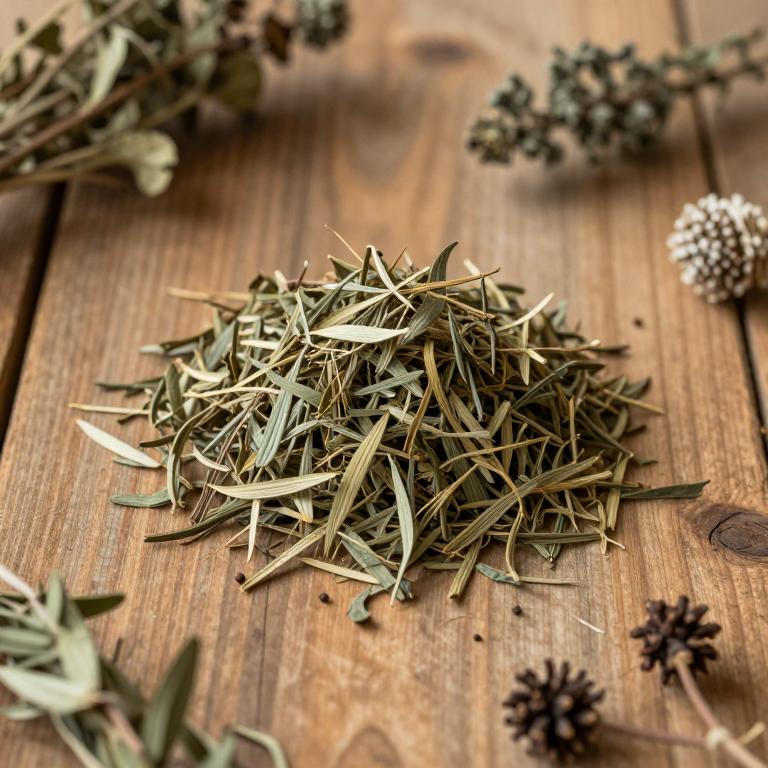
Names and Synonyms
Scientific Names
Accepted name
Cordia americanaSynonyms
- Patagonica americana
- Patagonula glabra
- Patagonula americana var. hirsuta
- Patagonula americana var. glabra
- Patagonula tweedyana
- Patagonula americana
- Petrea dentata
- Petrea denticulata
Regional and Traditional Names
Spanish:
- guayaibí
- guayaibí blanco
Sources: Wikidata, Catalogue of Life
Taxonomical Classification
This plant belongs to the kingdom Plantae and is classified under the phylum Streptophyta and the class Equisetopsida. Within the subclass Magnoliidae, it is further categorized under the order Boraginales and the family Boraginaceae. Finally, it is identified by the genus Cordia, specifically as the species Cordia americana.
| Rank | Classification |
|---|---|
| Kingdom | Plantae |
| Phylum | Streptophyta |
| Class | Equisetopsida |
| Subclass | Magnoliidae |
| Order | Boraginales |
| Family | Boraginaceae |
| Genus | Cordia |
Sources: The World Checklist of Vascular Plants (WCVP)
Distribution
This plant exhibits a wide geographical distribution across several regions of South America. In Western South America, it can be found specifically within the borders of Bolivia. Its presence in Brazil is extensive, spanning the West-Central, Southeast, and South regions. Additionally, the species extends into the southern part of the continent. Specifically, it is located in the Northeast region of Argentina.
| Region | Area |
|---|---|
| Western South America | Bolivia |
| Brazil | Brazil West-Central |
| Brazil | Brazil Southeast |
| Brazil | Brazil South |
| Southern South America | Argentina Northeast |
| Southern South America | Argentina Northwest |
| Southern South America | Paraguay |
| Southern South America | Uruguay |
Sources: The World Checklist of Vascular Plants (WCVP)
Botanical Identification
Ecology
The ecology of Cordia americana is characterized by its preference for low-altitude environments, specifically thriving within an elevational range that begins at sea level (0 m AMSL) and extends up to a maximum of 800 m AMSL. This species is typically found inhabiting "bosque bajo," where it integrates into the lower forest layers and shrubby vegetation structures. These specific environmental parameters suggest an adaptation to warmer, lowland tropical or subtropical ecosystems where it can effectively compete within the understory or transitional forest habitats.
- Elevational range max:
- 800 m AMSL
- Elevational range min:
- 0 m AMSL
- Habitat :
- Bosque bajo
Life history
The life history of Cordia americana is characterized by its status as a perennial plant, allowing it to persist through multiple growing seasons. As a phanerophyte, its reproductive shoots are elevated above the ground, a trait shared across its classification as both a phanerophyte and a nanophanerophyte depending on its specific developmental stage and size. The plant exhibits a deciduous nature, shedding its foliage seasonally as part of its natural growth cycle.
- Deciduousness :
- deciduous
- Life form :
- phanerophyte
- Lifecycle :
- perennial
Morphology
The morphology of Cordia americana is characterized by its stature as a woody tree, typically exhibiting a growth form that is self-supporting rather than acting as a climber or liana. This terrestrial species can reach significant dimensions, with a mean plant height of approximately 20 m and a maximum height of up to 30 m. As an independent organism, it does not function as a parasite or an epiphyte, maintaining a strictly terrestrial existence. Its structure is defined by its woody composition, providing the necessary stability for its substantial vertical development.
- Aquatic :
- terrestrial
- Climber :
- self-supporting
- Epiphyte :
- terrestrial
- Growth form :
- tree
- Parasite :
- independent
- Plant height max:
- 30 m
- Plant height mean:
- 20 m
- Woodiness :
- woody
Physiology
The physiology of Cordia americana is characterized by a C3 photosynthetic pathway, indicating a standard carbon fixation process typical of many woody tropical and subtropical species. Its leaf morphology and resource allocation are reflected in a consistent Specific Leaf Area (SLA) of 137 cm²/g, with the minimum, mean, and maximum recorded values all aligning at this specific metric. Furthermore, this species does not function as a nitrogen fixer, meaning it relies on the uptake of available nitrogen from the soil rather than through symbiotic nitrogen-fixing associations.
- Nitrogen fixer :
- no
- Photosynthetic pathway :
- C3
- Specific Leaf Area (SLA) min:
- 137 cm²/g
Reproduction
The reproduction of Cordia americana is characterized by the production of specialized seeds that exhibit specific quantitative morphological traits. The seed mass within this species shows minimal variation, indicating a highly standardized reproductive output. The mean seed mass is recorded at 0.014575 g, with a narrow range of deviation observed between the minimum and maximum values. Specifically, the smallest seeds measured have a mass of 0.014 g, while the largest seeds reach a mass of 0.01515 g. This precise distribution of seed mass is a critical component of its reproductive biology and dispersal potential.
- Seed mass max:
- 0.01515 g
- Seed mass mean:
- 0.014575 g
- Seed mass min:
- 0.014 g
Sources: Global Inventory of Floras and Traits (GIFT)
Plant Parts
Cordia americana has 1 reported plant parts identified across 1 scientific publications and several other databases that are studied for medicinal purposes. The most consistently reported plant part include leaf.
| Plant part | Supporting sources | Consensus |
|---|---|---|
| Leaf | 1 supporting sources | ★☆☆☆☆ |
Leaf
- Journal of ethnopharmacology
Chemicals
Cordia americana has 2 reported phytochemicals identified across 1 scientific publications and several other databases. The most consistently reported chemicals include Neolignans, rosmarinic acid.
| Chemical | Supporting sources | Consensus |
|---|---|---|
| Neolignans | 1 supporting sources | ★☆☆☆☆ |
| rosmarinic acid | 1 supporting sources | ★☆☆☆☆ |
Neolignans
- Planta medica
rosmarinic acid
- Journal of ethnopharmacology
Activities
Cordia americana has 1 reported activities identified across 1 scientific publications and several other databases. The most consistently reported activities include Antioxidant.
| Activity | Supporting sources | Consensus |
|---|---|---|
| Antioxidant | 1 supporting sources | ★☆☆☆☆ |
Antioxidant
- Planta medica
Conditions
Cordia americana has 2 reported investigations on conditions identified across 1 scientific publications and several other databases. The most consistently reported conditions include herpes simplex virus type 1, wounds.
| Condition | Supporting sources | Consensus |
|---|---|---|
| Herpes simplex virus type 1 | 1 supporting sources | ★☆☆☆☆ |
| Wounds | 1 supporting sources | ★☆☆☆☆ |
Herpes simplex virus type 1
- Journal of ethnopharmacology
Wounds
- Journal of ethnopharmacology
Preparations
Cordia americana has 5 reported preparations identified across 1 scientific publications and several other databases. The most consistently reported preparations include 50% and 70% hydroalcoholic extracts, aqueous extracts, ethanolic extract of the bark of Cordia americana, ethanolic extract of the leaves of Cordia americana, ethanolic extract prepared from the leaves of Cordia americana.
| Preparation | Supporting sources | Consensus |
|---|---|---|
| 50% and 70% hydroalcoholic extracts | 1 supporting sources | ★☆☆☆☆ |
| Aqueous extracts | 1 supporting sources | ★☆☆☆☆ |
| Ethanolic extract of the bark of cordia americana | 1 supporting sources | ★☆☆☆☆ |
| Ethanolic extract of the leaves of cordia americana | 1 supporting sources | ★☆☆☆☆ |
| Ethanolic extract prepared from the leaves of cordia americana | 1 supporting sources | ★☆☆☆☆ |
50% and 70% hydroalcoholic extracts
- Journal of ethnopharmacology
Aqueous extracts
- Journal of ethnopharmacology
Ethanolic extract of the bark of cordia americana
- Planta medica
Ethanolic extract of the leaves of cordia americana
- Journal of ethnopharmacology
Ethanolic extract prepared from the leaves of cordia americana
- Journal of ethnopharmacology