Manjack
Cordia alliodora · Accepted scientific name
Scientific literature: Very Sparse (4 studies) · ★☆☆☆☆
Manjack, scientifically known as Cordia alliodora, is a versatile evergreen tree native to tropical regions. Renowned for its fragrant, bell-shaped flowers and medicinal properties, it is used in traditional healing to treat skin ailments, inflammation, and digestive issues. This resilient species holds significant value in both ethnobotany and ecology.
- Family
- Boraginaceae
- Native range
- Africa
- Parts used
- Root · Stem
- Common names
- Manjack · Salmwood
- Scientific synonyms
- Lithocardium Gerascanthus Var. Alliodorum · Lithocardium Alliodorum · 26 more
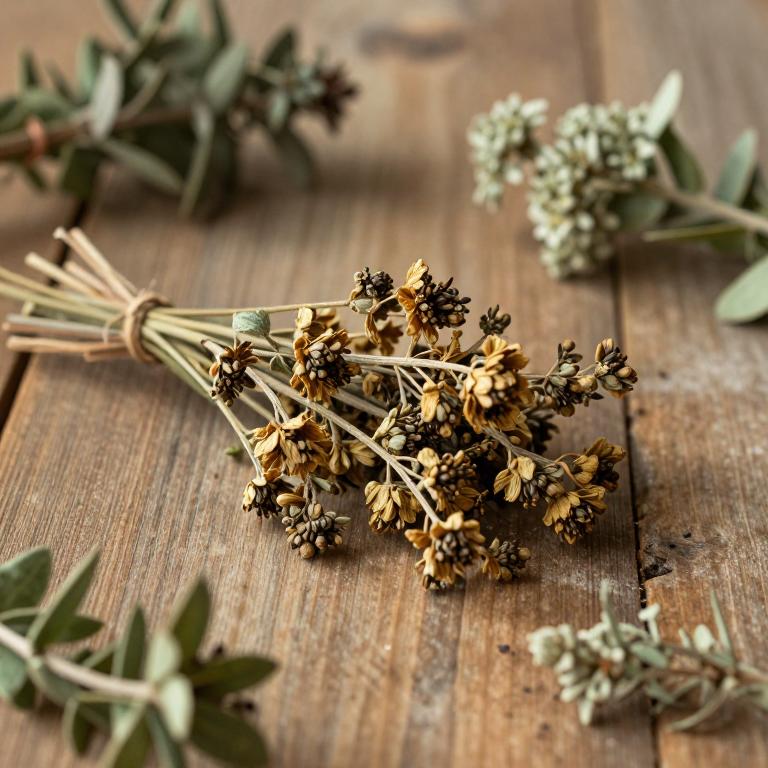
Names and Synonyms
Common Names
- Manjack
- salmwood
Scientific Names
Accepted name
Cordia alliodoraSynonyms
- Lithocardium gerascanthus var. alliodorum
- Lithocardium alliodorum
- Lithocardium cujabense
- Varronia rusbyi
- Solanum mucronatum
- Cordia macrantha
- Cordia rusbyi
- Cordia velutina
- Cordia andina
- Cordia cerdana
- Cordia chamissoniana var. complicata
- Cordia gerascanthus f. martinicensis
- Cordia hartwissiana
- Cerdana alliodora
- Cerdana cujabensis
- Gerascanthus velutinus
- Varronia tuberosa
- Lithocardium hartwigsiana
- Cordia alliodora f. albotomentosa
- Cordia alliodora var. boliviana
- Cordia alliodora var. glabra
- Cordia alliodora var. tomentosa
- Cordia cujabensis
- Cordia gerascanthus f. micrantha
- Cordia gerascanthus var. subcanescens
- Cordia goudotii
- Gerascanthus alliodorus
- Gerascanthus cujabensis
Regional and Traditional Names
Spanish:
- Cerdana alliodora
- Canalete
- Capá
- Cordia andina
- Ajo ajo
- Lithocardium alliodorum
- Cordia gerascanthus
- Alatrique
- Urua
- Capa
- Cap Prieto
- Nogal
- Nogal cafetero
- Solera
- Vara de Humo
- Cap Prieto
- ajo ajo
- alatrique
- canalete
- capá
- laurel blanco
- laurel negro
German:
- Lauch-Kordie
French:
- cèdre Sam
- bois de Chypre
- pardillo
Sources: Wikidata, Catalogue of Life
Taxonomical Classification
This plant, Cordia alliodora, is classified within the kingdom Plantae and the phylum Streptophyta. It belongs to the class Equisetopsida and the subclass Magnoliidae, falling under the order Boraginales. Finally, it is a member of the family Boraginaceae within the genus Cordia.
| Rank | Classification |
|---|---|
| Kingdom | Plantae |
| Phylum | Streptophyta |
| Class | Equisetopsida |
| Subclass | Magnoliidae |
| Order | Boraginales |
| Family | Boraginaceae |
| Genus | Cordia |
Sources: The World Checklist of Vascular Plants (WCVP)
Distribution
This plant exhibits a widespread presence across several distinct tropical regions. Within the Western Indian Ocean, its range includes the islands of Mauritius and the Seychelles. Moving toward the Malesian region, it can be found growing in Borneo. Its distribution extends into Papuasia, specifically across the Solomon Islands. Finally, the species is also documented in the Southwestern Pacific within Vanuatu.
| Region | Area |
|---|---|
| Western Indian Ocean | Mauritius |
| Western Indian Ocean | Seychelles |
| Malesia | Borneo |
| Papuasia | Solomon Is. |
| Southwestern Pacific | Vanuatu |
| North-Central Pacific | Hawaii |
| Mexico | Mexico Central |
| Mexico | Mexico Northeast |
| Mexico | Mexico Gulf |
| Mexico | Mexico Northwest |
Sources: The World Checklist of Vascular Plants (WCVP)
Botanical Identification
Ecology
The ecology of Cordia alliodora is characterized by its presence within the Floresta Estacional Semidecidual habitat, where it plays a role in the structural complexity of these seasonal forests. The species exhibits a broad vertical distribution across various landscapes, spanning an elevational range that begins at 0 m AMSL and extends up to a maximum of 1800 m AMSL. This wide altitudinal tolerance allows it to inhabit diverse environmental gradients, adapting to the fluctuating moisture and temperature regimes typical of semi-deciduous ecosystems.
- Elevational range max:
- 1800 m AMSL
- Elevational range min:
- 0 m AMSL
- Habitat :
- Floresta Estacional Semidecidual
Life history
The life history of Cordia alliodora is characterized by its classification as a perennial species, meaning it maintains its physiological functions and structural integrity over many years rather than completing a single reproductive cycle. As a long-lived woody plant, it follows a developmental trajectory that begins with seed germination, followed by an establishment phase where it develops a robust root system and a sturdy trunk to support its eventual canopy. Unlike annuals or biennials that undergo rapid senescence, this perennial species invests significant energy into secondary growth and long-term survival, allowing it to withstand seasonal fluctuations and produce flowers and fruits across multiple growing seasons. Its life cycle is marked by recurring reproductive phases, where it periodically transitions from vegetative growth to flowering, ensuring the continued dispersal of seeds to maintain population stability within its natural habitat.
- Lifecycle :
- perennial
Morphology
The morphology of Cordia alliadora is characterized by its stature as a large, woody tree that typically reaches a mean height of 25.5 m, with maximum growth potentially extending up to 32 m. As a self-supporting organism, it does not function as a climber, liana, or vine, nor does it exhibit parasitic behavior, maintaining an independent life cycle. The plant is strictly terrestrial in its ecological habit, lacking any epiphytic qualities such as holoepiphytic or hemiepiphytic growth forms. Its structure is defined by a robust, woody composition, which supports its significant vertical development within its natural habitat.
- Aquatic :
- terrestrial
- Climber :
- self-supporting
- Epiphyte :
- terrestrial
- Growth form :
- tree
- Parasite :
- independent
- Plant height max:
- 32 m
- Plant height mean:
- 25.5 m
- Woodiness :
- woody
Physiology
The physiology of Cordia alliodora is characterized by a C3 photosynthetic pathway, indicating a standard carbon fixation process typical of many woody tropical species. Its leaf morphology and resource management are reflected in a Specific Leaf Area (SLA) with a mean value of 168.472 cm²/g, suggesting a moderate level of leaf thickness and investment in photosynthetic tissue. The plant exhibits a Leaf Dry Matter Content (LDMC) that varies between a minimum of 368.3 mg/g and a maximum of 421.8 mg/g, with an overall mean LDMC of 395.05 mg/g, which points to a relatively dense leaf structure. Furthermore, the species does not exhibit succulence, nor does it function as a nitrogen fixer, relying instead on standard soil nutrient uptake rather than symbiotic nitrogen fixation.
- Leaf dry matter content (LDMC) max:
- 421.8 mg/g
- Leaf dry matter content (LDMC) mean:
- 395.05 mg/g
- Leaf dry matter content (LDMC) min:
- 368.3 mg/g
- Nitrogen fixer :
- no
- Photosynthetic pathway :
- C3
- Specific Leaf Area (SLA) mean:
- 168.472 cm²/g
- Succulence :
- no
Reproduction
The reproduction of Cordia alliodora is characterized by a dioecious sexual reproduction system, meaning individual plants are either male or female, and self-fertilization is notably absent. The pollination process is biotic, specifically relying on insects, with bees identified as a key pollination agent. Once fertilization occurs, the plant produces dry fruits that facilitate dispersal via an anemochorous syndrome, where seeds are dispersed by the wind. The resulting seeds exhibit significant morphological variability: they possess a mean seed length of 6.1 mm (ranging from a minimum of 1 mm to a maximum of 6 mm) and a consistent seed volume of 190 mm³. Furthermore, the seed mass varies considerably, with a mean mass of approximately 0.0236 g, though individual seeds can range from a minimum of 0.0029 g to a maximum of 0.1964 g.
- Dispersal syndrome :
- anemochorous
- Fruit dryness :
- dry
- Pollination syndrome :
- insect
- Pollination syndrome :
- bee
- Pollination syndrome :
- biotic
- Reproduction sexual :
- dioecious
- Seed length max:
- 6 mm
- Seed length mean:
- 6.1 mm
- Seed length min:
- 1 mm
- Seed mass max:
- 0.1964 g
- Seed mass mean:
- 0.0235758335 g
- Seed mass min:
- 0.0029 g
- Seed volume max:
- 190 mm³
- Self fertilization :
- absent
Sources: Global Inventory of Floras and Traits (GIFT)
Plant Parts
Cordia alliodora has 2 reported plant parts identified across 2 scientific publications and several other databases that are studied for medicinal purposes. The most consistently reported plant part include root, stem.
| Plant part | Supporting sources | Consensus |
|---|---|---|
| Root | 1 supporting sources | ★☆☆☆☆ |
| Stem | 1 supporting sources | ★☆☆☆☆ |
Root
- Journal of natural products
Stem
- Journal of ethnopharmacology
Chemicals
Cordia alliodora has 1 reported phytochemicals identified across 2 scientific publications and several other databases. The most consistently reported chemicals include 1-(3'-methoxypropanoyl)-2,4,5-trimethoxybenzene.
| Chemical | Supporting sources | Consensus |
|---|---|---|
| 1-(3'-methoxypropanoyl)-2,4,5-trimethoxybenzene | 1 supporting sources | ★☆☆☆☆ |
1-(3'-methoxypropanoyl)-2,4,5-trimethoxybenzene
- Journal of natural products
Activities
Cordia alliodora has 1 reported activities identified across 2 scientific publications and several other databases. The most consistently reported activities include Antifungal.
| Activity | Supporting sources | Consensus |
|---|---|---|
| Antifungal | 1 supporting sources | ★☆☆☆☆ |
Antifungal
- Journal of natural products
Preparations
Cordia alliodora has 3 reported preparations identified across 2 scientific publications and several other databases. The most consistently reported preparations include Ethanol extracts of stem barks, methanolic extracts, root bark.
| Preparation | Supporting sources | Consensus |
|---|---|---|
| Ethanol extracts of stem barks | 1 supporting sources | ★☆☆☆☆ |
| Methanolic extracts | 1 supporting sources | ★☆☆☆☆ |
| Root bark | 1 supporting sources | ★☆☆☆☆ |
Ethanol extracts of stem barks
- Journal of ethnopharmacology
Methanolic extracts
- Natural product research
Root bark
- Journal of natural products