Large-leaved Cordia
Cordia africana · Accepted scientific name
Scientific literature: Very Sparse (25 studies) · ★☆☆☆☆
Large-leaved Cordia, scientifically known as Cordia africanica, is a versatile woody shrub native to tropical Africa. Widely utilized in traditional medicine, its leaves, bark, and roots possess significant therapeutic properties. It is frequently employed to treat inflammation, digestive ailments, and skin conditions, offering valuable pharmacological potential for modern healthcare.
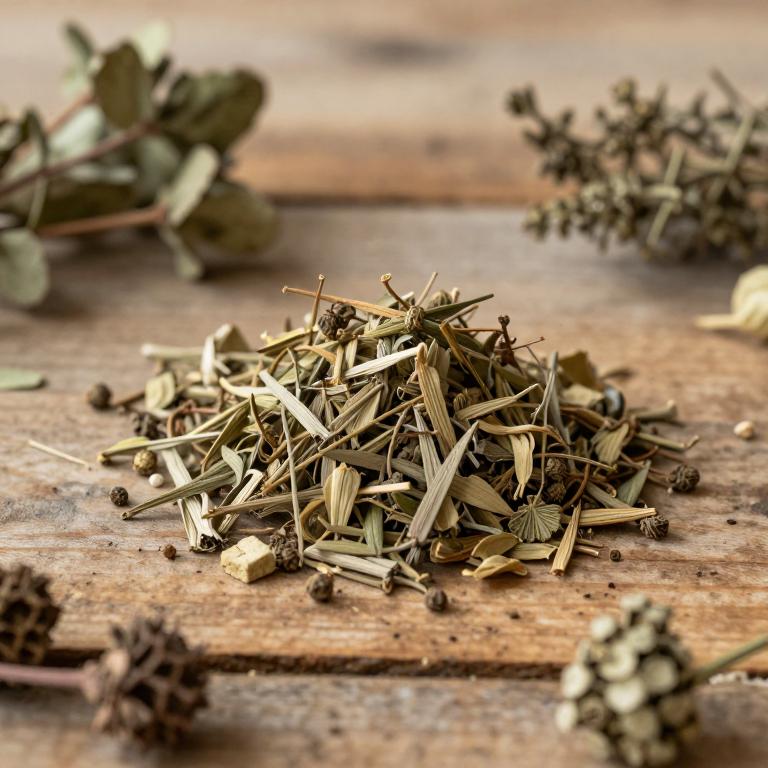
Names and Synonyms
Common Names
- Large-leaved Cordia
- East African cordia
- Sudan teak
- large-leaf cordia
- Large-Leaved Saucerberry
Scientific Names
Accepted name
Cordia africanaSynonyms
- Lithocardium amplifolium
- Varronia abyssinica
- Calyptracordia abyssinica
- Gerascanthus africanus
- Cordia abyssinica var. acutifolia
- Cordia unyorensis
- Cordia amplifolia
- Cordia harara
- Cordia holstii
- Lithocardium abyssinicum
- Cordia abyssinica
- Gerascanthus holstii
Regional and Traditional Names
German:
- Cordia abyssinica
- Schleimbeerenbaum
French:
- Cordia holstii
- faux teck
- sébestier d'Afrique
- teck d'Arabie
Sources: Wikidata, Catalogue of Life
Taxonomical Classification
This plant belongs to the kingdom Plantae and is classified under the phylum Streptophyta and the class Equisetopsida. Within the subclass Magnoliidae, it falls under the order Boraginales and the family Boraginaceae. It is specifically categorized under the genus Cordia as Cordia africana.
| Rank | Classification |
|---|---|
| Kingdom | Plantae |
| Phylum | Streptophyta |
| Class | Equisetopsida |
| Subclass | Magnoliidae |
| Order | Boraginales |
| Family | Boraginaceae |
| Genus | Cordia |
Sources: The World Checklist of Vascular Plants (WCVP)
Distribution
This plant exhibits a broad presence across several regions of the African continent. In West Tropical Africa, its distribution includes the nations of Guinea, Mali, and Nigeria. Moving toward the center of the continent, it is also found within West-Central Tropical Africa. Specifically, its range extends into Burundi and the Central African Republic. This diverse geographical spread highlights the plant's ability to thrive in various tropical environments.
| Region | Area |
|---|---|
| West Tropical Africa | Guinea |
| West Tropical Africa | Mali |
| West Tropical Africa | Nigeria |
| West-Central Tropical Africa | Burundi |
| West-Central Tropical Africa | Central African Republic |
| West-Central Tropical Africa | Cameroon |
| West-Central Tropical Africa | Rwanda |
| West-Central Tropical Africa | DR Congo |
| Northeast Tropical Africa | Chad |
| Northeast Tropical Africa | Eritrea |
Sources: The World Checklist of Vascular Plants (WCVP)
Botanical Identification
Ecology
The ecology of Cordia africana is characterized by a highly specific altitudinal niche, primarily thriving within a narrow elevational range. This species is typically found at elevations ranging from a minimum of 730 m AMSL to a maximum of 745 m AMSL. This restricted vertical distribution suggests that the plant is highly adapted to the particular microclimates, atmospheric pressures, and temperature regimes present within this specific altitudinal band. Such precision in its environmental requirements indicates that its ecological stability is closely tied to the specific topographical and climatic conditions found at these precise heights above mean sea level.
- Elevational range max:
- 745 m AMSL
- Elevational range min:
- 730 m AMSL
Life history
The life history of Cordia africana is characterized by its status as a perennial plant, allowing it to persist in its environment through multiple growing seasons. As a phanerophyte, its regenerative buds are located on aerial shoots well above the ground, a trait that defines its structural growth pattern. This species maintains an evergreen deciduousness, ensuring that it retains its foliage and continues its physiological processes throughout the year.
- Deciduousness :
- evergreen
- Life form :
- phanerophyte
- Lifecycle :
- perennial
Morphology
The morphology of Cordia africana is characterized by its growth form as a woody tree, which functions as a self-supporting structure rather than a climber or a vine. This species is an independent plant, meaning it does not act as a parasite, and it maintains a terrestrial existence rather than being aquatic or epiphytic. In terms of physical dimensions, the plant exhibits significant vertical development, with a height that ranges from a minimum of 10 meters to a maximum of 24 meters, maintaining a mean height of approximately 10 meters.
- Aquatic :
- terrestrial
- Climber :
- self-supporting
- Epiphyte :
- terrestrial
- Growth form :
- tree
- Parasite :
- independent
- Plant height max:
- 24 m
- Plant height mean:
- 10 m
- Woodiness :
- woody
Physiology
The physiology of Cordia africana is characterized by a C3 photosynthetic pathway, which dictates its carbon fixation processes and metabolic efficiency. Morphologically, the plant exhibits specific foliar dimensions, with leaves maintaining an average length of 11.9 cm and an average width of 9.9 cm. Regarding its nutrient cycling capabilities, the species does not function as a nitrogen fixer, meaning it relies on the soil's available nitrogen rather than symbiotic nitrogen-fixing bacteria to meet its nutritional requirements.
- Leaf length mean:
- 11.9 cm
- Leaf width mean:
- 9.9 cm
- Nitrogen fixer :
- no
- Photosynthetic pathway :
- C3
Reproduction
The reproduction of Cordia africana is characterized by a biotic pollination strategy, primarily facilitated by insects, with bees playing a significant role in the transfer of pollen. The plant produces fleshy fruits, which are indicative of a zoochorous dispersal syndrome, specifically utilizing endozoochory where seeds are dispersed through the digestive tracts of animals. The seeds themselves exhibit a range of physical dimensions and masses; they have a mean length of 8.3 mm and a maximum height of 6.2 mm, with a maximum width of 6.2 mm. In terms of volume, the seeds maintain a consistent measurement of approximately 230 mm³. The seed mass shows significant variability, ranging from a minimum of 0.02889 g to a maximum of 0.74868 g, with an overall mean seed mass of 0.325856667 g.
- Dispersal syndrome :
- zoochorous
- Dispersal syndrome :
- endozoochorous
- Fruit dryness :
- fleshy
- Pollination syndrome :
- insect
- Pollination syndrome :
- bee
- Pollination syndrome :
- biotic
- Seed height max:
- 6.2 mm
- Seed length mean:
- 8.3 mm
- Seed mass max:
- 0.74868 g
- Seed mass mean:
- 0.325856667 g
- Seed mass min:
- 0.02889 g
- Seed volume max:
- 230 mm³
- Seed width max:
- 6.2 mm
Sources: Global Inventory of Floras and Traits (GIFT)
Plant Parts
Cordia africana has 2 reported plant parts identified across 4 scientific publications and several other databases that are studied for medicinal purposes. The most consistently reported plant part include leaf, root.
| Plant part | Supporting sources | Consensus |
|---|---|---|
| Leaf | 3 supporting sources | ★★☆☆☆ |
| Root | 1 supporting sources | ★☆☆☆☆ |
Leaf
- Evidence-based complementary and alternative medicine : eCAM
- PloS one
- Clinical nutrition ESPEN
Root
- Scientific reports
Chemicals
Cordia africana has 8 reported phytochemicals identified across 4 scientific publications and several other databases. The most consistently reported chemicals include Tannins, CHLOROFORM, Flavonoids, Phenols, Steroids.
| Chemical | Supporting sources | Consensus |
|---|---|---|
| Tannins | 2 supporting sources | ★☆☆☆☆ |
| CHLOROFORM | 1 supporting sources | ★☆☆☆☆ |
| Flavonoids | 1 supporting sources | ★☆☆☆☆ |
| Phenols | 1 supporting sources | ★☆☆☆☆ |
| Steroids | 1 supporting sources | ★☆☆☆☆ |
| Terpenes | 1 supporting sources | ★☆☆☆☆ |
| Trilinolein | 1 supporting sources | ★☆☆☆☆ |
| triterpenoids | 1 supporting sources | ★☆☆☆☆ |
Tannins
- Journal of helminthology
- Scientific reports
CHLOROFORM
- PloS one
Flavonoids
- Scientific reports
Phenols
- Scientific reports
Steroids
- Scientific reports
Terpenes
- Journal of helminthology
Trilinolein
- Scientific reports
triterpenoids
- Scientific reports
Activities
Cordia africana has 3 reported activities identified across 4 scientific publications and several other databases. The most consistently reported activities include Antimalarial, Antioxidant, Hepatoprotective.
| Activity | Supporting sources | Consensus |
|---|---|---|
| Antimalarial | 1 supporting sources | ★☆☆☆☆ |
| Antioxidant | 1 supporting sources | ★☆☆☆☆ |
| Hepatoprotective | 1 supporting sources | ★☆☆☆☆ |
Antimalarial
- Evidence-based complementary and alternative medicine : eCAM
Antioxidant
- Clinical nutrition ESPEN
Hepatoprotective
- Clinical nutrition ESPEN
Conditions
Cordia africana has 4 reported investigations on conditions identified across 4 scientific publications and several other databases. The most consistently reported conditions include malaria, diarrhea, liver diseases, schistosomiasis.
| Condition | Supporting sources | Consensus |
|---|---|---|
| Malaria | 4 supporting sources | ★★☆☆☆ |
| Diarrhea | 1 supporting sources | ★☆☆☆☆ |
| Liver diseases | 1 supporting sources | ★☆☆☆☆ |
| Schistosomiasis | 1 supporting sources | ★☆☆☆☆ |
Malaria
- Journal of helminthology
- Evidence-based complementary and alternative medicine : eCAM
- Scientific reports
- Journal of ethnopharmacology
Diarrhea
- Scientific reports
Liver diseases
- Scientific reports
Schistosomiasis
- Journal of helminthology
Preparations
Cordia africana has 10 reported preparations identified across 4 scientific publications and several other databases. The most consistently reported preparations include 80% methanol extract, absolute methanol extract, chloroform extract, chloroform fraction, crude extract.
| Preparation | Supporting sources | Consensus |
|---|---|---|
| 80% methanol extract | 1 supporting sources | ★☆☆☆☆ |
| Absolute methanol extract | 1 supporting sources | ★☆☆☆☆ |
| Chloroform extract | 1 supporting sources | ★☆☆☆☆ |
| Chloroform fraction | 1 supporting sources | ★☆☆☆☆ |
| Crude extract | 1 supporting sources | ★☆☆☆☆ |
| Extracts | 1 supporting sources | ★☆☆☆☆ |
| Leaf extracts | 1 supporting sources | ★☆☆☆☆ |
| N-butanol fraction | 1 supporting sources | ★☆☆☆☆ |
| Solvent extracts | 1 supporting sources | ★☆☆☆☆ |
| Solvent fractions | 1 supporting sources | ★☆☆☆☆ |
80% methanol extract
- PloS one
Absolute methanol extract
- PloS one
Chloroform extract
- PloS one
Chloroform fraction
- Evidence-based complementary and alternative medicine : eCAM
Crude extract
- Evidence-based complementary and alternative medicine : eCAM
Extracts
- Journal of helminthology
Leaf extracts
- Evidence-based complementary and alternative medicine : eCAM
N-butanol fraction
- Evidence-based complementary and alternative medicine : eCAM
Solvent extracts
- PloS one
Solvent fractions
- Evidence-based complementary and alternative medicine : eCAM