goldthread
Coptis · Accepted scientific name
Scientific literature: Very Sparse (22 studies) · ★☆☆☆☆
Goldthread, scientifically known as Coptis, is a perennial herb revered in traditional medicine for its potent bioactive compounds. Renowned for its striking yellow rhizomes, it contains berberine, which offers powerful anti-inflammatory and antimicrobial properties. This resilient plant remains a vital component in treating various digestive and metabolic ailments.
- Family
- Ranunculaceae
- Native range
- Asia-Temperate
- Parts used
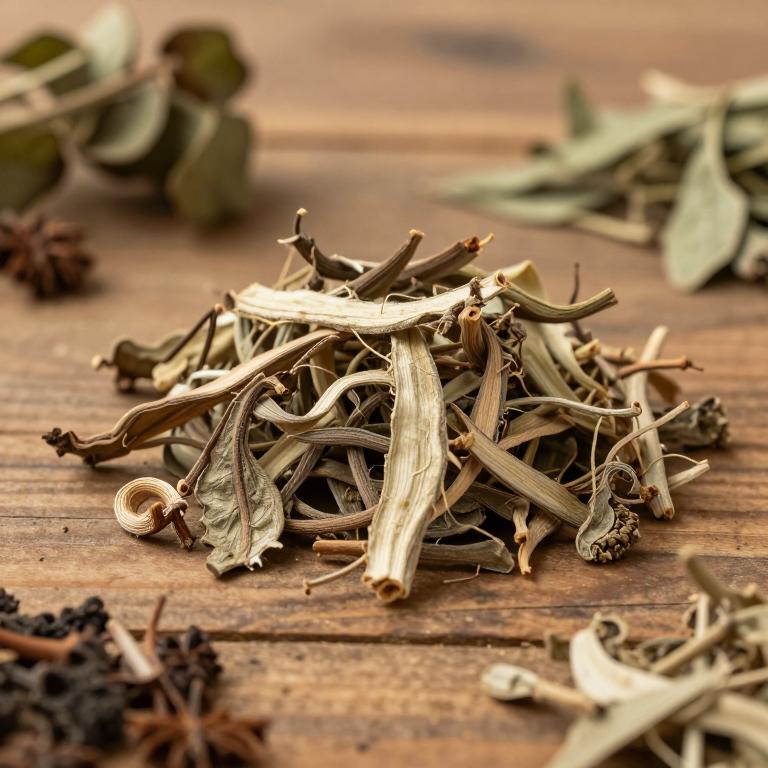
- Rhizome · Root
- Common names
- Goldthread · Goldthreads
- Scientific synonyms
- Chryza · Chrysocoptis · 2 more
Names and Synonyms
Common Names
- goldthread
- goldthreads
Scientific Names
Accepted name
CoptisSynonyms
- Chryza
- Chrysocoptis
- Chrysa
- Coldenella
Sources: Wikidata, Catalogue of Life
Taxonomical Classification
This plant belongs to the kingdom Plantae and the phylum Streptophyta, falling under the class Equisetopsida and subclass Magnoliidae. Within the order Ranunculales, it is a member of the family Ranunculaceae. Specifically, it is classified under the genus Coptis.
| Rank | Classification |
|---|---|
| Kingdom | Plantae |
| Phylum | Streptophyta |
| Class | Equisetopsida |
| Subclass | Magnoliidae |
| Order | Ranunculales |
| Family | Ranunculaceae |
| Genus | Coptis |
Sources: The World Checklist of Vascular Plants (WCVP)
Distribution
This plant exhibits a broad geographical distribution across the rugged territories of Northern Asia. In the vast expanse of Siberia, it can be specifically found within the Yakutiya region. Moving toward the Russian Far East, its presence extends through the Kamchatka Peninsula and the Khabarovsk area. The species also inhabits the coastal reaches of the Kuril Islands. Finally, its range continues through the remote and northern landscapes of Magadan.
| Region | Area |
|---|---|
| Siberia | Yakutiya |
| Russian Far East | Kamchatka |
| Russian Far East | Khabarovsk |
| Russian Far East | Kuril Is. |
| Russian Far East | Magadan |
| Russian Far East | Primorye |
| Russian Far East | Sakhalin |
| China | China South-Central |
| China | China North-Central |
| China | China Southeast |
Sources: The World Checklist of Vascular Plants (WCVP)
Plant Parts
Coptis has 2 reported plant parts identified across 6 scientific publications and several other databases that are studied for medicinal purposes. The most consistently reported plant part include rhizome, root.
| Plant part | Supporting sources | Consensus |
|---|---|---|
| Rhizome | 4 supporting sources | ★★☆☆☆ |
| Root | 2 supporting sources | ★☆☆☆☆ |
Rhizome
- Journal of natural medicines
- Planta medica
- Zhongguo Zhong yao za zhi = Zhongguo zhongyao zazhi = China journal of Chinese materia medica
- Hua xi yi ke da xue xue bao = Journal of West China University of Medical Sciences = Huaxi yike daxue xuebao
Root
- Journal of economic entomology
- Zhongguo Zhong yao za zhi = Zhongguo zhongyao zazhi = China journal of Chinese materia medica
Chemicals
Coptis has 2 reported phytochemicals identified across 6 scientific publications and several other databases. The most consistently reported chemicals include berberine, Coptisine.
| Chemical | Supporting sources | Consensus |
|---|---|---|
| berberine | 3 supporting sources | ★★☆☆☆ |
| Coptisine | 1 supporting sources | ★☆☆☆☆ |
berberine
- Pharmacological research
- Biomedicines
- Metabolites
Coptisine
- Cytotechnology
Activities
Coptis has 3 reported activities identified across 6 scientific publications and several other databases. The most consistently reported activities include Antidiabetic, Antimicrobial, Antioxidant.
| Activity | Supporting sources | Consensus |
|---|---|---|
| Antidiabetic | 1 supporting sources | ★☆☆☆☆ |
| Antimicrobial | 1 supporting sources | ★☆☆☆☆ |
| Antioxidant | 1 supporting sources | ★☆☆☆☆ |
Antidiabetic
- Science advances
Antimicrobial
- Science advances
Antioxidant
- Pharmacological research
Conditions
Coptis has 7 reported investigations on conditions identified across 6 scientific publications and several other databases. The most consistently reported conditions include Alzheimer's disease, Oxidative stress, Staphylococcus aureus, antidiabetic, colon cancer.
| Condition | Supporting sources | Consensus |
|---|---|---|
| Alzheimer's disease | 1 supporting sources | ★☆☆☆☆ |
| Oxidative stress | 1 supporting sources | ★☆☆☆☆ |
| Staphylococcus aureus | 1 supporting sources | ★☆☆☆☆ |
| Antidiabetic | 1 supporting sources | ★☆☆☆☆ |
| Colon cancer | 1 supporting sources | ★☆☆☆☆ |
| Inflammatory bowel disease | 1 supporting sources | ★☆☆☆☆ |
| Obesity | 1 supporting sources | ★☆☆☆☆ |
Alzheimer's disease
- Frontiers in pharmacology
Oxidative stress
- Frontiers in pharmacology
Staphylococcus aureus
- Zhongguo Zhong yao za zhi = Zhongguo zhongyao zazhi = China journal of Chinese materia medica
Antidiabetic
- Science advances
Colon cancer
- Journal of ethnopharmacology
Inflammatory bowel disease
- Pharmacological research
Obesity
- Metabolites
Preparations
Coptis has 5 reported preparations identified across 6 scientific publications and several other databases. The most consistently reported preparations include Coptis extract, Rhizoma Coptidis, SPSC, Zuojinwan, traditional Chinese drugs.
| Preparation | Supporting sources | Consensus |
|---|---|---|
| Coptis extract | 1 supporting sources | ★☆☆☆☆ |
| Rhizoma coptidis | 1 supporting sources | ★☆☆☆☆ |
| Spsc | 1 supporting sources | ★☆☆☆☆ |
| Zuojinwan | 1 supporting sources | ★☆☆☆☆ |
| Traditional chinese drugs | 1 supporting sources | ★☆☆☆☆ |
Coptis extract
- Zhong yao cai = Zhongyaocai = Journal of Chinese medicinal materials
Rhizoma coptidis
- Frontiers in pharmacology
Spsc
- Frontiers in medicine
Zuojinwan
- Yao xue xue bao = Acta pharmaceutica Sinica
Traditional chinese drugs
- Hua xi yi ke da xue xue bao = Journal of West China University of Medical Sciences = Huaxi yike daxue xuebao