Japanese goldthread
Coptis japonica · Accepted scientific name
Scientific literature: Very Extensive (384 studies) · ★★★★★
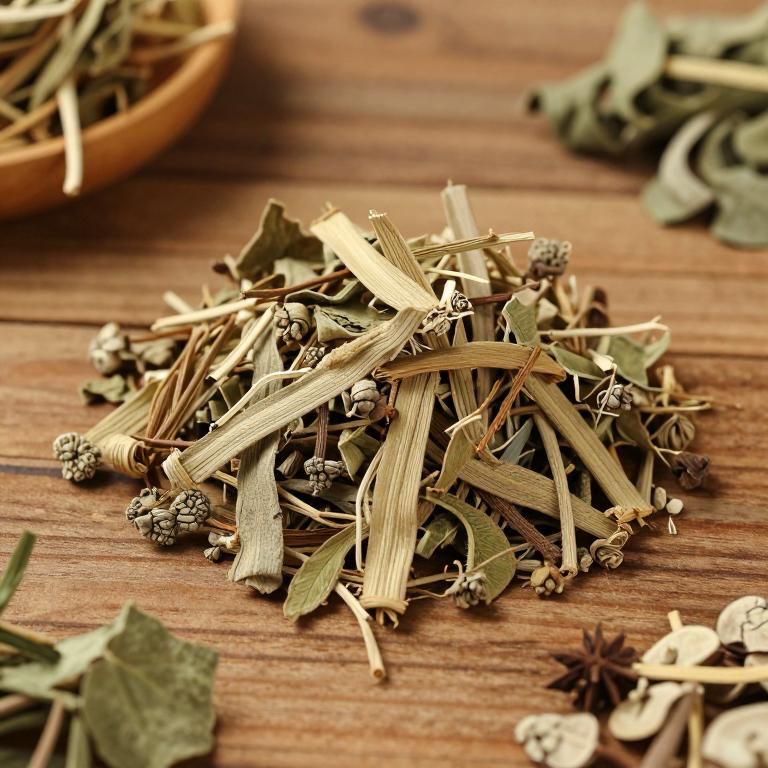
Japanese goldthread, scientifically known as Coptis japonica, is a perennial herb renowned in traditional East Asian medicine. Characterized by its striking yellow rhizomes, it contains potent alkaloids like berberine. This medicinal plant is widely studied for its powerful antibacterial, anti-inflammatory, and antioxidant properties, offering significant therapeutic potential.
- Family
- Ranunculaceae
- Native range
- Asia-Temperate
- Parts used
- Rhizome · Root
- Common names
- Japanese Goldthread
- Scientific synonyms
- Not available
Names and Synonyms
Common Names
- Japanese goldthread
Scientific Names
Accepted name
Coptis japonicaSources: Wikidata, Catalogue of Life
Taxonomical Classification
This plant belongs to the kingdom Plantae and the phylum Streptophyta. Within the class Equisetopsida and subclass Magnoliidae, it is classified under the order Ranunculales. Finally, it is a member of the family Ranunculaceae and is placed within the genus Coptis.
| Rank | Classification |
|---|---|
| Kingdom | Plantae |
| Phylum | Streptophyta |
| Class | Equisetopsida |
| Subclass | Magnoliidae |
| Order | Ranunculales |
| Family | Ranunculaceae |
| Genus | Coptis |
Sources: The World Checklist of Vascular Plants (WCVP)
Distribution
This plant is native to the specific region of Eastern Asia. Within this vast territory, its presence is documented in the islands of Japan. The species occupies unique ecological niches found throughout this particular archipelago. Because of this limited range, its natural habitat is geographically concentrated. Consequently, its wild distribution is primarily defined by its connection to the Japanese landscape.
| Region | Area |
|---|---|
| Eastern Asia | Japan |
Sources: The World Checklist of Vascular Plants (WCVP)
Botanical Identification
Morphology
The morphology of Coptis japonica is characterized by its growth form as a perennial herb, which allows it to thrive in moist, shaded forest environments. In terms of its structural composition, the plant is strictly non-woody, lacking any woody stems or permanent woody tissue. Its physical structure typically features a rhizomatous root system from which various vegetative parts emerge, supporting a soft, herbaceous body that lacks the lignified characteristics found in shrubs or trees.
- Growth form :
- herb
- Woodiness :
- non-woody
Sources: Global Inventory of Floras and Traits (GIFT)
Plant Parts
Coptis japonica has 2 reported plant parts identified across 8 scientific publications and several other databases that are studied for medicinal purposes. The most consistently reported plant part include rhizome, root.
| Plant part | Supporting sources | Consensus |
|---|---|---|
| Rhizome | 6 supporting sources | ★★★☆☆ |
| Root | 2 supporting sources | ★☆☆☆☆ |
Rhizome
- Journal of natural medicines
- Planta medica
- Archives of pharmacal research
- Journal of natural products
- Journal of ethnopharmacology
View 1 additional sources
- Biological & pharmaceutical bulletin
Root
- Journal of economic entomology
- Planta medica
Chemicals
Coptis japonica has 40 reported phytochemicals identified across 8 scientific publications and several other databases. The most consistently reported chemicals include berberine, Coptisine, Magnoflorine, Palmatine, S-adenosyl-L-methionine.
| Chemical | Supporting sources | Consensus |
|---|---|---|
| berberine | 8 supporting sources | ★★★★☆ |
| Coptisine | 3 supporting sources | ★★☆☆☆ |
| Magnoflorine | 3 supporting sources | ★★☆☆☆ |
| Palmatine | 3 supporting sources | ★★☆☆☆ |
| S-adenosyl-L-methionine | 3 supporting sources | ★★☆☆☆ |
| Coclaurine | 2 supporting sources | ★☆☆☆☆ |
| Norreticuline | 2 supporting sources | ★☆☆☆☆ |
| (R)-Norcoclaurine | 1 supporting sources | ★☆☆☆☆ |
| (R,S)-Norlaudanosoline | 1 supporting sources | ★☆☆☆☆ |
| (S)-Norcoclaurine | 1 supporting sources | ★☆☆☆☆ |
berberine
- Dr. Duke
- Plant & cell physiology
- Phytotherapy research : PTR
- Frontiers in pharmacology
- Journal of agricultural and food chemistry
View 3 additional sources
- Chemico-biological interactions
- Journal of economic entomology
- Planta medica
Coptisine
- Dr. Duke
- Journal of agricultural and food chemistry
- Journal of economic entomology
Magnoflorine
- Dr. Duke
- Journal of agricultural and food chemistry
- Bioorganic & medicinal chemistry letters
Palmatine
- Dr. Duke
- Journal of economic entomology
- Planta medica
S-adenosyl-L-methionine
- Plant & cell physiology
- Phytochemistry
- European journal of biochemistry
Coclaurine
- Phytochemistry
- The Journal of biological chemistry
Norreticuline
- Phytochemistry
- The Journal of biological chemistry
(R)-Norcoclaurine
- European journal of biochemistry
(R,S)-Norlaudanosoline
- European journal of biochemistry
(S)-Norcoclaurine
- European journal of biochemistry
Activities
Coptis japonica has 303 reported activities identified across 8 scientific publications and several other databases. The most consistently reported activities include Antiinflammatory, Antiallergic, Laxative, (+)-Inotropic, ACE-Inhibitor.
| Activity | Supporting sources | Consensus |
|---|---|---|
| Antiinflammatory | 3 supporting sources | ★★☆☆☆ |
| Antiallergic | 2 supporting sources | ★☆☆☆☆ |
| Laxative | 2 supporting sources | ★☆☆☆☆ |
| (+)-Inotropic | 1 supporting sources | ★☆☆☆☆ |
| ACE-Inhibitor | 1 supporting sources | ★☆☆☆☆ |
| Abortifacient | 1 supporting sources | ★☆☆☆☆ |
| Adrenocorticotrophic | 1 supporting sources | ★☆☆☆☆ |
| Adrenolytic | 1 supporting sources | ★☆☆☆☆ |
| Allelopathic | 1 supporting sources | ★☆☆☆☆ |
| Amebicide | 1 supporting sources | ★☆☆☆☆ |
Antiinflammatory
- Dr. Duke
- Archives of pharmacal research
- Journal of natural products
Antiallergic
- Dr. Duke
- Archives of pharmacal research
Laxative
- Dr. Duke
- Scientific reports
(+)-Inotropic
- Dr. Duke
ACE-Inhibitor
- Dr. Duke
Abortifacient
- Dr. Duke
Adrenocorticotrophic
- Dr. Duke
Adrenolytic
- Dr. Duke
Allelopathic
- Dr. Duke
Amebicide
- Dr. Duke
Conditions
Coptis japonica has 9 reported investigations on conditions identified across 8 scientific publications and several other databases. The most consistently reported conditions include Oxidative stress, adipogenesis, cachexia, contact hypersensitivity, gastroenteritis.
| Condition | Supporting sources | Consensus |
|---|---|---|
| Oxidative stress | 1 supporting sources | ★☆☆☆☆ |
| Adipogenesis | 1 supporting sources | ★☆☆☆☆ |
| Cachexia | 1 supporting sources | ★☆☆☆☆ |
| Contact hypersensitivity | 1 supporting sources | ★☆☆☆☆ |
| Gastroenteritis | 1 supporting sources | ★☆☆☆☆ |
| Hypercholesterolemia | 1 supporting sources | ★☆☆☆☆ |
| Hypertension | 1 supporting sources | ★☆☆☆☆ |
| Muscle atrophy | 1 supporting sources | ★☆☆☆☆ |
| Sarcopenia | 1 supporting sources | ★☆☆☆☆ |
Oxidative stress
- Frontiers in pharmacology
Adipogenesis
- Phytotherapy research : PTR
Cachexia
- Bioorganic & medicinal chemistry letters
Contact hypersensitivity
- Journal of natural medicines
Gastroenteritis
- Biological & pharmaceutical bulletin
Hypercholesterolemia
- Chemico-biological interactions
Hypertension
- Chemico-biological interactions
Muscle atrophy
- Bioorganic & medicinal chemistry letters
Sarcopenia
- Bioorganic & medicinal chemistry letters
Preparations
Coptis japonica has 8 reported preparations identified across 8 scientific publications and several other databases. The most consistently reported preparations include rhizomes, butanol (BuOH) fraction, components, crude drug, cultured Coptis japonica cells.
| Preparation | Supporting sources | Consensus |
|---|---|---|
| Rhizomes | 2 supporting sources | ★☆☆☆☆ |
| Butanol (buoh) fraction | 1 supporting sources | ★☆☆☆☆ |
| Components | 1 supporting sources | ★☆☆☆☆ |
| Crude drug | 1 supporting sources | ★☆☆☆☆ |
| Cultured coptis japonica cells | 1 supporting sources | ★☆☆☆☆ |
| Dried rhizome | 1 supporting sources | ★☆☆☆☆ |
| Myogenic extract | 1 supporting sources | ★☆☆☆☆ |
| Roots | 1 supporting sources | ★☆☆☆☆ |
Rhizomes
- Planta medica
- Journal of natural products
Butanol (buoh) fraction
- Planta medica
Components
- Planta medica
Crude drug
- Biological & pharmaceutical bulletin
Cultured coptis japonica cells
- European journal of biochemistry
Dried rhizome
- Journal of natural medicines
Myogenic extract
- Bioorganic & medicinal chemistry letters
Roots
- Journal of economic entomology