Coptis chinensis var. brevisepala
Coptis chinensis var. brevisepala · Accepted scientific name
Scientific literature: Very Sparse (10 studies) · ★☆☆☆☆
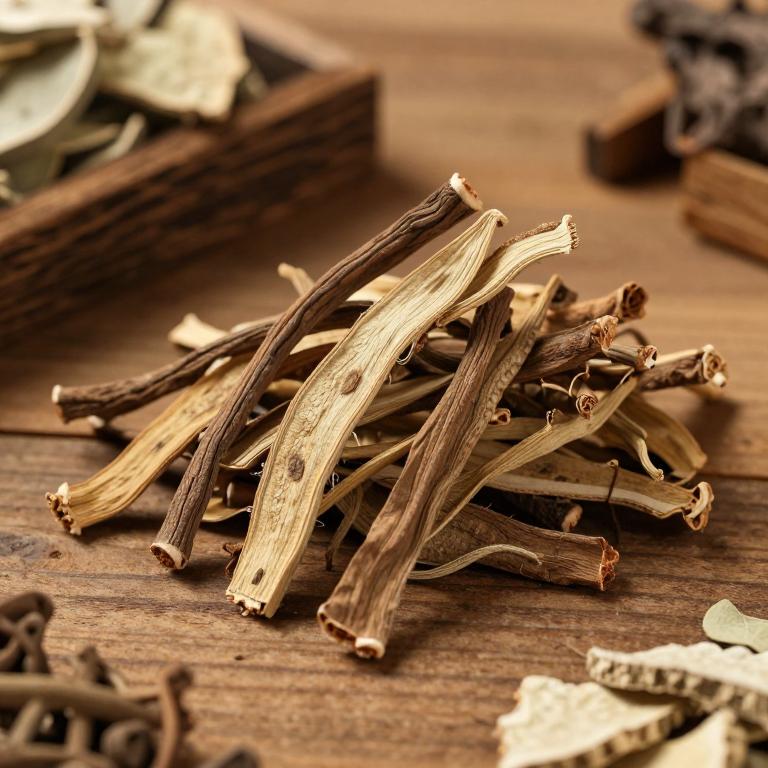
, scientifically known as Coptis chinensis var. brevisepala, is a significant medicinal herb prized in traditional East Asian medicine. Renowned for its high berberine content, this plant offers potent anti-inflammatory and antimicrobial properties. It is widely utilized to treat digestive ailments, infections, and metabolic imbalances through its bioactive compounds.
- Family
- Ranunculaceae
- Native range
- Asia-Temperate
- Parts used
- Rhizome · Leaf
- Common names
- Not available
- Scientific synonyms
- Not available
Names and Synonyms
Scientific Names
Accepted name
Coptis chinensis var. brevisepalaSources: Wikidata, Catalogue of Life
Taxonomical Classification
This plant belongs to the kingdom Plantae and is classified under the phylum Streptophyta and class Equisetopsida. Within the subclass Magnoliidae, it is ordered under Ranunculales and falls into the family Ranunculaceae. Specifically, it is identified as a member of the genus Coptis, categorized as the variety brevisepala.
| Rank | Classification |
|---|---|
| Kingdom | Plantae |
| Phylum | Streptophyta |
| Class | Equisetopsida |
| Subclass | Magnoliidae |
| Order | Ranunculales |
| Family | Ranunculaceae |
| Genus | Coptis |
Sources: The World Checklist of Vascular Plants (WCVP)
Distribution
This plant is characterized by a specific and localized range within the Asian continent. According to botanical records, its primary distribution is found exclusively within China. More specifically, it inhabits the regions categorized as China Southeast. This concentrated geographical footprint suggests that the species thrives under the particular environmental conditions of that area. Consequently, understanding this regional presence is essential for its conservation and study.
| Region | Area |
|---|---|
| China | China Southeast |
Sources: The World Checklist of Vascular Plants (WCVP)
Plant Parts
Coptis chinensis var. brevisepala has 3 reported plant parts identified across 4 scientific publications and several other databases that are studied for medicinal purposes. The most consistently reported plant part include rhizome, leaf, root.
| Plant part | Supporting sources | Consensus |
|---|---|---|
| Rhizome | 2 supporting sources | ★☆☆☆☆ |
| Leaf | 1 supporting sources | ★☆☆☆☆ |
| Root | 1 supporting sources | ★☆☆☆☆ |
Rhizome
- Frontiers in microbiology
- Zhongguo Zhong yao za zhi = Zhongguo zhongyao zazhi = China journal of Chinese materia medica
Leaf
- Frontiers in microbiology
Root
- Frontiers in microbiology
Chemicals
Coptis chinensis var. brevisepala has 5 reported phytochemicals identified across 4 scientific publications and several other databases. The most consistently reported chemicals include Columbamine, Coptisine, Jatrorrhizine, Palmatine, berberine.
| Chemical | Supporting sources | Consensus |
|---|---|---|
| Columbamine | 1 supporting sources | ★☆☆☆☆ |
| Coptisine | 1 supporting sources | ★☆☆☆☆ |
| Jatrorrhizine | 1 supporting sources | ★☆☆☆☆ |
| Palmatine | 1 supporting sources | ★☆☆☆☆ |
| berberine | 1 supporting sources | ★☆☆☆☆ |
Columbamine
- Zhongguo Zhong yao za zhi = Zhongguo zhongyao zazhi = China journal of Chinese materia medica
Coptisine
- Zhongguo Zhong yao za zhi = Zhongguo zhongyao zazhi = China journal of Chinese materia medica
Jatrorrhizine
- Zhongguo Zhong yao za zhi = Zhongguo zhongyao zazhi = China journal of Chinese materia medica
Palmatine
- Zhongguo Zhong yao za zhi = Zhongguo zhongyao zazhi = China journal of Chinese materia medica
berberine
- Zhongguo Zhong yao za zhi = Zhongguo zhongyao zazhi = China journal of Chinese materia medica