Copaifera oblongifolia
Copaifera oblongifolia · Accepted scientific name
Scientific literature: Very Sparse (5 studies) · ★☆☆☆☆
Copaifera oblongifolia, is a remarkable medicinal tree native to South American rainforests. Renowned for its aromatic oleoresin, this species is traditionally utilized in folk medicine to treat inflammation, skin ailments, and respiratory issues. Its unique chemical profile offers significant therapeutic potential, making it a subject of modern pharmacological interest.
- Family
- Fabaceae
- Native range
- Southern America
- Parts used
- Leaf
- Common names
- Not available
- Scientific synonyms
- Copaifera Oblongifolia Var. Dawsonii · Copaifera Oblongifolia Var. Comosa · 1 more
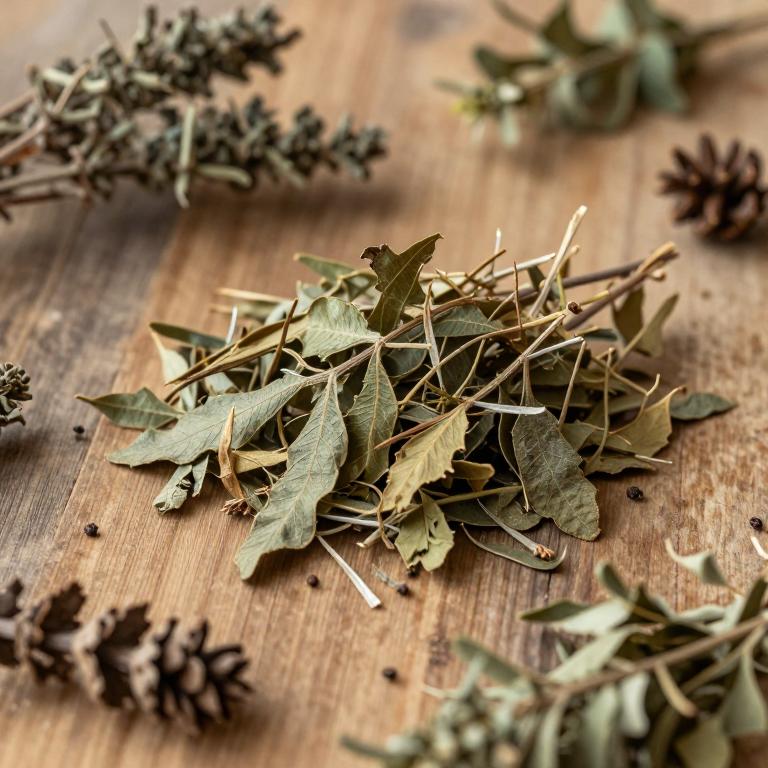
Names and Synonyms
Scientific Names
Accepted name
Copaifera oblongifoliaSynonyms
- Copaifera oblongifolia var. dawsonii
- Copaifera oblongifolia var. comosa
- Copaiba oblongifolia
Sources: Wikidata, Catalogue of Life
Taxonomical Classification
This plant belongs to the kingdom Plantae and is classified under the phylum Streptophyta and class Equisetopsida. Within the subclass Magnoliidae, it falls under the order Fabales and the family Fabaceae. Specifically, it is identified by the genus Copaifera and the species name Copaifera oblongifolia.
| Rank | Classification |
|---|---|
| Kingdom | Plantae |
| Phylum | Streptophyta |
| Class | Equisetopsida |
| Subclass | Magnoliidae |
| Order | Fabales |
| Family | Fabaceae |
| Genus | Copaifera |
Sources: The World Checklist of Vascular Plants (WCVP)
Distribution
This plant exhibits a widespread presence throughout several key regions of Brazil. It can be found growing across the vast landscapes of Brazil North. Additionally, its distribution extends into the diverse ecosystems of Brazil Northeast. The species is also documented within the territories of Brazil West-Central. Finally, its geographical range reaches into the environmental zones of Brazil Southeast.
| Region | Area |
|---|---|
| Brazil | Brazil West-Central |
| Brazil | Brazil Northeast |
| Brazil | Brazil Southeast |
| Brazil | Brazil North |
Sources: The World Checklist of Vascular Plants (WCVP)
Botanical Identification
Morphology
The morphology of Copaifera oblongifolia is characterized by a woody growth form that can manifest as either a tree or a shrub. This plant reaches a maximum height of approximately 3 meters.
- Growth form :
- tree
- Growth form :
- shrub
- Plant height max:
- 3 m
- Woodiness :
- woody
Sources: Global Inventory of Floras and Traits (GIFT)
Plant Parts
Copaifera oblongifolia has 1 reported plant parts identified across 1 scientific publications and several other databases that are studied for medicinal purposes. The most consistently reported plant part include leaf.
| Plant part | Supporting sources | Consensus |
|---|---|---|
| Leaf | 1 supporting sources | ★☆☆☆☆ |
Leaf
- In silico pharmacology
Chemicals
Copaifera oblongifolia has 3 reported phytochemicals identified across 1 scientific publications and several other databases. The most consistently reported chemicals include Lupeol, Steroids, Triterpenes.
| Chemical | Supporting sources | Consensus |
|---|---|---|
| Lupeol | 1 supporting sources | ★☆☆☆☆ |
| Steroids | 1 supporting sources | ★☆☆☆☆ |
| Triterpenes | 1 supporting sources | ★☆☆☆☆ |
Lupeol
- In silico pharmacology
Steroids
- In silico pharmacology
Triterpenes
- In silico pharmacology
Conditions
Copaifera oblongifolia has 1 reported investigations on conditions identified across 1 scientific publications and several other databases. The most consistently reported conditions include Schistosomiasis.
| Condition | Supporting sources | Consensus |
|---|---|---|
| Schistosomiasis | 1 supporting sources | ★☆☆☆☆ |
Schistosomiasis
- In silico pharmacology
Preparations
Copaifera oblongifolia has 1 reported preparations identified across 1 scientific publications and several other databases. The most consistently reported preparations include hexane fraction.
| Preparation | Supporting sources | Consensus |
|---|---|---|
| Hexane fraction | 1 supporting sources | ★☆☆☆☆ |
Hexane fraction
- In silico pharmacology