Convolvulus hystrix
Convolvulus hystrix · Accepted scientific name
Scientific literature: Very Sparse (9 studies) · ★☆☆☆☆
Convolvulus hystrix, scientifically known as Convolvulus hystrix, is a perennial climbing herb native to parts of Africa and Asia. Renowned in traditional medicine, this plant is valued for its diverse therapeutic properties, frequently utilized to treat inflammatory conditions, skin ailments, and various digestive issues through its potent bioactive compounds.
- Family
- Convolvulaceae
- Native range
- Africa
- Parts used
- Not available
- Common names
- Not available
- Scientific synonyms
- Not available
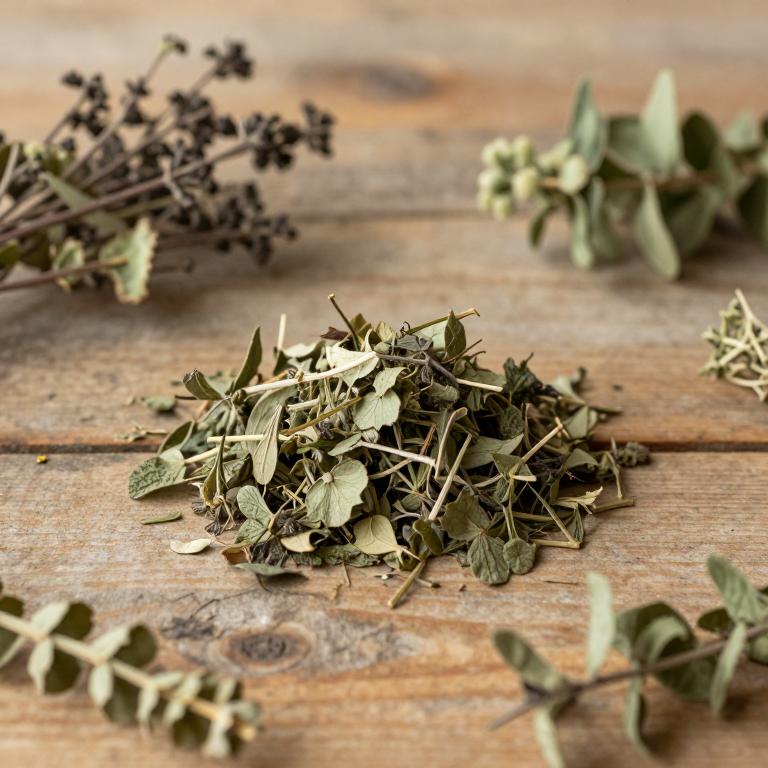
Names and Synonyms
Scientific Names
Accepted name
Convolvulus hystrixSources: Wikidata, Catalogue of Life
Taxonomical Classification
This plant belongs to the kingdom Plantae and the phylum Streptophyta, falling under the class Equisetopsida and subclass Magnoliidae. Within the order Solanales, it is categorized under the family Convolvulaceae. Finally, it is classified under the genus Convolvulus as the species Convolvulus hystrix.
| Rank | Classification |
|---|---|
| Kingdom | Plantae |
| Phylum | Streptophyta |
| Class | Equisetopsida |
| Subclass | Magnoliidae |
| Order | Solanales |
| Family | Convolvulaceae |
| Genus | Convolvulus |
Sources: The World Checklist of Vascular Plants (WCVP)
Distribution
This plant exhibits a specific geographical distribution concentrated within the African continent. It can be found growing in the country of Egypt, which is located in Northern Africa. Moving into the Northeast Tropical Africa region, its presence is documented in Djibouti. The species is also native to the territories of Eritrea and Ethiopia. Finally, its range extends further into the Horn of Africa to include Somalia.
| Region | Area |
|---|---|
| Northern Africa | Egypt |
| Northeast Tropical Africa | Djibouti |
| Northeast Tropical Africa | Eritrea |
| Northeast Tropical Africa | Ethiopia |
| Northeast Tropical Africa | Somalia |
| Northeast Tropical Africa | Sudan-South Sudan |
| Western Asia | Lebanon-Syria |
| Western Asia | Sinai |
| Arabian Peninsula | Oman |
| Arabian Peninsula | Saudi Arabia |
Sources: The World Checklist of Vascular Plants (WCVP)
Botanical Identification
Life history
The life history of Convolvulus hystrix is characterized by a specialized survival strategy dictated by its classification as a hemicryptophyte, meaning its perennating buds are located at or just below the soil surface, protected by leaf litter or the soil layer itself. This growth habit allows the plant to persist through unfavorable seasons by regenerating from these protected buds during more favorable environmental conditions. While its structural complexity can occasionally align with the characteristics of a nanophanerophyte due to its low-growing, woody-based architecture, its primary life cycle relies on this hemicryptophytic mechanism to ensure long-term survival. By maintaining its dormant buds near the ground level, the species effectively navigates seasonal fluctuations, transitioning from a dormant state to active vegetative growth and subsequent reproductive phases when moisture and temperature levels are optimal.
- Life form :
- nanophanerophyte
- Life form :
- hemicryptophyte
Morphology
The morphology of Convolvulus hystrix is characterized by its growth habit as a non-woody plant, featuring flexible stems that lack significant lignification. It functions as a self-supporting climber, utilizing its structural capabilities to navigate its environment without the need for external hosts. As a terrestrial species, it establishes itself in soil-based habitats rather than growing as an epiphyte on other plants. Furthermore, the plant is entirely independent in its nutritional requirements, lacking any parasitic tendencies and functioning as a free-living organism.
- Climber :
- self-supporting
- Epiphyte :
- terrestrial
- Parasite :
- independent
- Woodiness :
- non-woody
Sources: Global Inventory of Floras and Traits (GIFT)
Chemicals
Convolvulus hystrix has 9 reported phytochemicals identified across 0 scientific publications and several other databases. The most consistently reported chemicals include BETA-SITOSTEROL, Isoferulic acid, Isoscopoletin, OLEANOLIC ACID, STIGMASTEROL.
| Chemical | Supporting sources | Consensus |
|---|---|---|
| BETA-SITOSTEROL | 1 supporting sources | ★☆☆☆☆ |
| Isoferulic acid | 1 supporting sources | ★☆☆☆☆ |
| Isoscopoletin | 1 supporting sources | ★☆☆☆☆ |
| OLEANOLIC ACID | 1 supporting sources | ★☆☆☆☆ |
| STIGMASTEROL | 1 supporting sources | ★☆☆☆☆ |
| SYRINGIC ACID | 1 supporting sources | ★☆☆☆☆ |
| Vanillic acid | 1 supporting sources | ★☆☆☆☆ |
| ferulic acid | 1 supporting sources | ★☆☆☆☆ |
| vanillin | 1 supporting sources | ★☆☆☆☆ |
BETA-SITOSTEROL
- Die Pharmazie
Isoferulic acid
- Die Pharmazie
Isoscopoletin
- Die Pharmazie
OLEANOLIC ACID
- Die Pharmazie
STIGMASTEROL
- Die Pharmazie
SYRINGIC ACID
- Die Pharmazie
Vanillic acid
- Die Pharmazie
ferulic acid
- Die Pharmazie
vanillin
- Die Pharmazie