Lanceleaf Buttonwood
Conocarpus lancifolius · Accepted scientific name
Scientific literature: Very Sparse (34 studies) · ★☆☆☆☆
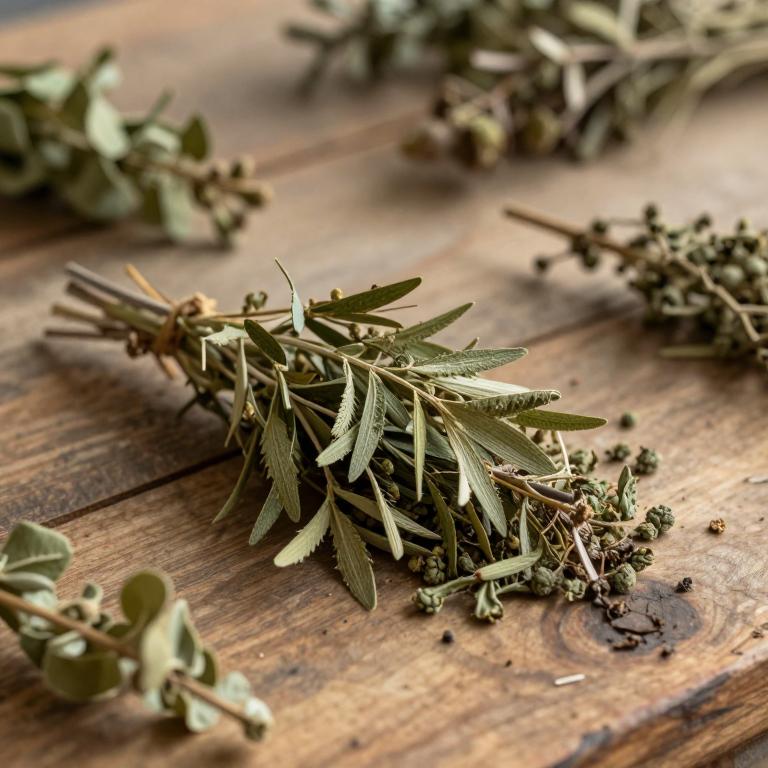
Lanceleaf Buttonwood, scientifically known as Conocarpus lancifolius, is a resilient evergreen shrub native to tropical regions. Renowned for its lance-shaped leaves and hardy nature, this plant holds significant ethnobotanical value. In traditional medicine, various parts are utilized for their potential healing properties, particularly in treating skin ailments and inflammation.
- Family
- Combretaceae
- Native range
- Africa
- Parts used
- Fruit
- Common names
- Lanceleaf Buttonwood
- Scientific synonyms
- Conocarpus Niloticus
Names and Synonyms
Common Names
- Lanceleaf Buttonwood
Scientific Names
Accepted name
Conocarpus lancifoliusSynonyms
- Conocarpus niloticus
Sources: Wikidata, Catalogue of Life
Taxonomical Classification
This plant, Conocarpus lancifolius, belongs to the kingdom Plantae and the phylum Streptophyta. It is classified under the class Equisetopsida and subclass Magnoliidae within the order Myrtales. Finally, it is a member of the family Combretaceae and falls under the genus Conocarpus.
| Rank | Classification |
|---|---|
| Kingdom | Plantae |
| Phylum | Streptophyta |
| Class | Equisetopsida |
| Subclass | Magnoliidae |
| Order | Myrtales |
| Family | Combretaceae |
| Genus | Conocarpus |
Sources: The World Checklist of Vascular Plants (WCVP)
Distribution
This plant exhibits a specific geographical distribution concentrated within the arid regions of Northeast Tropical Africa and the Arabian Peninsula. In the Horn of Africa, it can be found growing in the territory of Eritrea. Its presence extends further south into the coastal and inland areas of Somalia. Additionally, the species is documented within the unique landscapes of the Arabian Peninsula, specifically in Yemen. Together, these locations define the primary natural range for Conocarpus lancifolius.
| Region | Area |
|---|---|
| Northeast Tropical Africa | Eritrea |
| Northeast Tropical Africa | Somalia |
| Arabian Peninsula | Yemen |
Sources: The World Checklist of Vascular Plants (WCVP)
Botanical Identification
Life history
The life history of Conocarpus lancifolius is characterized by its nature as a perennial plant, allowing it to persist through multiple growing seasons and establish a stable presence in its habitat. Throughout its developmental stages, it maintains an evergreen habit, retaining its foliage year-round rather than shedding leaves seasonally. This combination of a long-lived lifecycle and continuous leaf retention enables the species to maintain photosynthetic activity and structural integrity across varying environmental conditions.
- Deciduousness :
- evergreen
- Lifecycle :
- perennial
Morphology
The morphology of Conocarpus lancifolius is characterized by its robust growth form, functioning primarily as a tree. This woody species reaches an average plant height of approximately 15 m, developing a sturdy structural framework. Although it exhibits climbing tendencies, it is classified as a self-supporting plant rather than an obligatory or facultative climber, allowing it to maintain its stature independently. Furthermore, the plant is an independent organism, meaning it does not function as a parasite, and its physical structure is defined by its distinctly woody composition.
- Climber :
- self-supporting
- Growth form :
- tree
- Parasite :
- independent
- Plant height mean:
- 15 m
- Woodiness :
- woody
Physiology
The physiology of Conocarpus lancifolius is characterized by a C3 photosynthetic pathway, a mechanism in which carbon fixation occurs primarily through the enzyme RuBisCO during the Calvin cycle. This metabolic process dictates how the plant manages gas exchange and energy production, typically requiring consistent moisture availability to maintain stomatal conductance. Furthermore, this species is not a nitrogen fixer, meaning it lacks the symbiotic relationship with nitrogen-fixing bacteria required to convert atmospheric nitrogen into usable forms, and must instead rely on the uptake of nitrates and ammonium available within the soil matrix to meet its nutritional requirements for protein synthesis and growth.
- Nitrogen fixer :
- no
- Photosynthetic pathway :
- C3
Reproduction
The reproduction of Conocarpus lancifolius is characterized by the production of seeds that exhibit significant variation in weight, reflecting a specific range of investment in offspring. The seed mass within the species is notably small, with a recorded mean value of 0.00576375 g. This reproductive output shows a broad spectrum of individual seed sizes, ranging from a minimum mass of 0.00062 g to a maximum mass of 0.01 g. Such fluctuations in seed mass suggest a diverse dispersal strategy or varying levels of nutrient allocation per propagule during the reproductive cycle.
- Seed mass max:
- 0.01 g
- Seed mass mean:
- 0.00576375 g
- Seed mass min:
- 0.00062 g
Sources: Global Inventory of Floras and Traits (GIFT)
Plant Parts
Conocarpus lancifolius has 1 reported plant parts identified across 1 scientific publications and several other databases that are studied for medicinal purposes. The most consistently reported plant part include fruit.
| Plant part | Supporting sources | Consensus |
|---|---|---|
| Fruit | 1 supporting sources | ★☆☆☆☆ |
Fruit
- Pakistan journal of pharmaceutical sciences
Chemicals
Conocarpus lancifolius has 5 reported phytochemicals identified across 1 scientific publications and several other databases. The most consistently reported chemicals include Anthraquinones, Cardiac Glycosides, Flavonoids, Saponins, Steroids.
| Chemical | Supporting sources | Consensus |
|---|---|---|
| Anthraquinones | 2 supporting sources | ★☆☆☆☆ |
| Cardiac Glycosides | 2 supporting sources | ★☆☆☆☆ |
| Flavonoids | 2 supporting sources | ★☆☆☆☆ |
| Saponins | 2 supporting sources | ★☆☆☆☆ |
| Steroids | 2 supporting sources | ★☆☆☆☆ |
Anthraquinones
- Anti-cancer agents in medicinal chemistry
- Molecules (Basel, Switzerland)
Cardiac Glycosides
- Anti-cancer agents in medicinal chemistry
- Molecules (Basel, Switzerland)
Flavonoids
- Anti-cancer agents in medicinal chemistry
- Molecules (Basel, Switzerland)
Saponins
- Anti-cancer agents in medicinal chemistry
- Molecules (Basel, Switzerland)
Steroids
- Anti-cancer agents in medicinal chemistry
- Molecules (Basel, Switzerland)
Activities
Conocarpus lancifolius has 6 reported activities identified across 1 scientific publications and several other databases. The most consistently reported activities include Antibacterial, Cytotoxic, Antifungal, Antiprotozoal, Antidiabetic.
| Activity | Supporting sources | Consensus |
|---|---|---|
| Antibacterial | 3 supporting sources | ★★☆☆☆ |
| Cytotoxic | 3 supporting sources | ★★☆☆☆ |
| Antifungal | 2 supporting sources | ★☆☆☆☆ |
| Antiprotozoal | 2 supporting sources | ★☆☆☆☆ |
| Antidiabetic | 1 supporting sources | ★☆☆☆☆ |
| Antioxidant | 1 supporting sources | ★☆☆☆☆ |
Antibacterial
- Anti-cancer agents in medicinal chemistry
- Pakistan journal of pharmaceutical sciences
- Molecules (Basel, Switzerland)
Cytotoxic
- Anti-cancer agents in medicinal chemistry
- Pakistan journal of pharmaceutical sciences
- Molecules (Basel, Switzerland)
Antifungal
- Anti-cancer agents in medicinal chemistry
- Molecules (Basel, Switzerland)
Antiprotozoal
- Anti-cancer agents in medicinal chemistry
- Pakistan journal of pharmaceutical sciences
Antidiabetic
- Pakistan journal of pharmaceutical sciences
Antioxidant
- Pakistan journal of pharmaceutical sciences
Conditions
Conocarpus lancifolius has 8 reported investigations on conditions identified across 1 scientific publications and several other databases. The most consistently reported conditions include antidiabetic, Alzheimer's disease, Aspergillus flavus, Aspergillus fumigatus, Candida albicans.
| Condition | Supporting sources | Consensus |
|---|---|---|
| Antidiabetic | 3 supporting sources | ★★☆☆☆ |
| Alzheimer's disease | 1 supporting sources | ★☆☆☆☆ |
| Aspergillus flavus | 1 supporting sources | ★☆☆☆☆ |
| Aspergillus fumigatus | 1 supporting sources | ★☆☆☆☆ |
| Candida albicans | 1 supporting sources | ★☆☆☆☆ |
| Antioxidant | 1 supporting sources | ★☆☆☆☆ |
| Cognitive disorders | 1 supporting sources | ★☆☆☆☆ |
| Neurodegenerative disorders | 1 supporting sources | ★☆☆☆☆ |
Antidiabetic
- Anti-cancer agents in medicinal chemistry
- Pakistan journal of pharmaceutical sciences
- Molecules (Basel, Switzerland)
Alzheimer's disease
- Molecules (Basel, Switzerland)
Aspergillus flavus
- Anti-cancer agents in medicinal chemistry
Aspergillus fumigatus
- Anti-cancer agents in medicinal chemistry
Candida albicans
- Anti-cancer agents in medicinal chemistry
Antioxidant
- Pakistan journal of pharmaceutical sciences
Cognitive disorders
- Molecules (Basel, Switzerland)
Neurodegenerative disorders
- Molecules (Basel, Switzerland)
Preparations
Conocarpus lancifolius has 1 reported preparations identified across 1 scientific publications and several other databases. The most consistently reported preparations include methanolic extract.
| Preparation | Supporting sources | Consensus |
|---|---|---|
| Methanolic extract | 1 supporting sources | ★☆☆☆☆ |
Methanolic extract
- Anti-cancer agents in medicinal chemistry