buttonwood
Conocarpus erectus · Accepted scientific name
Scientific literature: Very Sparse (8 studies) · ★☆☆☆☆
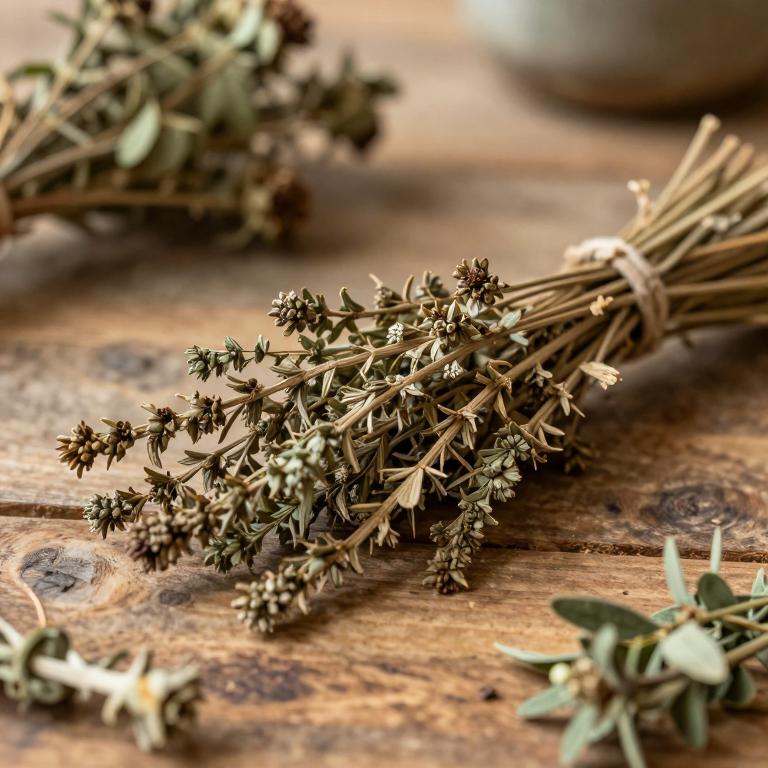
Buttonwood, scientifically known as Conocarpus erectus, is a versatile medicinal shrub native to tropical regions. Renowned for its therapeutic properties, various parts of this plant are utilized in traditional healing to treat skin ailments, inflammation, and digestive issues. Its robust nature and bioactive compounds make it a valuable botanical resource.
Names and Synonyms
Common Names
- Buttonwood
- Buttonwood Shrub
- Silver-leaved Buttonwood
- button mangrove
- Green Buttonwood
Scientific Names
Accepted name
Conocarpus erectusSynonyms
- Terminalia erecta
- Terminalia erecta var. procumbens
- Conocarpus erectus var. procumbens
- Conocarpus erectus f. sericeus
- Conocarpus erectus var. sericeus
- Conocarpus procumbens
- Conocarpus pubescens
- Conocarpus supinus
- Conocarpus sericeus
- Conocarpus acutifolius
- Conocarpus erectus var. arboreus
- Conocarpus erectus var. argenteus
Regional and Traditional Names
Spanish:
- Botoncaue
- Mangle Botoncillo
- Mangle botón
- Mangle zaragosa
German:
- Knopfmangrove
- Knopfmangrove
French:
- Palétuvier gris
- Palétuvier gris
- Palétuvier à boutons
Sources: Wikidata, Catalogue of Life
Taxonomical Classification
This plant belongs to the kingdom Plantae and is classified under the phylum Streptophyta and class Equisetopsida. Within the subclass Magnoliidae, it is organized into the order Myrtales and the family Combretaceae. Finally, it is identified by its specific genus, Conocarpus, as part of the species Conocarpus erectus.
| Rank | Classification |
|---|---|
| Kingdom | Plantae |
| Phylum | Streptophyta |
| Class | Equisetopsida |
| Subclass | Magnoliidae |
| Order | Myrtales |
| Family | Combretaceae |
| Genus | Conocarpus |
Sources: The World Checklist of Vascular Plants (WCVP)
Distribution
This plant exhibits a widespread presence across several distinct regions of the African continent. In Northern Africa, its range extends into the territory of Egypt. Moving toward the West Tropical Africa region, the species is found in Benin and the Gambia. It is also documented to grow within the borders of Ghana. Finally, its geographical distribution continues through the nation of Guinea-Bissau.
| Region | Area |
|---|---|
| Northern Africa | Egypt |
| West Tropical Africa | Benin |
| West Tropical Africa | Gambia |
| West Tropical Africa | Ghana |
| West Tropical Africa | Guinea-Bissau |
| West Tropical Africa | Guinea |
| West Tropical Africa | Ivory Coast |
| West Tropical Africa | Liberia |
| West Tropical Africa | Nigeria |
| West Tropical Africa | Senegal |
Sources: The World Checklist of Vascular Plants (WCVP)
Botanical Identification
Ecology
The ecology of Conocarpus erectus is characterized by its specialization in low-lying coastal environments, primarily occupying mangrove habitats. It is predominantly found at sea level, with a mean elevation of 0 m AMSL and a minimum elevation of 0 m AMSL, indicating a strong preference for saline, intertidal, or coastal wetland ecosystems. While it is most commonly associated with these maritime zones, its ecological distribution extends upward through a broader altitudinal gradient, reaching a maximum elevation of 1000 m AMSL.
- Elevational range max:
- 1000 m AMSL
- Elevational range mean:
- 0 m AMSL
- Habitat :
- mangrove
Genetics
The genetics of Conocarpus erectus are characterized by a specific chromosomal configuration that defines its cytological profile. This species possesses a diploid chromosome number of 24, a fundamental genetic parameter that influences its reproductive biology and evolutionary stability within its taxonomic group. This chromosomal count serves as a key genetic marker for distinguishing the species from related taxa and plays a critical role in the inheritance patterns of its morphological and biochemical traits.
- Chromosome number :
- 24
Life history
The life history of Conocarpus erectus is characterized by a perennial lifecycle, allowing the plant to persist through multiple growing seasons. As a phanerophyte, it maintains its photosynthetic organs at a significant height above the ground, specifically categorized within the phanerophyte and nanophanerophyte life forms depending on its specific growth stage and environmental conditions. This species exhibits an evergreen deciduousness, ensuring that it retains its foliage throughout the year rather than shedding it seasonally.
- Deciduousness :
- evergreen
- Life form :
- phanerophyte
- Lifecycle :
- perennial
Morphology
The morphology of Conocarpus erectus is characterized by its growth form as a woody tree, which functions as an independent organism rather than a parasite. This species is strictly terrestrial in its ecological habit, lacking aquatic or epiphytic tendencies. Structurally, the plant is self-supporting, meaning it does not exhibit the climbing or vining behavior associated with lianas. In terms of vertical dimension, the plant displays significant stature, with a recorded minimum height of 3 meters, a maximum height of 8 meters, and an average height of approximately 14.389 meters.
- Aquatic :
- terrestrial
- Climber :
- self-supporting
- Epiphyte :
- terrestrial
- Growth form :
- tree
- Parasite :
- independent
- Plant height max:
- 8 m
- Plant height mean:
- 14.389345688 m
- Plant height min:
- 3 m
- Woodiness :
- woody
Physiology
The physiology of Conocarpus erectus is characterized by a C3 photosynthetic pathway, which dictates its carbon fixation processes and metabolic efficiency in varying environmental conditions. The plant's vegetative development is reflected in its leaf morphology, where the foliage typically exhibits a length ranging from a minimum of 2.5 cm to a maximum of 9 cm. Correspondingly, the leaf width is relatively narrow, spanning from a minimum of 1 cm to a maximum of 3 cm. Furthermore, regarding its nutrient acquisition strategies, the species does not function as a nitrogen fixer, meaning it relies on the uptake of available nitrogen from the soil rather than through symbiotic atmospheric fixation.
- Leaf length max:
- 9 cm
- Leaf length min:
- 2.5 cm
- Leaf width max:
- 3 cm
- Leaf width min:
- 1 cm
- Nitrogen fixer :
- no
- Photosynthetic pathway :
- C3
Reproduction
The reproduction of Conocarpus erectus is characterized by the production of small fruits with a length ranging from a minimum of 1 cm to a maximum of 1.5 cm. The seeds produced by this species are notably lightweight, exhibiting a mean mass of 0.00336 g, with individual seed masses fluctuating within a narrow range between a minimum of 0.0033 g and a maximum of 0.00348 g. Regarding its dispersal mechanisms, the plant utilizes a multi-faceted dispersal syndrome; it is primarily autochorous, meaning it employs mechanisms for self-dispersal, but it also demonstrates hydrochorous capabilities, allowing seeds to be transported via water currents.
- Dispersal syndrome :
- autochorous
- Dispersal syndrome :
- hydrochorous
- Fruit length max:
- 1.5 cm
- Fruit length min:
- 1 cm
- Seed mass max:
- 0.00348 g
- Seed mass mean:
- 0.00336 g
- Seed mass min:
- 0.0033 g
Sources: Global Inventory of Floras and Traits (GIFT)
Chemicals
Conocarpus erectus has 2 reported phytochemicals identified across 0 scientific publications and several other databases. The most consistently reported chemicals include Flavonoids, Vescalagin.
| Chemical | Supporting sources | Consensus |
|---|---|---|
| Flavonoids | 1 supporting sources | ★☆☆☆☆ |
| Vescalagin | 1 supporting sources | ★☆☆☆☆ |
Flavonoids
- Pakistan journal of pharmaceutical sciences
Vescalagin
- Recent patents on biotechnology
Activities
Conocarpus erectus has 3 reported activities identified across 0 scientific publications and several other databases. The most consistently reported activities include Anticancer, Antidiabetic, Antioxidant.
| Activity | Supporting sources | Consensus |
|---|---|---|
| Anticancer | 1 supporting sources | ★☆☆☆☆ |
| Antidiabetic | 1 supporting sources | ★☆☆☆☆ |
| Antioxidant | 1 supporting sources | ★☆☆☆☆ |
Anticancer
- Environmental science and pollution research international
Antidiabetic
- Environmental science and pollution research international
Antioxidant
- Pakistan journal of pharmaceutical sciences
Conditions
Conocarpus erectus has 2 reported investigations on conditions identified across 0 scientific publications and several other databases. The most consistently reported conditions include antidiabetic, bacterial infections.
| Condition | Supporting sources | Consensus |
|---|---|---|
| Antidiabetic | 1 supporting sources | ★☆☆☆☆ |
| Bacterial infections | 1 supporting sources | ★☆☆☆☆ |
Antidiabetic
- Environmental science and pollution research international
Bacterial infections
- Journal of ethnopharmacology
Preparations
Conocarpus erectus has 4 reported preparations identified across 0 scientific publications and several other databases. The most consistently reported preparations include Aqueous extracts, Hydrolysable tannins, ethanol (95%), leaf extract.
| Preparation | Supporting sources | Consensus |
|---|---|---|
| Aqueous extracts | 2 supporting sources | ★☆☆☆☆ |
| Hydrolysable tannins | 1 supporting sources | ★☆☆☆☆ |
| Ethanol (95%) | 1 supporting sources | ★☆☆☆☆ |
| Leaf extract | 1 supporting sources | ★☆☆☆☆ |
Aqueous extracts
- Antimicrobial agents and chemotherapy
- Journal of medical microbiology
Hydrolysable tannins
- Recent patents on biotechnology
Ethanol (95%)
- Pakistan journal of pharmaceutical sciences
Leaf extract
- Environmental science and pollution research international