Conioselinum smithii
Conioselinum smithii · Accepted scientific name
Scientific literature: Sparse (52 studies) · ★★☆☆☆
, scientifically known as Conioselinum smithii, is a notable medicinal herb belonging to the Apiaceae family. Often found in specific high-altitude regions, this plant is valued in traditional medicine for its therapeutic properties. Its bioactive compounds offer potential applications in treating various ailments, making it a subject of ethnobotanical interest.
- Family
- Apiaceae
- Native range
- Asia-Temperate
- Parts used
- Root · Leaf
- Common names
- Not available
- Scientific synonyms
- Tilingia Jeholensis · Ligusticum Smithii · 4 more
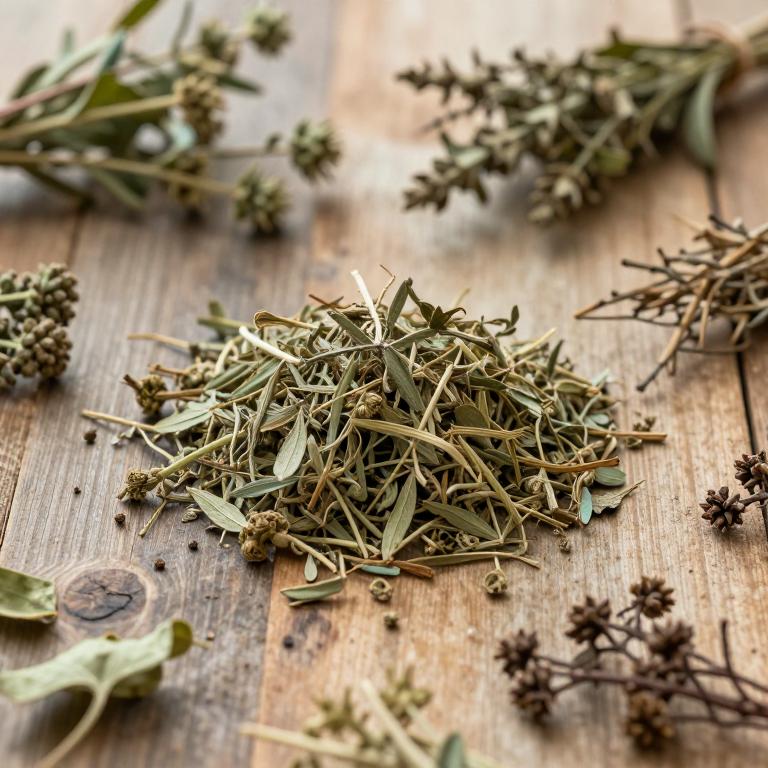
Names and Synonyms
Scientific Names
Accepted name
Conioselinum smithiiSynonyms
- Tilingia jeholensis
- Ligusticum smithii
- Ligusticum jeholense var. tenuisectum
- Cnidium jeholense
- Conioselinum jeholense
- Ligusticum jeholense
Sources: Wikidata, Catalogue of Life
Taxonomical Classification
This plant belongs to the kingdom Plantae and the phylum Streptophyta, falling under the class Equisetopsida and subclass Magnoliidae. It is classified within the order Apiales and the family Apiaceae. Finally, it is identified by its specific genus, Conioselinum.
| Rank | Classification |
|---|---|
| Kingdom | Plantae |
| Phylum | Streptophyta |
| Class | Equisetopsida |
| Subclass | Magnoliidae |
| Order | Apiales |
| Family | Apiaceae |
| Genus | Conioselinum |
Sources: The World Checklist of Vascular Plants (WCVP)
Distribution
This plant is geographically distributed across several specific regions in East Asia. In the Russian Far East, its presence is noted within the Primorye territory. Its range extends significantly into China, where it can be found in Inner Mongolia. Additionally, the species inhabits the Manchuria region of China. Finally, its distribution includes the China North-Central area.
| Region | Area |
|---|---|
| Russian Far East | Primorye |
| China | Inner Mongolia |
| China | Manchuria |
| China | China North-Central |
Sources: The World Checklist of Vascular Plants (WCVP)
Botanical Identification
Ecology
The ecology of Conioselinum smithii is characterized by its specific distribution within high-altitude montane environments, where it thrives across a distinct vertical gradient. This species is predominantly found in mountainous regions, occupying an elevational range that begins at a minimum of 1250 m AMSL and extends up to a maximum of 2500 m AMSL. Within this altitudinal span, the plant maintains an optimal presence at a mean elevation of approximately 1875 m AMSL, suggesting a preference for the specific climatic conditions, such as temperature regimes and moisture availability, typical of mid-to-high montane ecosystems.
- Elevational range max:
- 2500 m AMSL
- Elevational range mean:
- 1875 m AMSL
- Elevational range min:
- 1250 m AMSL
Life history
The life history of Conioselinum smithii is characterized by its status as a perennial plant, allowing it to persist through multiple growing seasons. As a perennial species, it does not complete its entire life cycle within a single year but instead develops robust root systems that support regrowth and survival over extended periods. This perennial nature enables the plant to establish itself within its ecological niche, often returning annually to flower and produce seeds, thereby ensuring its long-term presence in the environment. Through this cyclic process of seasonal growth and dormancy, the plant manages its energy reserves to support continuous development and reproductive success across successive years.
- Lifecycle :
- perennial
Morphology
The morphology of Conioselinum smithii is characterized by its non-woody structure, which defines its herbaceous growth habit. The plant exhibits a variable stature, typically reaching a mean height of 0.55 m. Its vertical growth is bounded by a minimum height of 0.3 m and can extend to a maximum height of 0.8 m.
- Plant height max:
- 0.8 m
- Plant height mean:
- 0.55 m
- Plant height min:
- 0.3 m
- Woodiness :
- non-woody
Reproduction
The reproduction of Conioselinum smithii is characterized by its specific inflorescence and fruit morphology. The plant produces an inflorescence that varies in length, ranging from a minimum of 0.03 m to a maximum of 0.07 m. Following pollination, the development of the fruit follows distinct dimensional patterns; the fruit length typically measures between 0.3 cm and 0.4 cm, with an average length of 0.35 cm. Regarding the fruit width, the dimensions range from a minimum of 0.2 cm to a maximum of 0.25 cm, resulting in a mean fruit width of 0.225 cm.
- Fruit length max:
- 0.4 cm
- Fruit length mean:
- 0.35 cm
- Fruit length min:
- 0.3 cm
- Fruit width max:
- 0.25 cm
- Fruit width mean:
- 0.225 cm
- Fruit width min:
- 0.2 cm
- Inflorescence length max:
- 0.07 m
- Inflorescence length min:
- 0.03 m
Sources: Global Inventory of Floras and Traits (GIFT)
Plant Parts
Conioselinum smithii has 2 reported plant parts identified across 3 scientific publications and several other databases that are studied for medicinal purposes. The most consistently reported plant part include root, leaf.
| Plant part | Supporting sources | Consensus |
|---|---|---|
| Root | 2 supporting sources | ★☆☆☆☆ |
| Leaf | 1 supporting sources | ★☆☆☆☆ |
Root
- Molecules (Basel, Switzerland)
- Zhong yao cai = Zhongyaocai = Journal of Chinese medicinal materials
Leaf
- Frontiers in plant science
Chemicals
Conioselinum smithii has 23 reported phytochemicals identified across 3 scientific publications and several other databases. The most consistently reported chemicals include ferulic acid, (E)-Ligustilide, 5-Pentylcyclohexa-1,3-diene, BETA-SITOSTEROL, CHLOROGENIC ACID.
| Chemical | Supporting sources | Consensus |
|---|---|---|
| ferulic acid | 2 supporting sources | ★☆☆☆☆ |
| (E)-Ligustilide | 1 supporting sources | ★☆☆☆☆ |
| 5-Pentylcyclohexa-1,3-diene | 1 supporting sources | ★☆☆☆☆ |
| BETA-SITOSTEROL | 1 supporting sources | ★☆☆☆☆ |
| CHLOROGENIC ACID | 1 supporting sources | ★☆☆☆☆ |
| Coniferyl ferulate | 1 supporting sources | ★☆☆☆☆ |
| Cryptochlorogenic acid | 1 supporting sources | ★☆☆☆☆ |
| Daucosterol | 1 supporting sources | ★☆☆☆☆ |
| Fatty acids | 1 supporting sources | ★☆☆☆☆ |
| Flavonoids | 1 supporting sources | ★☆☆☆☆ |
ferulic acid
- Zhong yao cai = Zhongyaocai = Journal of Chinese medicinal materials
- Zhongguo Zhong yao za zhi = Zhongguo zhongyao zazhi = China journal of Chinese materia medica
(E)-Ligustilide
- Frontiers in plant science
5-Pentylcyclohexa-1,3-diene
- Frontiers in plant science
BETA-SITOSTEROL
- Zhong yao cai = Zhongyaocai = Journal of Chinese medicinal materials
CHLOROGENIC ACID
- Zhongguo Zhong yao za zhi = Zhongguo zhongyao zazhi = China journal of Chinese materia medica
Coniferyl ferulate
- Zhongguo Zhong yao za zhi = Zhongguo zhongyao zazhi = China journal of Chinese materia medica
Cryptochlorogenic acid
- Zhongguo Zhong yao za zhi = Zhongguo zhongyao zazhi = China journal of Chinese materia medica
Daucosterol
- Zhong yao cai = Zhongyaocai = Journal of Chinese medicinal materials
Fatty acids
- Journal of ethnopharmacology
Flavonoids
- Journal of ethnopharmacology
Activities
Conioselinum smithii has 5 reported activities identified across 3 scientific publications and several other databases. The most consistently reported activities include Analgesic, Antibacterial, Anticancer, Antifungal, Antioxidant.
| Activity | Supporting sources | Consensus |
|---|---|---|
| Analgesic | 1 supporting sources | ★☆☆☆☆ |
| Antibacterial | 1 supporting sources | ★☆☆☆☆ |
| Anticancer | 1 supporting sources | ★☆☆☆☆ |
| Antifungal | 1 supporting sources | ★☆☆☆☆ |
| Antioxidant | 1 supporting sources | ★☆☆☆☆ |
Analgesic
- Journal of ethnopharmacology
Antibacterial
- Journal of ethnopharmacology
Anticancer
- Journal of ethnopharmacology
Antifungal
- Food chemistry
Antioxidant
- Journal of ethnopharmacology
Preparations
Conioselinum smithii has 4 reported preparations identified across 3 scientific publications and several other databases. The most consistently reported preparations include EtOH extracts, LEO@ZIF-8, Ligusticum jeholense essential oil, free LEO.
| Preparation | Supporting sources | Consensus |
|---|---|---|
| Etoh extracts | 1 supporting sources | ★☆☆☆☆ |
| Leo@zif-8 | 1 supporting sources | ★☆☆☆☆ |
| Ligusticum jeholense essential oil | 1 supporting sources | ★☆☆☆☆ |
| Free leo | 1 supporting sources | ★☆☆☆☆ |
Etoh extracts
- Zhong yao cai = Zhongyaocai = Journal of Chinese medicinal materials
Leo@zif-8
- Food chemistry
Ligusticum jeholense essential oil
- Food chemistry
Free leo
- Food chemistry