Sichuan lovage
Conioselinum anthriscoides · Accepted scientific name
Scientific literature: Very Sparse (49 studies) · ★☆☆☆☆
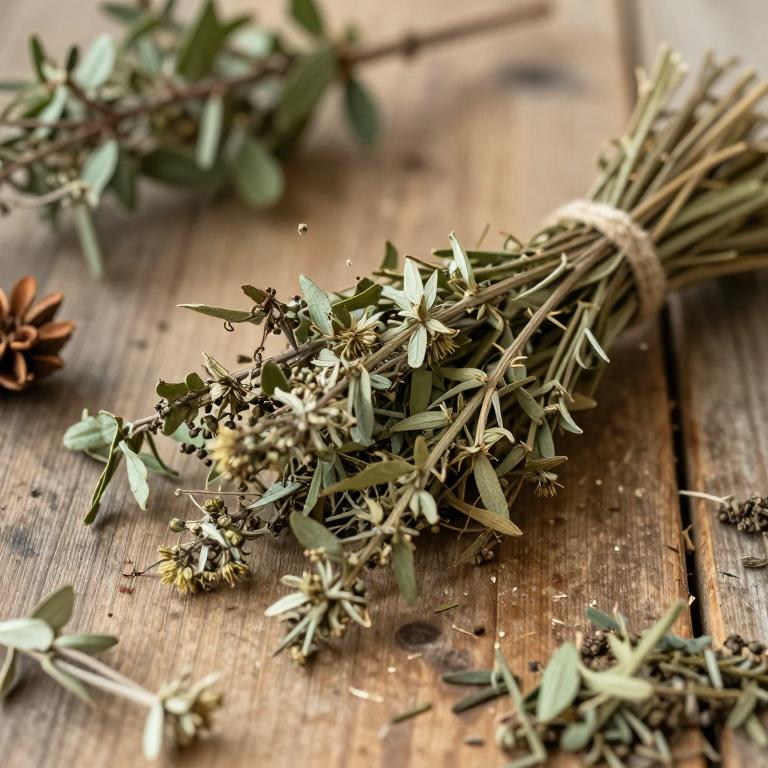
Sichuan lovage, scientifically known as Conioselinum anthriscoidum, is a vital medicinal herb deeply rooted in traditional East Asian medicine. Renowned for its warming properties, it is frequently used to invigorate blood circulation, alleviate pain, and dispel stagnation, making it a cornerstone ingredient in various therapeutic herbal formulations.
- Family
- Apiaceae
- Native range
- Asia-Temperate
- Parts used
- Leaf
- Common names
- Sichuan Lovage
- Scientific synonyms
- Aegopodium Anthriscoides · Carum Anthriscoides · 7 more
Names and Synonyms
Common Names
- Sichuan lovage
Scientific Names
Accepted name
Conioselinum anthriscoidesSynonyms
- Aegopodium anthriscoides
- Carum anthriscoides
- Ligusticum silvaticum
- Ligusticum sinense
- Ligusticum sinense var. alpinum
- Ligusticum sinense var. hupehense
- Ligusticum harrysmithii
- Ligusticum levistifolium
- Ligusticum markgrafianum
Sources: Wikidata, Catalogue of Life
Taxonomical Classification
This plant belongs to the kingdom Plantae and is classified within the phylum Streptophyta and the class Equisetopsida. It is further organized under the subclass Magnoliidae and the order Apiales. Finally, it is a member of the family Apiaceae, falling under the specific genus Conioselinum.
| Rank | Classification |
|---|---|
| Kingdom | Plantae |
| Phylum | Streptophyta |
| Class | Equisetopsida |
| Subclass | Magnoliidae |
| Order | Apiales |
| Family | Apiaceae |
| Genus | Conioselinum |
Sources: The World Checklist of Vascular Plants (WCVP)
Distribution
This plant exhibits a broad geographical distribution across several distinct regions in Asia. Within China, it can be found spanning from the North-Central provinces to the Southeast territories. Its range further extends into the China South-Central region and reaches up into Inner Mongolia. Additionally, the species is documented to grow within the Indo-China region, specifically in Vietnam. Collectively, these locations highlight the diverse habitats where the species thrives.
| Region | Area |
|---|---|
| China | China South-Central |
| China | Inner Mongolia |
| China | China North-Central |
| China | China Southeast |
| Indo-China | Vietnam |
Sources: The World Checklist of Vascular Plants (WCVP)
Botanical Identification
Ecology
The ecology of Conioselinum anthriscoides is characterized by a broad altitudinal distribution within montane ecosystems, allowing it to occupy diverse niche environments. This species is found across a significant vertical gradient, with its presence recorded from a minimum elevation of 1000 m AMSL up to a maximum of 3000 m AMSL. Throughout its natural habitat, the plant maintains a mean elevation of approximately 1850 m AMSL, indicating a preference for mid-to-high altitude zones where specific temperature and moisture regimes are maintained. This elevational range suggests an adaptability to varying atmospheric pressures and climatic shifts associated with mountainous terrain.
- Elevational range max:
- 3000 m AMSL
- Elevational range mean:
- 1850 m AMSL
- Elevational range min:
- 1000 m AMSL
Life history
The life history of Conioselinum anthriscoides is characterized by its classification as a perennial plant, meaning it persists through multiple growing seasons rather than completing its life cycle in a single year. As a perennial, it typically establishes a robust root system that allows it to survive dormant periods and regrow during favorable environmental conditions. This lifecycle allows the species to invest energy into long-term vegetative growth and structural stability, enabling it to occupy its ecological niche over several years. Through its perennial nature, the plant can engage in repeated reproductive cycles, contributing to its long-term presence within its specific habitat.
- Lifecycle :
- perennial
Morphology
The morphology of Conioselinum anthriscoides is characterized by a non-woody growth habit, typical of many herbaceous species within its family. The plant reaches a mean height of approximately 1 m, manifesting a slender and flexible structure that lacks permanent lignified tissue.
- Plant height mean:
- 1 m
- Woodiness :
- non-woody
Reproduction
The reproduction of Conioselinum anthriscoides is characterized by the development of specific inflorescence and fruit structures. The plant produces an inflorescence that typically ranges in length from a minimum of 0.06 m to a maximum of 0.08 m. Following successful pollination, the resulting fruits exhibit highly consistent dimensions, maintaining a uniform length of approximately 0.4 cm (with both minimum and maximum measurements recorded at this value). The width of the fruit shows slightly more variability, with a minimum width of 0.2 cm, a maximum width of 0.25 cm, and an average width of 0.225 cm.
- Fruit length max:
- 0.4 cm
- Fruit width max:
- 0.25 cm
- Fruit width mean:
- 0.225 cm
- Fruit width min:
- 0.2 cm
- Inflorescence length max:
- 0.08 m
- Inflorescence length min:
- 0.06 m
Sources: Global Inventory of Floras and Traits (GIFT)
Plant Parts
Conioselinum anthriscoides has 1 reported plant parts identified across 1 scientific publications and several other databases that are studied for medicinal purposes. The most consistently reported plant part include leaf.
| Plant part | Supporting sources | Consensus |
|---|---|---|
| Leaf | 1 supporting sources | ★☆☆☆☆ |
Leaf
- Frontiers in plant science
Chemicals
Conioselinum anthriscoides has 32 reported phytochemicals identified across 1 scientific publications and several other databases. The most consistently reported chemicals include CADMIUM, (3S,3aR)-neocnidilide, (E)-Ligustilide, (Z)-3-butylidene-7-hydroxyphthalide, (Z)-Ligustilide.
| Chemical | Supporting sources | Consensus |
|---|---|---|
| CADMIUM | 2 supporting sources | ★☆☆☆☆ |
| (3S,3aR)-neocnidilide | 1 supporting sources | ★☆☆☆☆ |
| (E)-Ligustilide | 1 supporting sources | ★☆☆☆☆ |
| (Z)-3-butylidene-7-hydroxyphthalide | 1 supporting sources | ★☆☆☆☆ |
| (Z)-Ligustilide | 1 supporting sources | ★☆☆☆☆ |
| 3-BUTYLPHTHALIDE | 1 supporting sources | ★☆☆☆☆ |
| 5-Pentylcyclohexa-1,3-diene | 1 supporting sources | ★☆☆☆☆ |
| 5-[3-(4-hydroxy-3-methoxyphenyl)allyl]ferulic acid | 1 supporting sources | ★☆☆☆☆ |
| Butylphthalide | 1 supporting sources | ★☆☆☆☆ |
| CHLOROGENIC ACID | 1 supporting sources | ★☆☆☆☆ |
CADMIUM
- Plant physiology and biochemistry : PPB
- Chemosphere
(3S,3aR)-neocnidilide
- International journal of molecular sciences
(E)-Ligustilide
- Frontiers in plant science
(Z)-3-butylidene-7-hydroxyphthalide
- Zhong yao cai = Zhongyaocai = Journal of Chinese medicinal materials
(Z)-Ligustilide
- Zhong yao cai = Zhongyaocai = Journal of Chinese medicinal materials
3-BUTYLPHTHALIDE
- Zhong yao cai = Zhongyaocai = Journal of Chinese medicinal materials
5-Pentylcyclohexa-1,3-diene
- Frontiers in plant science
5-[3-(4-hydroxy-3-methoxyphenyl)allyl]ferulic acid
- International journal of molecular sciences
Butylphthalide
- Frontiers in plant science
CHLOROGENIC ACID
- Zhongguo Zhong yao za zhi = Zhongguo zhongyao zazhi = China journal of Chinese materia medica
Activities
Conioselinum anthriscoides has 5 reported activities identified across 1 scientific publications and several other databases. The most consistently reported activities include Analgesic, Antibacterial, Anticancer, Antioxidant, Hydrating.
| Activity | Supporting sources | Consensus |
|---|---|---|
| Analgesic | 1 supporting sources | ★☆☆☆☆ |
| Antibacterial | 1 supporting sources | ★☆☆☆☆ |
| Anticancer | 1 supporting sources | ★☆☆☆☆ |
| Antioxidant | 1 supporting sources | ★☆☆☆☆ |
| Hydrating | 1 supporting sources | ★☆☆☆☆ |
Analgesic
- Journal of ethnopharmacology
Antibacterial
- Journal of ethnopharmacology
Anticancer
- Journal of ethnopharmacology
Antioxidant
- Journal of ethnopharmacology
Hydrating
- International journal of molecular sciences
Preparations
Conioselinum anthriscoides has 3 reported preparations identified across 1 scientific publications and several other databases. The most consistently reported preparations include aqueous extract, crude ethanol extracts, methanolic extracts.
| Preparation | Supporting sources | Consensus |
|---|---|---|
| Aqueous extract | 1 supporting sources | ★☆☆☆☆ |
| Crude ethanol extracts | 1 supporting sources | ★☆☆☆☆ |
| Methanolic extracts | 1 supporting sources | ★☆☆☆☆ |
Aqueous extract
- Pharmaceutical biology
Crude ethanol extracts
- BMC complementary and alternative medicine
Methanolic extracts
- International journal of molecular sciences