Condea undulata
Condea undulata · Accepted scientific name
Scientific literature: Very Sparse (5 studies) · ★☆☆☆☆
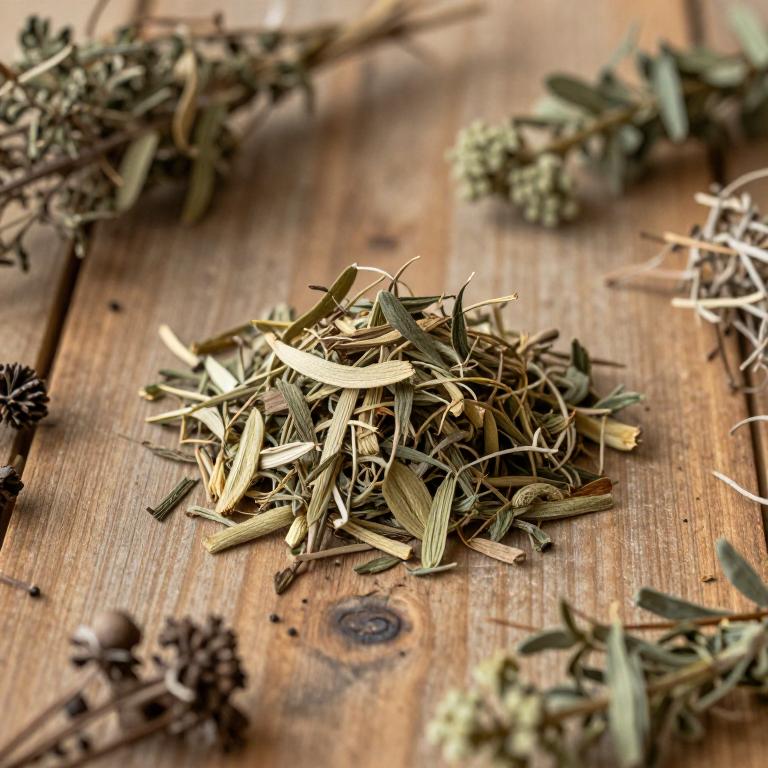
Condea undulata, is a distinctive medicinal plant native to specific tropical regions, valued for its unique pharmacological properties. Often recognized by its characteristic wavy leaves, this species is traditionally utilized in various herbal remedies to treat inflammatory conditions and promote overall wellness, offering significant potential for modern therapeutic research.
- Family
- Lamiaceae
- Native range
- Southern America
- Parts used
- Leaf
- Common names
- Not available
- Scientific synonyms
- Mesosphaerum Eriocalyx · Mesosphaerum Undulatum · 8 more
Names and Synonyms
Scientific Names
Accepted name
Condea undulataSynonyms
- Mesosphaerum eriocalyx
- Mesosphaerum undulatum
- Mesosphaerum fasciculatum
- Hyptis undulata
- Hyptis eriocalyx
- Hyptis fasciculata
- Hyptis fasciculata var. tomentella
- Hypothronia undata
- Clinopodium verticillatum
- Hyptis fasciculata var. tomentosa
Sources: Wikidata
Taxonomical Classification
This plant belongs to the kingdom Plantae and is classified under the phylum Streptophyta and class Equisetopsida. Within the subclass Magnoliidae, it is categorized under the order Lamiales and the family Lamiaceae. Ultimately, its taxonomic identity is defined by its placement within the genus Condea.
| Rank | Classification |
|---|---|
| Kingdom | Plantae |
| Phylum | Streptophyta |
| Class | Equisetopsida |
| Subclass | Magnoliidae |
| Order | Lamiales |
| Family | Lamiaceae |
| Genus | Condea |
Sources: The World Checklist of Vascular Plants (WCVP)
Distribution
This plant exhibits a broad geographical distribution across several key regions of South America. Within Brazil, it can be found spanning the West-Central, Northeast, Southeast, and South regions. Its presence in the Brazilian territory highlights its adaptability to diverse ecological zones. Moving beyond Brazil, the species is also documented in the southern reaches of the continent. Specifically, it is known to grow within the territory of Uruguay.
| Region | Area |
|---|---|
| Brazil | Brazil West-Central |
| Brazil | Brazil Northeast |
| Brazil | Brazil Southeast |
| Brazil | Brazil South |
| Southern South America | Uruguay |
Sources: The World Checklist of Vascular Plants (WCVP)
Botanical Identification
Ecology
The ecology of Condea undulata is characterized by a broad altitudinal distribution, occurring from sea level up to an elevation of 1000 m AMSL. This species exhibits significant ecological plasticity, inhabiting a diverse array of environments ranging from anthropogenic areas (Área Antrópica) and floodplain meadows (Campo de Várzea) to coastal restinga formations. Additionally, it is found within various forest ecosystems, including ombrophilous forests (Floresta Ombrófila, also known as rainforests), mixed ombrophilous forests (Floresta Ombrófila Mista), and other humid forest types, demonstrating its ability to thrive across both disturbed landscapes and complex, high-moisture natural habitats.
- Elevational range max:
- 1000 m AMSL
- Elevational range min:
- 0 m AMSL
- Habitat :
- Área Antrópica, Campo de Várzea, Floresta Ombrófila (= Floresta Pluvial), Floresta Ombrófila Mista, Restinga
Life history
The life history of Condea undulata is characterized by its status as a perennial organism, ensuring its long-term presence within its ecological niche through multiple growing seasons. Regarding its structural growth and survival strategies, the plant exhibits distinct life forms depending on environmental conditions and developmental stages, categorized as both a phanerophyte and a nanophanerophyte. As a phanerophyte, it possesses elevated shoots that allow it to persist above the ground level, while its classification as a nanophanerophyte indicates a capacity to maintain very short woody stems or buds just above the soil surface, providing a resilient growth habit.
- Life form :
- nanophanerophyte
- Life form :
- phanerophyte
- Lifecycle :
- perennial
Morphology
The morphology of Condea undulata is characterized by its growth form as a non-woody herb, exhibiting a non-woody structure throughout its vegetative parts. As a self-supporting plant, it lacks the climbing habits of lianas or vines, functioning instead as a self-supporting entity rather than an obligatory or facultative climber. It is categorized as a terrestrial organism, showing no aquatic or semiaquatic tendencies, and it does not function as an epiphyte, remaining strictly terrestrial rather than occupying holoepiphytic, hemiepiphytic, or facultative niches. Furthermore, the plant is an independent species, lacking any obligatory or facultative parasitic relationship with a host.
- Aquatic :
- terrestrial
- Climber :
- self-supporting
- Epiphyte :
- terrestrial
- Growth form :
- herb
- Parasite :
- independent
- Woodiness :
- non-woody
Sources: Global Inventory of Floras and Traits (GIFT)
Plant Parts
Condea undulata has 1 reported plant parts identified across 1 scientific publications and several other databases that are studied for medicinal purposes. The most consistently reported plant part include leaf.
| Plant part | Supporting sources | Consensus |
|---|---|---|
| Leaf | 1 supporting sources | ★☆☆☆☆ |
Leaf
- Phytomedicine : international journal of phytotherapy and phytopharmacology
Chemicals
Condea undulata has 3 reported phytochemicals identified across 1 scientific publications and several other databases. The most consistently reported chemicals include Aurantiamide acetate, Aurantiamide benzoate, betulinic acid.
| Chemical | Supporting sources | Consensus |
|---|---|---|
| Aurantiamide acetate | 1 supporting sources | ★☆☆☆☆ |
| Aurantiamide benzoate | 1 supporting sources | ★☆☆☆☆ |
| betulinic acid | 1 supporting sources | ★☆☆☆☆ |
Aurantiamide acetate
- Yakugaku zasshi : Journal of the Pharmaceutical Society of Japan
Aurantiamide benzoate
- Yakugaku zasshi : Journal of the Pharmaceutical Society of Japan
betulinic acid
- Yakugaku zasshi : Journal of the Pharmaceutical Society of Japan
Preparations
Condea undulata has 3 reported preparations identified across 1 scientific publications and several other databases. The most consistently reported preparations include alcoholic extract from leaves, butanol extract, ethanol extract.
| Preparation | Supporting sources | Consensus |
|---|---|---|
| Alcoholic extract from leaves | 1 supporting sources | ★☆☆☆☆ |
| Butanol extract | 1 supporting sources | ★☆☆☆☆ |
| Ethanol extract | 1 supporting sources | ★☆☆☆☆ |
Alcoholic extract from leaves
- Phytomedicine : international journal of phytotherapy and phytopharmacology
Butanol extract
- Pharmacological research
Ethanol extract
- Pharmacological research