gray thorn
Condaliopsis obtusifolia · Accepted scientific name
Scientific literature: Very Sparse (4 studies) · ★☆☆☆☆
Gray thorn, scientifically known as Condaliopsis obtusifolia, is a resilient shrub native to the tropical landscapes of the Americas. Renowned in traditional medicine, this plant offers diverse therapeutic potential. Its unique botanical properties make it a subject of interest for researchers exploring natural remedies and bioactive plant compounds.
- Family
- Rhamnaceae
- Native range
- Northern America
- Parts used
- Not available
- Common names
- Gray Thorn
- Scientific synonyms
- Condaliopsis Lycioides · Condalia Lycioides · 7 more
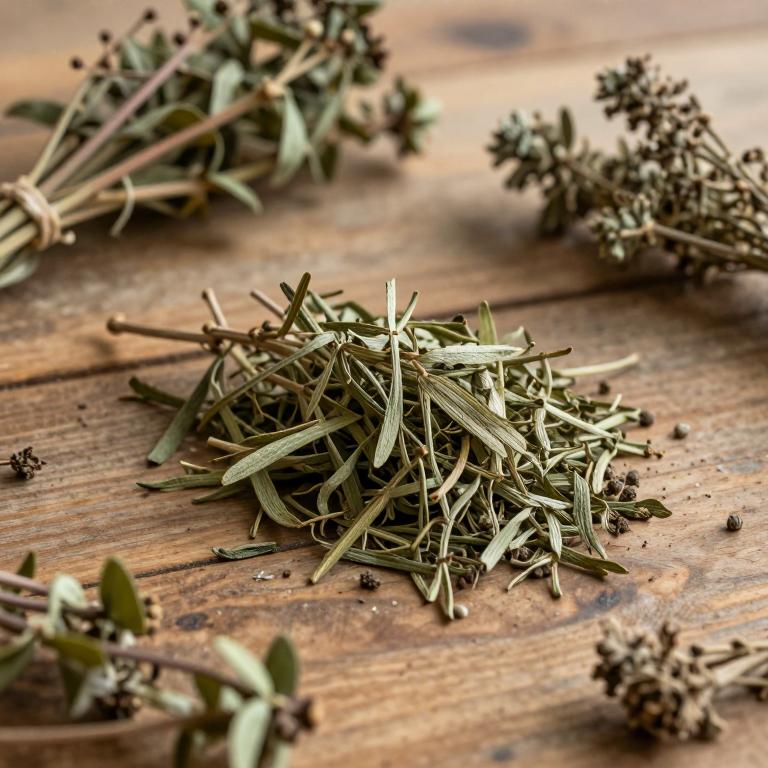
Names and Synonyms
Common Names
- gray thorn
Scientific Names
Accepted name
Condaliopsis obtusifoliaSynonyms
- Condaliopsis lycioides
- Condalia lycioides
- Sarcomphalus obtusifolius
- Ziziphus obtusifolia
- Condalia obtusifolia
- Paliurus texanus
- Rhamnus obtusifolia
- Ziziphus lycioides
- Condalia lycioides var. microphylla
Regional and Traditional Names
Spanish:
- Espino gris
Sources: Catalogue of Life
Taxonomical Classification
This plant belongs to the kingdom Plantae and is classified under the phylum Streptophyta within the class Equisetopsida. Further taxonomic details place it in the subclass Magnoliidae and the order Rosales. It is a member of the family Rhamnaceae and is specifically identified by the genus Condaliopsis.
| Rank | Classification |
|---|---|
| Kingdom | Plantae |
| Phylum | Streptophyta |
| Class | Equisetopsida |
| Subclass | Magnoliidae |
| Order | Rosales |
| Family | Rhamnaceae |
| Genus | Condaliopsis |
Sources: The World Checklist of Vascular Plants (WCVP)
Distribution
This plant exhibits a specific range across various regions of North America. In the North-Central United States, its presence is noted in Oklahoma. Moving toward the southwest, it can be found within the state of Arizona. Its distribution extends into the South-Central United States, specifically throughout New Mexico and Texas. Finally, the species reaches into Mexico, particularly in the northeastern part of the country.
| Region | Area |
|---|---|
| North-Central U.S.A. | Oklahoma |
| Southwestern U.S.A. | Arizona |
| South-Central U.S.A. | New Mexico |
| South-Central U.S.A. | Texas |
| Mexico | Mexico Northeast |
| Mexico | Mexico Gulf |
| Mexico | Mexico Northwest |
Sources: The World Checklist of Vascular Plants (WCVP)
Chemicals
Condaliopsis obtusifolia has 1 reported phytochemicals identified across 0 scientific publications and several other databases. The most consistently reported chemicals include HEXANE.
| Chemical | Supporting sources | Consensus |
|---|---|---|
| HEXANE | 1 supporting sources | ★☆☆☆☆ |
HEXANE
- Pharmacognosy research
Activities
Condaliopsis obtusifolia has 2 reported activities identified across 0 scientific publications and several other databases. The most consistently reported activities include Antiproliferative, Apoptotic.
| Activity | Supporting sources | Consensus |
|---|---|---|
| Antiproliferative | 1 supporting sources | ★☆☆☆☆ |
| Apoptotic | 1 supporting sources | ★☆☆☆☆ |
Antiproliferative
- Pharmacognosy research
Apoptotic
- Pharmacognosy research
Preparations
Condaliopsis obtusifolia has 4 reported preparations identified across 0 scientific publications and several other databases. The most consistently reported preparations include fractions, hexane, methanol extract, n-hexane fraction.
| Preparation | Supporting sources | Consensus |
|---|---|---|
| Fractions | 1 supporting sources | ★☆☆☆☆ |
| Hexane | 1 supporting sources | ★☆☆☆☆ |
| Methanol extract | 1 supporting sources | ★☆☆☆☆ |
| N-hexane fraction | 1 supporting sources | ★☆☆☆☆ |
Fractions
- Pharmacognosy research
Hexane
- Pharmacognosy research
Methanol extract
- Pharmacognosy research
N-hexane fraction
- Pharmacognosy research