Commiphora kerstingii
Commiphora kerstingii · Accepted scientific name
Scientific literature: Very Sparse (4 studies) · ★☆☆☆☆
Commiphora kerstingii, scientifically known as Commiphora kerstingii, is a medicinal shrub native to arid African regions. Renowned for its resinous bark, it is traditionally utilized in ethnomedicine to treat various ailments. This plant holds significant pharmacological interest due to its diverse bioactive compounds and potential therapeutic applications.
- Family
- Burseraceae
- Native range
- Africa
- Parts used
- Not available
- Common names
- Not available
- Scientific synonyms
- Commiphora Ararobba
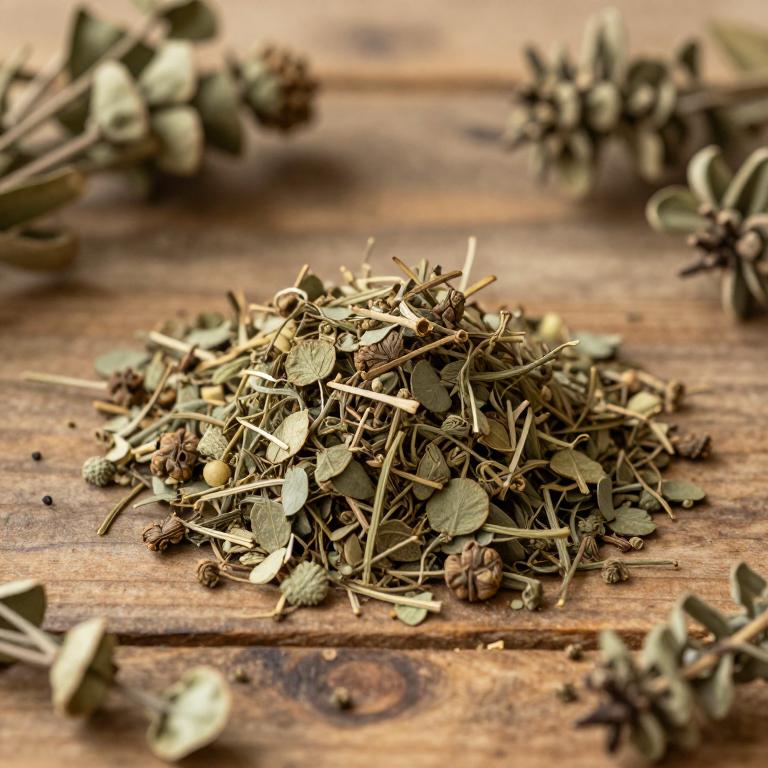
Names and Synonyms
Scientific Names
Accepted name
Commiphora kerstingiiSynonyms
- Commiphora ararobba
Sources: Wikidata
Taxonomical Classification
This plant belongs to the kingdom Plantae and the phylum Streptophyta, situated within the class Equisetopsida and subclass Magnoliidae. It is classified under the order Sapindales and is a member of the family Burseraceae. Finally, it is specifically identified by the genus Commiphora.
| Rank | Classification |
|---|---|
| Kingdom | Plantae |
| Phylum | Streptophyta |
| Class | Equisetopsida |
| Subclass | Magnoliidae |
| Order | Sapindales |
| Family | Burseraceae |
| Genus | Commiphora |
Sources: The World Checklist of Vascular Plants (WCVP)
Distribution
This plant exhibits a widespread presence across several key regions within the African continent. In West Tropical Africa, its distribution includes the countries of Nigeria and Togo. Moving into West-Central Tropical Africa, it can be found inhabiting both Cameroon and the Central African Republic. Additionally, its range extends into Northeast Tropical Africa, specifically within the borders of Chad. Collectively, these locations highlight the diverse tropical environments where the species thrives.
| Region | Area |
|---|---|
| West Tropical Africa | Nigeria |
| West Tropical Africa | Togo |
| West-Central Tropical Africa | Central African Republic |
| West-Central Tropical Africa | Cameroon |
| Northeast Tropical Africa | Chad |
Sources: The World Checklist of Vascular Plants (WCVP)
Botanical Identification
Life history
The life history of Commiphora kerstingii is characterized by its status as a perennial organism, allowing it to persist through multiple growing seasons within its native environment. Morphologically, the plant is classified as a phanerophyte, specifically exhibiting traits consistent with both phanerophyte and nanophanerophyte life forms, which indicates that its reproductive buds are borne on aerial shoots well above the ground level. This growth strategy enables the species to maintain a stable presence in its habitat, utilizing its perennial nature to withstand environmental fluctuations over long periods.
- Life form :
- phanerophyte
- Lifecycle :
- perennial
Morphology
The morphology of Commiphora kerstingii is characterized by its woody growth form, which manifests primarily as a tree. This plant exhibits a significant stature, with its height ranging from a minimum of approximately 6.10 meters to a maximum of about 9.14 meters.
- Growth form :
- tree
- Plant height max:
- 9.144111192 m
- Plant height min:
- 6.096074128 m
- Woodiness :
- woody
Sources: Global Inventory of Floras and Traits (GIFT)
Chemicals
Commiphora kerstingii has 1 reported phytochemicals identified across 0 scientific publications and several other databases. The most consistently reported chemicals include Masticadienonic acid.
| Chemical | Supporting sources | Consensus |
|---|---|---|
| Masticadienonic acid | 1 supporting sources | ★☆☆☆☆ |
Masticadienonic acid
- Journal of ethnopharmacology
Activities
Commiphora kerstingii has 1 reported activities identified across 0 scientific publications and several other databases. The most consistently reported activities include Anticancer.
| Activity | Supporting sources | Consensus |
|---|---|---|
| Anticancer | 1 supporting sources | ★☆☆☆☆ |
Anticancer
- Journal of ethnopharmacology
Conditions
Commiphora kerstingii has 2 reported investigations on conditions identified across 0 scientific publications and several other databases. The most consistently reported conditions include cancer, prostate cancer.
| Condition | Supporting sources | Consensus |
|---|---|---|
| Cancer | 1 supporting sources | ★☆☆☆☆ |
| Prostate cancer | 1 supporting sources | ★☆☆☆☆ |
Cancer
- Journal of ethnopharmacology
Prostate cancer
- Journal of ethnopharmacology