common yellow commelina
Commelina africana · Accepted scientific name
Scientific literature: Very Sparse (7 studies) · ★☆☆☆☆
Common yellow Commelina, scientifically known as Commelina africana, is a resilient medicinal shrub native to African landscapes. Renowned for its vibrant yellow blossoms, this plant is deeply embedded in traditional healing practices. It is frequently utilized for its potent bioactive properties to treat various ailments and support overall wellness.
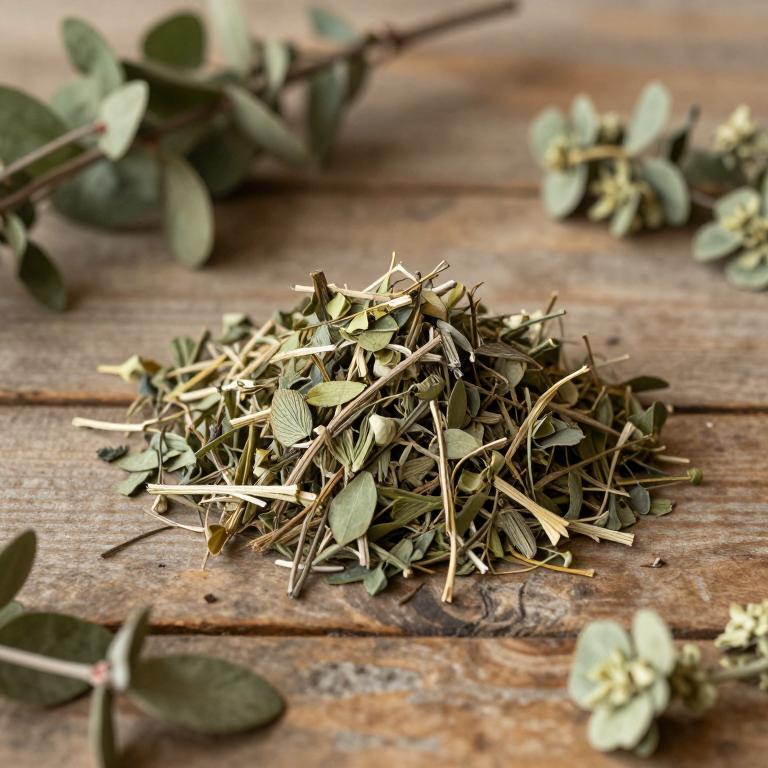
Names and Synonyms
Common Names
- African Yellow Dayflower
- Yellow Commelina
- Yellow Dayflower
- Yellow Wandering Jew
Scientific Names
Accepted name
Commelina africanaSynonyms
- Hedwigia africana
- Stickmannia africana
- Dirtea africana
Regional and Traditional Names
French:
- Herbe d'eau à fleurs jaunes
Sources: Wikidata, Catalogue of Life
Taxonomical Classification
This plant, Commelina africana, belongs to the kingdom Plantae and the phylum Streptophyta. It is classified under the class Equisetopsida and the subclass Magnoliidae within the order Commelinales. Furthermore, it is the type species of the family Commelinaceae and the genus Commelina.
| Rank | Classification |
|---|---|
| Kingdom | Plantae |
| Phylum | Streptophyta |
| Class | Equisetopsida |
| Subclass | Magnoliidae |
| Order | Commelinales |
| Family | Commelinaceae |
| Genus | Commelina |
Sources: The World Checklist of Vascular Plants (WCVP)
Distribution
This plant exhibits a diverse geographical range spanning across different oceanic and continental regions. In the Macaronesia region, its presence is specifically noted in Cape Verde. Its distribution extends significantly into West Tropical Africa, where it can be found in Benin and Burkina. Furthermore, the species is documented within the borders of Ghana. Finally, the plant's range reaches as far as Guinea-Bissau, completing its westward spread across the continent.
| Region | Area |
|---|---|
| Macaronesia | Cape Verde |
| West Tropical Africa | Benin |
| West Tropical Africa | Burkina |
| West Tropical Africa | Ghana |
| West Tropical Africa | Guinea-Bissau |
| West Tropical Africa | Guinea |
| West Tropical Africa | Ivory Coast |
| West Tropical Africa | Liberia |
| West Tropical Africa | Nigeria |
| West Tropical Africa | Senegal |
Sources: The World Checklist of Vascular Plants (WCVP)
Botanical Identification
Ecology
The ecology of Commeelina africana is characterized by a broad altitudinal distribution that allows it to inhabit a diverse array of environmental conditions. This species demonstrates remarkable adaptability, occupying an expansive elevational range that begins at sea level, specifically at a minimum of 2 m AMSL, and extends to high-altitude environments reaching a maximum of 2160 m AMSL. This wide vertical gradient suggests that the plant can thrive across various ecological zones, from lowland coastal or riparian habitats to montane ecosystems, navigating fluctuations in temperature, moisture availability, and atmospheric pressure encountered across these different elevations.
- Elevational range max:
- 2160 m AMSL
- Elevational range min:
- 2 m AMSL
Life history
The life history of Combretina africana is characterized by its status as a perennial organism, allowing it to persist through multiple growing seasons within its natural habitat. In terms of its structural growth strategy and ecological positioning, the plant is classified as a chamaephyte, meaning its perennating buds are located close to the soil surface, typically just above the ground level. This specific life form, consistent across its classification as both a chamaephyte and a specialized growth type, enables the species to navigate environmental stressors while maintaining a stable presence in its ecosystem over a long-term duration.
- Life form :
- chamaephyte
- Lifecycle :
- perennial
Morphology
The morphology of Commelina africana is characterized by its herbaceous growth form, appearing as a non-woody, self-supporting herb. This plant typically exhibits a terrestrial habit, functioning as an independent organism rather than a parasite or epiphyte. In terms of stature, it is a relatively small plant with a height ranging from a minimum of 0.05 m to a maximum of approximately 0.91 m, maintaining an average plant height of about 0.5 m.
- Aquatic :
- terrestrial
- Climber :
- self-supporting
- Epiphyte :
- terrestrial
- Growth form :
- herb
- Parasite :
- independent
- Plant height max:
- 0.914411119 m
- Plant height mean:
- 0.5 m
- Plant height min:
- 0.05 m
- Woodiness :
- non-woody
Physiology
The physiology of Combretina africana is characterized by specific morphological dimensions and metabolic processes that define its growth patterns. The leaves exhibit a regulated size range, with individual leaf lengths typically measuring between a minimum of 2.5 cm and a maximum of 5 cm. Correspondingly, the leaf width is relatively narrow, ranging from a minimum of 1 cm to a maximum of 1.5 cm. In terms of nutrient cycling and soil interaction, the plant does not function as a nitrogen fixer, meaning it lacks the symbiotic relationship with nitrogen-fixing bacteria required to convert atmospheric nitrogen into a usable form for its metabolic processes.
- Leaf length max:
- 5 cm
- Leaf length min:
- 2.5 cm
- Leaf width max:
- 1.5 cm
- Leaf width min:
- 1 cm
- Nitrogen fixer :
- no
Reproduction
The reproduction of Commelina africanica is driven by a biotic pollination syndrome, primarily facilitated by insects, with bees playing a specific and significant role in the transfer of pollen. Once fertilization is successful, the plant produces a fruit categorized as a capsule. The subsequent dispersal of seeds follows an autochorous syndrome, meaning the plant utilizes autochorous mechanisms to distribute its offspring.
- Dispersal syndrome :
- autochorous
- Fruit type :
- capsule
- Pollination syndrome :
- insect
- Pollination syndrome :
- bee
- Pollination syndrome :
- biotic
Sources: Global Inventory of Floras and Traits (GIFT)
Chemicals
Commelina africana has 4 reported phytochemicals identified across 0 scientific publications and several other databases. The most consistently reported chemicals include Flavonoids, Saponins, Tannins, Terpenoids.
| Chemical | Supporting sources | Consensus |
|---|---|---|
| Flavonoids | 1 supporting sources | ★☆☆☆☆ |
| Saponins | 1 supporting sources | ★☆☆☆☆ |
| Tannins | 1 supporting sources | ★☆☆☆☆ |
| Terpenoids | 1 supporting sources | ★☆☆☆☆ |
Flavonoids
- Journal of evidence-based integrative medicine
Saponins
- Journal of evidence-based integrative medicine
Tannins
- Journal of evidence-based integrative medicine
Terpenoids
- Journal of evidence-based integrative medicine
Activities
Commelina africana has 1 reported activities identified across 0 scientific publications and several other databases. The most consistently reported activities include Antibacterial.
| Activity | Supporting sources | Consensus |
|---|---|---|
| Antibacterial | 1 supporting sources | ★☆☆☆☆ |
Antibacterial
- BMC complementary and alternative medicine
Conditions
Commelina africana has 2 reported investigations on conditions identified across 0 scientific publications and several other databases. The most consistently reported conditions include Pseudomonas aeruginosa, childbirth.
| Condition | Supporting sources | Consensus |
|---|---|---|
| Pseudomonas aeruginosa | 1 supporting sources | ★☆☆☆☆ |
| Childbirth | 1 supporting sources | ★☆☆☆☆ |
Pseudomonas aeruginosa
- Journal of evidence-based integrative medicine
Childbirth
- Journal of ethnopharmacology
Preparations
Commelina africana has 3 reported preparations identified across 0 scientific publications and several other databases. The most consistently reported preparations include Aqueous extracts, extracts, leaves.
| Preparation | Supporting sources | Consensus |
|---|---|---|
| Aqueous extracts | 1 supporting sources | ★☆☆☆☆ |
| Extracts | 1 supporting sources | ★☆☆☆☆ |
| Leaves | 1 supporting sources | ★☆☆☆☆ |
Aqueous extracts
- Journal of ethnopharmacology
Extracts
- Journal of ethnopharmacology
Leaves
- Journal of evidence-based integrative medicine