Large-fruited bushwillow
Combretum zeyheri · Accepted scientific name
Scientific literature: Very Sparse (21 studies) · ★☆☆☆☆
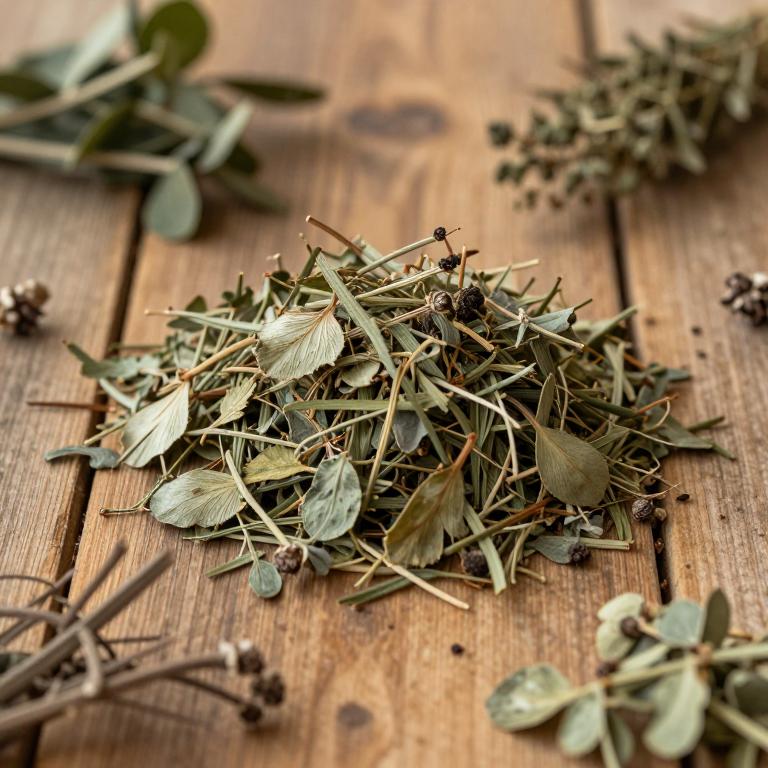
Large-fruited bushwillow, scientifically known as Combretum zeyheri, is a resilient woody shrub native to Southern Africa. Renowned for its medicinal properties, various parts of this plant are traditionally utilized to treat ailments such as inflammation, digestive issues, and skin infections, offering significant ethnobotanical value within indigenous healing practices.
Names and Synonyms
Common Names
- Large-Fruited Combretum
- Largefruit Bushwillow
- Zeyher's Bushwillow
- Zeyher’s bushwillow
Scientific Names
Accepted name
Combretum zeyheriSynonyms
- Combretum teuszii
- Combretum tinctorum
- Combretum sinuatipetalum
- Combretum sankisiense
- Combretum calocarpum
- Combretum bragae
- Combretum antunesii
- Combretum dilembense
- Combretum platycarpum
- Combretum odontopetalum
- Combretum oblongum
- Combretum megalocarpum
- Combretum lopolense
- Combretum zeyheri var. seineri
Sources: Wikidata, Catalogue of Life
Taxonomical Classification
This plant belongs to the kingdom Plantae and is classified under the phylum Streptophyta within the class Equisetopsida. Following the subclass Magnoliidae, it is organized under the order Myrtales and the family Combretaceae. Ultimately, it is identified by its specific genus, Combretum, and its species name, zehyeri.
| Rank | Classification |
|---|---|
| Kingdom | Plantae |
| Phylum | Streptophyta |
| Class | Equisetopsida |
| Subclass | Magnoliidae |
| Order | Myrtales |
| Family | Combretaceae |
| Genus | Combretum |
Sources: The World Checklist of Vascular Plants (WCVP)
Distribution
This plant exhibits a broad geographical distribution across several distinct regions of the African continent. In West-Central Tropical Africa, it can be found growing within the Democratic Republic of the Congo. Its presence extends into East Tropical Africa, specifically within the territories of Kenya and Tanzania. Moving toward the southern part of the continent, the species is also located in South Tropical Africa. This southern distribution encompasses the countries of both Angola and Malawi.
| Region | Area |
|---|---|
| West-Central Tropical Africa | DR Congo |
| East Tropical Africa | Kenya |
| East Tropical Africa | Tanzania |
| South Tropical Africa | Angola |
| South Tropical Africa | Malawi |
| South Tropical Africa | Mozambique |
| South Tropical Africa | Zambia |
| South Tropical Africa | Zimbabwe |
| Southern Africa | Botswana |
| Southern Africa | Caprivi Strip |
Sources: The World Checklist of Vascular Plants (WCVP)
Botanical Identification
Ecology
The ecology of Combretum zehyeri is characterized by its presence within forest habitats, where it plays a role in the local ecosystem. This species exhibits a broad altitudinal distribution, thriving in diverse topographical settings that span a significant vertical gradient. Its elevational range extends from a minimum of 45 m AMSL to a maximum of 1600 m AMSL, allowing it to occupy various ecological niches across different mountain and lowland profiles.
- Elevational range max:
- 1600 m AMSL
- Elevational range min:
- 45 m AMSL
- Habitat :
- forest
Life history
The life history of Combretum zeyheri is characterized by its classification as a perennial plant, allowing it to persist through multiple growing seasons within its natural habitat. As a deciduous species, it undergoes a seasonal cycle where it sheds its foliage, typically in response to environmental changes or dry periods, before regenerating new growth. This combination of a long-lived perennial lifecycle and a deciduous growth habit enables the plant to adapt to its ecological niche by managing resource consumption and surviving seasonal fluctuations.
- Deciduousness :
- deciduous
- Lifecycle :
- perennial
Morphology
The morphology of Combretum zehleri is characterized by its growth form as a woody tree, which is capable of reaching significant dimensions. It is a self-supporting plant, rather than a climber or liana, and functions as an independent organism without parasitic behavior. In terms of stature, the plant exhibits a height range from a minimum of 2 m to a maximum of 12 m, with an average plant height of approximately 7 m. It is a terrestrial species, meaning it grows on land rather than in aquatic or semi-aquatic environments, and it is not an epiphyte.
- Aquatic :
- terrestrial
- Climber :
- self-supporting
- Epiphyte :
- terrestrial
- Growth form :
- tree
- Parasite :
- independent
- Plant height max:
- 12 m
- Plant height mean:
- 7 m
- Plant height min:
- 2 m
- Woodiness :
- woody
Physiology
The physiology of Combretum zehleri is characterized by metabolic processes adapted to the semi-arid and seasonal environments in which it typically thrives, focusing on efficient water management and nutrient uptake. Regarding its interaction with soil chemistry, the plant is not a nitrogen fixer, meaning it lacks the specialized symbiotic relationship with rhizobia bacteria required to convert atmospheric nitrogen into bioavailable forms; instead, it relies on the decomposition of organic matter and the assimilation of nitrates or ammonium present in the soil. Its physiological mechanisms prioritize survival during periods of drought, often employing sclerophyllous leaf characteristics or controlled stomatal conductance to minimize transpiration. The plant's metabolic pathways are optimized for resource acquisition in nutrient-variable soils, utilizing an extensive root system to scavenge for essential minerals and moisture, while its photosynthetic efficiency is tuned to withstand high light intensities and temperature fluctuations characteristic of its natural habitat.
- Nitrogen fixer :
- no
Reproduction
The reproduction of Combretum zeyheri involves the production of seeds characterized by a specific mass range that plays a crucial role in its dispersal and establishment. Based on empirical data, the seed mass of this species exhibits a mean value of approximately 0.964026667 g. The variation within the seed population is relatively narrow, with individual seed masses ranging from a minimum of 0.92 g to a maximum of 1 g. This consistency in seed weight suggests a stabilized reproductive strategy aimed at maintaining a specific nutrient reserve within each seed to support early seedling development.
- Seed mass max:
- 1 g
- Seed mass mean:
- 0.964026667 g
- Seed mass min:
- 0.92 g
Sources: Global Inventory of Floras and Traits (GIFT)
Plant Parts
Combretum zeyheri has 1 reported plant parts identified across 1 scientific publications and several other databases that are studied for medicinal purposes. The most consistently reported plant part include leaf.
| Plant part | Supporting sources | Consensus |
|---|---|---|
| Leaf | 1 supporting sources | ★☆☆☆☆ |
Leaf
- BMC complementary and alternative medicine
Chemicals
Combretum zeyheri has 1 reported phytochemicals identified across 1 scientific publications and several other databases. The most consistently reported chemicals include Saponins.
| Chemical | Supporting sources | Consensus |
|---|---|---|
| Saponins | 1 supporting sources | ★☆☆☆☆ |
Saponins
- BMC complementary and alternative medicine
Activities
Combretum zeyheri has 4 reported activities identified across 1 scientific publications and several other databases. The most consistently reported activities include Antibacterial, Antifungal, Anticancer, Antioxidant.
| Activity | Supporting sources | Consensus |
|---|---|---|
| Antibacterial | 2 supporting sources | ★☆☆☆☆ |
| Antifungal | 2 supporting sources | ★☆☆☆☆ |
| Anticancer | 1 supporting sources | ★☆☆☆☆ |
| Antioxidant | 1 supporting sources | ★☆☆☆☆ |
Antibacterial
- BMC complementary and alternative medicine
- BioMed research international
Antifungal
- BMC complementary and alternative medicine
- BioMed research international
Anticancer
- BioMed research international
Antioxidant
- BMC complementary and alternative medicine
Conditions
Combretum zeyheri has 10 reported investigations on conditions identified across 1 scientific publications and several other databases. The most consistently reported conditions include cancer, Acinetobacter baumannii, Candida albicans, bacterial infections, fever.
| Condition | Supporting sources | Consensus |
|---|---|---|
| Cancer | 2 supporting sources | ★☆☆☆☆ |
| Acinetobacter baumannii | 1 supporting sources | ★☆☆☆☆ |
| Candida albicans | 1 supporting sources | ★☆☆☆☆ |
| Bacterial infections | 1 supporting sources | ★☆☆☆☆ |
| Fever | 1 supporting sources | ★☆☆☆☆ |
| Hypertension | 1 supporting sources | ★☆☆☆☆ |
| Pain | 1 supporting sources | ★☆☆☆☆ |
| Syphilis | 1 supporting sources | ★☆☆☆☆ |
| Tuberculosis | 1 supporting sources | ★☆☆☆☆ |
| Wound healing | 1 supporting sources | ★☆☆☆☆ |
Cancer
- BMC complementary and alternative medicine
- Journal of ethnopharmacology
Acinetobacter baumannii
- Advances in pharmacological and pharmaceutical sciences
Candida albicans
- BMC complementary and alternative medicine
Bacterial infections
- Journal of ethnopharmacology
Fever
- BMC complementary and alternative medicine
Hypertension
- Journal of ethnopharmacology
Pain
- BMC complementary and alternative medicine
Syphilis
- Journal of ethnopharmacology
Tuberculosis
- BMC complementary and alternative medicine
Wound healing
- BMC complementary and alternative medicine
Preparations
Combretum zeyheri has 6 reported preparations identified across 1 scientific publications and several other databases. The most consistently reported preparations include aqueous extract, aqueous or ethanol extract, ethanol extract, ethanolic extract, leaf ethanol or water extracts.
| Preparation | Supporting sources | Consensus |
|---|---|---|
| Aqueous extract | 1 supporting sources | ★☆☆☆☆ |
| Aqueous or ethanol extract | 1 supporting sources | ★☆☆☆☆ |
| Ethanol extract | 1 supporting sources | ★☆☆☆☆ |
| Ethanolic extract | 1 supporting sources | ★☆☆☆☆ |
| Leaf ethanol or water extracts | 1 supporting sources | ★☆☆☆☆ |
| Methanolic (czm) | 1 supporting sources | ★☆☆☆☆ |
Aqueous extract
- BMC complementary and alternative medicine
Aqueous or ethanol extract
- BMC complementary and alternative medicine
Ethanol extract
- BMC complementary and alternative medicine
Ethanolic extract
- BMC complementary and alternative medicine
Leaf ethanol or water extracts
- BMC complementary and alternative medicine
Methanolic (czm)
- Advances in pharmacological and pharmaceutical sciences