Combretum quadrangulare
Combretum quadrangulare · Accepted scientific name
Scientific literature: Sparse (61 studies) · ★★☆☆☆
Combretum quadrangulare, scientifically known as Combretum quadrangulare, is a versatile medicinal shrub native to tropical Africa. Widely revered in traditional medicine, it is most famous for its ability to support bone health, enhance athletic performance, and promote weight management through its unique bioactive compounds and antioxidant properties.
- Family
- Combretaceae
- Native range
- Asia-Tropical
- Parts used
- Seed · Leaf
- Common names
- Not available
- Scientific synonyms
- Not available
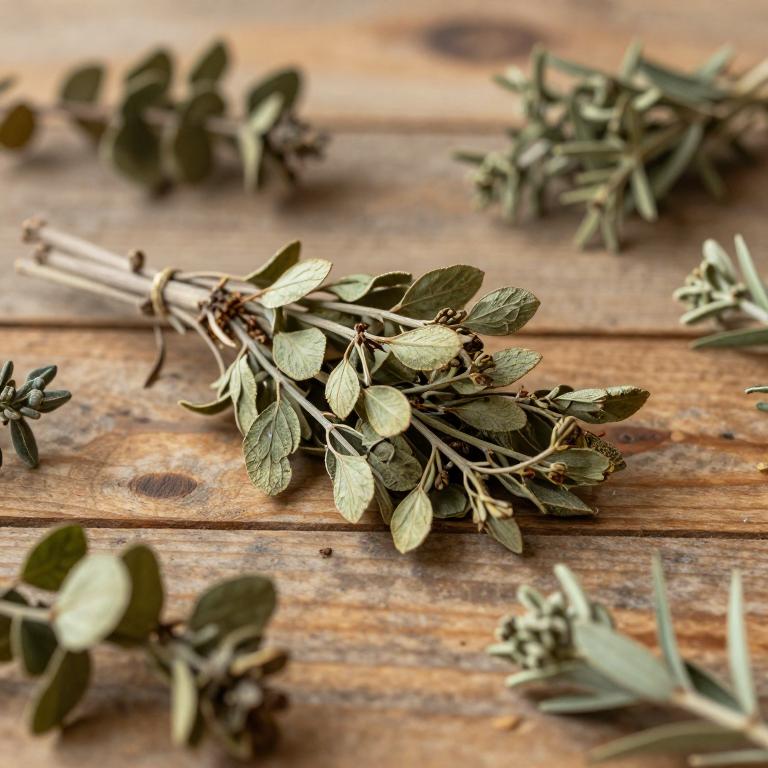
Names and Synonyms
Scientific Names
Accepted name
Combretum quadrangulareSources: Wikidata, Catalogue of Life
Taxonomical Classification
This plant belongs to the kingdom Plantae and the phylum Streptophyta, falling under the class Equisetopsida and subclass Magnoliidae. Within the order Myrtales, it is classified under the family Combretaceae. Finally, its specific taxonomic designation is within the genus Combretum.
| Rank | Classification |
|---|---|
| Kingdom | Plantae |
| Phylum | Streptophyta |
| Class | Equisetopsida |
| Subclass | Magnoliidae |
| Order | Myrtales |
| Family | Combretaceae |
| Genus | Combretum |
Sources: The World Checklist of Vascular Plants (WCVP)
Distribution
This plant is widely distributed throughout the Indo-China region. It can be found growing naturally in the country of Cambodia. Its presence is also well-documented across the landscapes of Laos and Myanmar. Furthermore, the species thrives within the diverse environments of Thailand. Finally, it is commonly distributed throughout Vietnam as well.
| Region | Area |
|---|---|
| Indo-China | Cambodia |
| Indo-China | Laos |
| Indo-China | Myanmar |
| Indo-China | Thailand |
| Indo-China | Vietnam |
Sources: The World Checklist of Vascular Plants (WCVP)
Botanical Identification
Life history
The life history of Combretum quadrangulare is characterized by its status as a perennial plant, allowing it to persist in its environment through multiple growing seasons. As a woody climber or shrub, its development involves a long-term survival strategy where it establishes a robust structural framework to support its climbing habit. Depending on the environmental conditions and available resources, its growth pattern may exhibit variability, but it fundamentally maintains a continuous life cycle rather than completing its development within a single year. This perennial nature enables the plant to invest in extensive woody tissues and extensive root systems, facilitating long-term stability and the ability to recover from seasonal stressors.
- Lifecycle :
- perennial
Morphology
The morphology of Combretum quadrangularis is characterized by its significant stature and robust structural development. It typically manifests as a woody tree, though it exhibits climbing tendencies, functioning as a self-supporting liana or vine. This growth form allows it to achieve a substantial plant height, with a mean height reaching approximately 10 m. The plant's physical structure is defined by its woody nature, providing the necessary stability for its climbing and tree-like growth habits.
- Climber :
- self-supporting
- Growth form :
- tree
- Plant height mean:
- 10 m
- Woodiness :
- woody
Physiology
The physiology of Combretum quadrangularis is characterized by its specialized metabolic processes and structural adaptations that support its growth in various tropical environments. As a woody climber, its physiological activity is driven by efficient photosynthetic pathways that facilitate rapid biomass production and the synthesis of complex secondary metabolites, such as tannins and flavonoids, which serve as defensive mechanisms. Regarding its nutrient acquisition strategies, the plant does not engage in symbiotic nitrogen fixation; therefore, it is not a nitrogen fixer (trait_1: no, trait_2: no). Instead, its physiological reliance on nitrogen is met through the uptake of nitrates and ammonium ions from the soil via an extensive root system. The plant also demonstrates specific transpiration and water-regulation mechanisms to maintain turgor pressure and facilitate the transport of nutrients through its vascular tissues, ensuring systemic physiological stability during varying environmental conditions.
- Nitrogen fixer :
- no
Sources: Global Inventory of Floras and Traits (GIFT)
Plant Parts
Combretum quadrangulare has 2 reported plant parts identified across 5 scientific publications and several other databases that are studied for medicinal purposes. The most consistently reported plant part include seed, leaf.
| Plant part | Supporting sources | Consensus |
|---|---|---|
| Seed | 3 supporting sources | ★★☆☆☆ |
| Leaf | 2 supporting sources | ★☆☆☆☆ |
Seed
- Journal of natural products
- Chemical & pharmaceutical bulletin
- Planta medica
Leaf
- Biological & pharmaceutical bulletin
- Chemical & pharmaceutical bulletin
Chemicals
Combretum quadrangulare has 36 reported phytochemicals identified across 5 scientific publications and several other databases. The most consistently reported chemicals include Vitexin, 5,4'-dihydroxy-3,7,3'-trimethoxyflavone, 5,7,4'-Trihydroxy-3,3'-dimethoxyflavone, BETA-SITOSTEROL, Isokaempferide.
| Chemical | Supporting sources | Consensus |
|---|---|---|
| Vitexin | 3 supporting sources | ★★☆☆☆ |
| 5,4'-dihydroxy-3,7,3'-trimethoxyflavone | 2 supporting sources | ★☆☆☆☆ |
| 5,7,4'-Trihydroxy-3,3'-dimethoxyflavone | 2 supporting sources | ★☆☆☆☆ |
| BETA-SITOSTEROL | 2 supporting sources | ★☆☆☆☆ |
| Isokaempferide | 2 supporting sources | ★☆☆☆☆ |
| KAMATAKENIN | 2 supporting sources | ★☆☆☆☆ |
| betulinic acid | 2 supporting sources | ★☆☆☆☆ |
| (+)-catechin | 1 supporting sources | ★☆☆☆☆ |
| (-)-Epigallocatechin | 1 supporting sources | ★☆☆☆☆ |
| 1-O-Acetyl-23-deoxojessic acid | 1 supporting sources | ★☆☆☆☆ |
Vitexin
- Biological & pharmaceutical bulletin
- Molecules (Basel, Switzerland)
- Chemical & pharmaceutical bulletin
5,4'-dihydroxy-3,7,3'-trimethoxyflavone
- Biological & pharmaceutical bulletin
- Chemical & pharmaceutical bulletin
5,7,4'-Trihydroxy-3,3'-dimethoxyflavone
- Biological & pharmaceutical bulletin
- Chemical & pharmaceutical bulletin
BETA-SITOSTEROL
- Biological & pharmaceutical bulletin
- Chemical & pharmaceutical bulletin
Isokaempferide
- Biological & pharmaceutical bulletin
- Chemical & pharmaceutical bulletin
KAMATAKENIN
- Biological & pharmaceutical bulletin
- Chemical & pharmaceutical bulletin
betulinic acid
- Biological & pharmaceutical bulletin
- Chemical & pharmaceutical bulletin
(+)-catechin
- Chemical & pharmaceutical bulletin
(-)-Epigallocatechin
- Chemical & pharmaceutical bulletin
1-O-Acetyl-23-deoxojessic acid
- Chemical & pharmaceutical bulletin
Activities
Combretum quadrangulare has 6 reported activities identified across 5 scientific publications and several other databases. The most consistently reported activities include Hepatoprotective, Analgesic, Anthelmintic, Antidiabetic, Antidysenteric.
| Activity | Supporting sources | Consensus |
|---|---|---|
| Hepatoprotective | 2 supporting sources | ★☆☆☆☆ |
| Analgesic | 1 supporting sources | ★☆☆☆☆ |
| Anthelmintic | 1 supporting sources | ★☆☆☆☆ |
| Antidiabetic | 1 supporting sources | ★☆☆☆☆ |
| Antidysenteric | 1 supporting sources | ★☆☆☆☆ |
| Antipyretic | 1 supporting sources | ★☆☆☆☆ |
Hepatoprotective
- Molecules (Basel, Switzerland)
- Planta medica
Analgesic
- Molecules (Basel, Switzerland)
Anthelmintic
- Molecules (Basel, Switzerland)
Antidiabetic
- Biophysics and physicobiology
Antidysenteric
- Molecules (Basel, Switzerland)
Antipyretic
- Molecules (Basel, Switzerland)
Conditions
Combretum quadrangulare has 4 reported investigations on conditions identified across 5 scientific publications and several other databases. The most consistently reported conditions include analgesic, antidiabetic, antipyretic, type 2 diabetes mellitus.
| Condition | Supporting sources | Consensus |
|---|---|---|
| Analgesic | 1 supporting sources | ★☆☆☆☆ |
| Antidiabetic | 1 supporting sources | ★☆☆☆☆ |
| Antipyretic | 1 supporting sources | ★☆☆☆☆ |
| Type 2 diabetes mellitus | 1 supporting sources | ★☆☆☆☆ |
Analgesic
- Molecules (Basel, Switzerland)
Antidiabetic
- Biophysics and physicobiology
Antipyretic
- Molecules (Basel, Switzerland)
Type 2 diabetes mellitus
- Biophysics and physicobiology
Preparations
Combretum quadrangulare has 2 reported preparations identified across 5 scientific publications and several other databases. The most consistently reported preparations include MeOH extract, MeOH extract of leaves.
| Preparation | Supporting sources | Consensus |
|---|---|---|
| Meoh extract | 2 supporting sources | ★☆☆☆☆ |
| Meoh extract of leaves | 2 supporting sources | ★☆☆☆☆ |
Meoh extract
- Journal of natural products
- Chemical & pharmaceutical bulletin
Meoh extract of leaves
- Biological & pharmaceutical bulletin
- Chemical & pharmaceutical bulletin