Combretum hartmannianum
Combretum hartmannianum · Accepted scientific name
Scientific literature: Very Sparse (24 studies) · ★☆☆☆☆
, scientifically known as Combretum hartmannianum, is a resilient medicinal shrub native to African landscapes. Renowned for its diverse therapeutic properties, this plant is traditionally utilized to treat various ailments, including inflammation and digestive issues. Its unique phytochemical profile offers significant potential for modern pharmacological research and natural healing.
- Family
- Combretaceae
- Native range
- Africa
- Parts used
- Leaf · Stem
- Common names
- Not available
- Scientific synonyms
- Not available
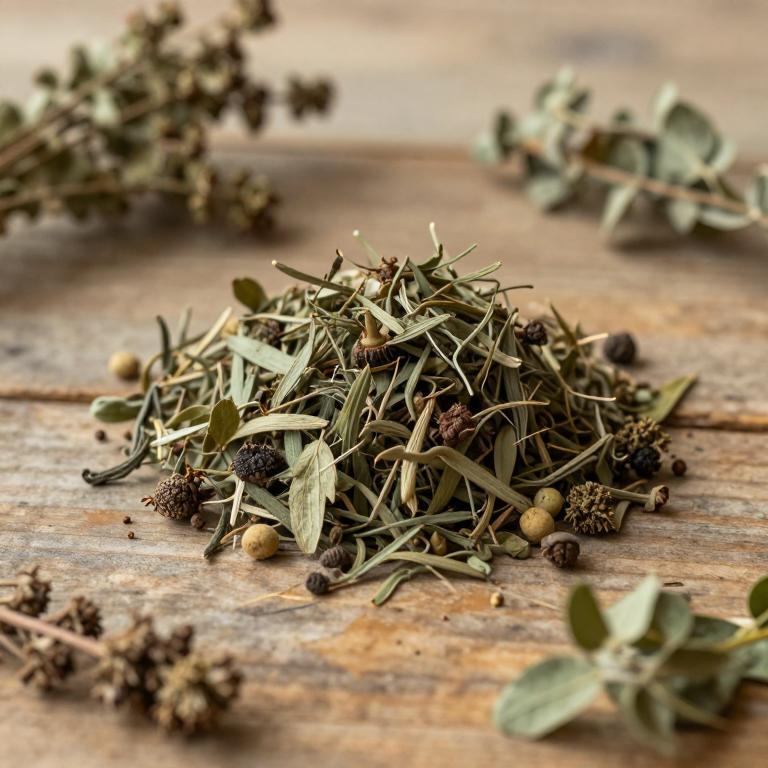
Names and Synonyms
Scientific Names
Accepted name
Combretum hartmannianumSources: Wikidata
Taxonomical Classification
This plant, Combretum hartmannianum, belongs to the kingdom Plantae and the phylum Streptophyta. Within the class Equisetopsida and subclass Magnoliidae, it is classified under the order Myrtales. Finally, it is a member of the family Combretaceae and the genus Combretum.
| Rank | Classification |
|---|---|
| Kingdom | Plantae |
| Phylum | Streptophyta |
| Class | Equisetopsida |
| Subclass | Magnoliidae |
| Order | Myrtales |
| Family | Combretaceae |
| Genus | Combretum |
Sources: The World Checklist of Vascular Plants (WCVP)
Distribution
This plant exhibits a specific geographical distribution within the Northeast Tropical Africa region. It can be found growing in the territory of Eritrea. Furthermore, its presence extends into the landscapes of Ethiopia. The species is also documented throughout Sudan and South Sudan. Consequently, its natural habitat is concentrated within these particular African nations.
| Region | Area |
|---|---|
| Northeast Tropical Africa | Eritrea |
| Northeast Tropical Africa | Ethiopia |
| Northeast Tropical Africa | Sudan-South Sudan |
Sources: The World Checklist of Vascular Plants (WCVP)
Botanical Identification
Life history
The life history of Combretum hartmannianum is characterized by its status as a perennial species, allowing it to persist in its ecosystem through multiple growing seasons. Throughout its developmental stages, the plant exhibits a deciduous growth habit, shedding its foliage periodically, which is often a strategic adaptation to seasonal environmental shifts or moisture availability.
- Deciduousness :
- deciduous
- Lifecycle :
- perennial
Morphology
The morphology of Combretum hartmannianum is characterized by its growth form as a tree, which reaches a significant mean plant height of 25 m. This species exhibits a woody nature, providing the structural integrity necessary for its stature. Regarding its climbing habits, it is classified as a self-supporting plant, meaning it does not rely on external structures for vertical growth.
- Climber :
- self-supporting
- Growth form :
- tree
- Plant height mean:
- 25 m
- Woodiness :
- woody
Physiology
The physiology of Combretum hartmannianum is characterized by complex metabolic processes adapted to its specific ecological niche, primarily focusing on nutrient acquisition and carbon assimilation. Regarding its nitrogen metabolism, the plant is not a nitrogen fixer; it lacks the symbiotic relationship with diazotrophic bacteria, such as Rhizobium, typically found in leguminous species, and therefore relies on the uptake of inorganic nitrogen sources like nitrates and ammonium from the soil through its root system. Its photosynthetic pathways and water-use efficiency are tuned to manage transpiration rates in response to environmental stressors, ensuring that cellular homeostasis is maintained during fluctuations in moisture availability. Furthermore, the plant engages in intricate secondary metabolite synthesis, producing various phytochemicals that serve physiological roles in defense mechanisms and oxidative stress mitigation.
- Nitrogen fixer :
- no
Sources: Global Inventory of Floras and Traits (GIFT)
Plant Parts
Combretum hartmannianum has 2 reported plant parts identified across 2 scientific publications and several other databases that are studied for medicinal purposes. The most consistently reported plant part include leaf, stem.
| Plant part | Supporting sources | Consensus |
|---|---|---|
| Leaf | 1 supporting sources | ★☆☆☆☆ |
| Stem | 1 supporting sources | ★☆☆☆☆ |
Leaf
- Journal of ethnopharmacology
Stem
- Journal of ethnopharmacology
Chemicals
Combretum hartmannianum has 11 reported phytochemicals identified across 2 scientific publications and several other databases. The most consistently reported chemicals include Castalagin, Combregenin, Cordifoliside D, Corilagin, Flavonoids.
| Chemical | Supporting sources | Consensus |
|---|---|---|
| Castalagin | 1 supporting sources | ★☆☆☆☆ |
| Combregenin | 1 supporting sources | ★☆☆☆☆ |
| Cordifoliside D | 1 supporting sources | ★☆☆☆☆ |
| Corilagin | 1 supporting sources | ★☆☆☆☆ |
| Flavonoids | 1 supporting sources | ★☆☆☆☆ |
| Punicalagin | 1 supporting sources | ★☆☆☆☆ |
| Tellimagrandin I | 1 supporting sources | ★☆☆☆☆ |
| Terchebulin | 1 supporting sources | ★☆☆☆☆ |
| Terminolic acid | 1 supporting sources | ★☆☆☆☆ |
| luteolin | 1 supporting sources | ★☆☆☆☆ |
Castalagin
- Biomedicine & pharmacotherapy = Biomedecine & pharmacotherapie
Combregenin
- Biomedicine & pharmacotherapy = Biomedecine & pharmacotherapie
Cordifoliside D
- Biomedicine & pharmacotherapy = Biomedecine & pharmacotherapie
Corilagin
- Biomedicine & pharmacotherapy = Biomedecine & pharmacotherapie
Flavonoids
- Biomedicine & pharmacotherapy = Biomedecine & pharmacotherapie
Punicalagin
- Biomedicine & pharmacotherapy = Biomedecine & pharmacotherapie
Tellimagrandin I
- Biomedicine & pharmacotherapy = Biomedecine & pharmacotherapie
Terchebulin
- BMC complementary and alternative medicine
Terminolic acid
- Biomedicine & pharmacotherapy = Biomedecine & pharmacotherapie
luteolin
- Biomedicine & pharmacotherapy = Biomedecine & pharmacotherapie
Activities
Combretum hartmannianum has 2 reported activities identified across 2 scientific publications and several other databases. The most consistently reported activities include Antioxidant, Antiproliferative.
| Activity | Supporting sources | Consensus |
|---|---|---|
| Antioxidant | 1 supporting sources | ★☆☆☆☆ |
| Antiproliferative | 1 supporting sources | ★☆☆☆☆ |
Antioxidant
- BMC complementary and alternative medicine
Antiproliferative
- BMC complementary and alternative medicine
Conditions
Combretum hartmannianum has 5 reported investigations on conditions identified across 2 scientific publications and several other databases. The most consistently reported conditions include Porphyromonas gingivalis, neoplasia, oxidative stress, periodontal diseases, persistent cough.
| Condition | Supporting sources | Consensus |
|---|---|---|
| Porphyromonas gingivalis | 1 supporting sources | ★☆☆☆☆ |
| Neoplasia | 1 supporting sources | ★☆☆☆☆ |
| Oxidative stress | 1 supporting sources | ★☆☆☆☆ |
| Periodontal diseases | 1 supporting sources | ★☆☆☆☆ |
| Persistent cough | 1 supporting sources | ★☆☆☆☆ |
Porphyromonas gingivalis
- BMC complementary and alternative medicine
Neoplasia
- BMC complementary and alternative medicine
Oxidative stress
- BMC complementary and alternative medicine
Periodontal diseases
- BMC complementary and alternative medicine
Persistent cough
- Biomedicine & pharmacotherapy = Biomedecine & pharmacotherapie
Preparations
Combretum hartmannianum has 6 reported preparations identified across 2 scientific publications and several other databases. The most consistently reported preparations include bark, decoctions, leaves, macerations, stem.
| Preparation | Supporting sources | Consensus |
|---|---|---|
| Bark | 1 supporting sources | ★☆☆☆☆ |
| Decoctions | 1 supporting sources | ★☆☆☆☆ |
| Leaves | 1 supporting sources | ★☆☆☆☆ |
| Macerations | 1 supporting sources | ★☆☆☆☆ |
| Stem | 1 supporting sources | ★☆☆☆☆ |
| Tonics | 1 supporting sources | ★☆☆☆☆ |
Bark
- Journal of ethnopharmacology
Decoctions
- Biomedicine & pharmacotherapy = Biomedecine & pharmacotherapie
Leaves
- Journal of ethnopharmacology
Macerations
- Biomedicine & pharmacotherapy = Biomedecine & pharmacotherapie
Stem
- Journal of ethnopharmacology
Tonics
- Biomedicine & pharmacotherapy = Biomedecine & pharmacotherapie